



July Opens with Hawthorne and a Very Long Reading List
Nathaniel Hawthorne was born on July 4, 1804 – a fact that lands differently when you’re staring down 258 books that literary editors believe deserve your attention before December. Lit Hub’s second-half anticipation list dropped this week, and it is not a casual scroll. It is a commitment, a reckoning, and depending on your library hold queue, possibly a source of low-grade anxiety.
The list arrives as readers are already mid-argument about what reading even means right now – who gets translated, who gets censored, whose stories survive the culture wars intact, and why a 200-year-old fictional Englishman named Darcy still has people in his corner. This week’s dispatch from the literary internet is less a roundup than a pressure map of where fiction and criticism are pushing hardest.
The Canon Is Weirder Than You Were Told
One of the more quietly disorienting pieces circulating this week asks why the best American backpacking book was written by a Japanese Buddhist Beat poet. The question is not rhetorical. Lit Hub’s craft coverage returned to that premise without hedging – genre, nationality, and spiritual tradition collided to produce something that American writers, working in their own landscape, apparently couldn’t. That’s worth sitting with longer than a summary allows.
Over at The Comics Journal, cartoonist Kim Deitch gave John Kelly a line worth keeping: “I’m more of a writer who draws than an artist who writes.” Deitch, whose career spans decades of underground comics, is rejecting the classification before it gets applied. The distinction matters because it changes what you’re actually reading when you read a comic – not illustration accompanying text, but a different kind of narrative logic operating under the same cover.
Ancient Roman romance novels also came up this week, and yes, they apparently went hard. Lit Hub’s history coverage made the case that the genre’s hunger – obsessive, melodramatic, thoroughly bodily – did not originate in the 18th century or the paperback rack. It originated in antiquity, which means every conversation about romance fiction as a lesser or newer form of literature is historically embarrassing as well as condescending.
Patrick Bateman’s Aesthetic Legacy Is Apparently Still Running
Dirt published a conversation between Caroline Reilly and Megan Nolan about Patrick Bateman – specifically the skincare and grooming rituals that define his character in American Psycho – and Reilly’s framing was sharp: “It seems obvious to me that it’s not appealing to have to apply 40 different things every night. Why would that be good?” The essay considers what it means that Bateman’s exhausting, violent self-maintenance has become a reference point for contemporary masculine grooming aesthetics, irony either fully intact or quietly discarded depending on who’s doing the referencing.
At the Los Angeles Review of Books, Lillian Fishman turned her attention to Love Island, landing on a description that refuses to be dismissive: “This is a world of girls and boys. Its fundamental charm lies in its playground quality, in its capacity to speak not to our practical adult hopes but to our simple wish to belong.” That appeared in The New Yorker, and Fishman’s engagement with it treats the show as a text worth the same scrutiny as a novel – which is either the right call or a sign that the boundaries between cultural criticism and literary criticism have collapsed entirely into each other.
Translation, Memory, and the Stories That Survive Violence
Granta published a discussion between Palestinian poets Samer Abu Hawwash and Huda J. Fakhreddine about Palestinian poetry written during genocide. It is not a comfortable read, and it is not meant to be. The conversation addresses what poetry can hold, what it cannot hold, and what it means to keep writing in a language and a tradition when the people who carry that tradition are being killed. That it ran alongside pieces about Love Island and Roman romance fiction in the same week’s reading is its own kind of editorial statement.
At Granta, Damion Searls took a different approach to the question of language and meaning – examining translation through the multiple languages of Norway, where the relationship between written and spoken Norwegian is not a simple inheritance but an ongoing political and literary negotiation. Alfred Jung Lee’s piece in The Believer cut even further into the mechanics of writing itself, arguing that “most of a description goes unsaid rather than said; most everything is tossed into the pile of the unvarying, the uninteresting, the unremarkable.” What writers choose not to describe is where the real decisions live.
ProPublica returned this week to the story of Anthony Broadwater, cleared five years ago of sexually assaulting Alice Sebold. Journalist Joaquin Sapien revisited the case – an act of journalism that matters partly because the original wrongful conviction was shaped, at least in part, by a literary account that carried more cultural weight than the legal record. The intersection of memoir, credibility, and criminal justice is not abstract here.
At The Baffler, an essay on art censorship named its mechanics directly: “Censuring works without having encountered them firsthand, misrepresenting facts, and taking elements wildly out of context became the strategy of the cultural warriors.” That description applies to a pattern visible across institutions right now – libraries, museums, publishers – where the attack on a work frequently has nothing to do with the work itself. Marjane Satrapi’s continued relevance to writers like Naz Riahi, discussed this week on Lit Hub, sits in pointed contrast: her work has been a flashpoint precisely because it refuses the kind of erasure censorship depends on.
The Rest of the Week, Moving Fast
Namwali Serpell and Saeed Jones discussed Toni Morrison this week, specifically Morrison’s reputation as what they called a “master of shade.” Hyperallergic went inside William Kentridge’s studio, described as “a safe space for stupidity” – Kentridge’s phrase, not a criticism. Marco Bresciani wrote for Jacobin about Carlo Ginzburg, the anti-fascist historian who pioneered microhistory, a method of reading large historical forces through small, granular cases. Diana Bellonby examined the queerness of Vernon Lee’s ghost stories at the Los Angeles Review of Books.
On the practical side: the Independent Press Top 40 Bestsellers for fiction and nonfiction were updated, July’s best new sci-fi and fantasy titles landed, 10 children’s books for July were listed, and the 13 best book covers from June were collected. Ed Simon wrote about Noah Webster’s dictionary. Someone asked whether they were the asshole for declining an invitation to submit work. Bookmobiles made an appearance as a subject of genuine cultural history. Frederick Douglass’s July 4th speech was flagged as something worth returning to – not for the first time, and not without reason.
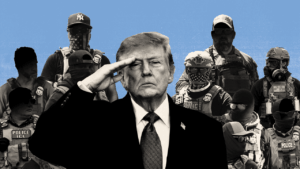
The question of whether American presidents can declare war also appeared, which is either a civics refresher or a sign of where the anxiety in the room is actually pointing.