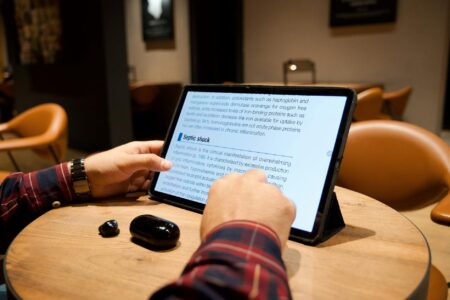





Audiobook sales have officially surpassed physical book revenue for the first time in publishing history, marking a seismic shift in how readers consume literature. The Audio Publishers Association reported that audiobook sales reached $1.8 billion in 2023, while combined hardcover and paperback sales fell to $1.7 billion, according to data from the Association of American Publishers.
This milestone represents more than just changing consumer preferences-it signals a fundamental transformation in the reading ecosystem that publishers, authors, and retailers have been watching unfold for nearly a decade.
The shift isn’t sudden. Audiobook sales have grown consistently by double digits each year since 2012, while physical book sales have remained relatively flat or declined. What changed in 2023 was the acceleration of trends already in motion: longer commutes returning post-pandemic, the proliferation of subscription services like Audible, and a generation of consumers who see “listening” and “reading” as equivalent activities.
The Multitasking Generation Drives Growth
Audiobook consumption patterns reveal why this format has captured such a significant market share. Unlike traditional reading, audiobooks integrate seamlessly into daily routines. Commuters, gym-goers, and multitaskers represent the core demographic driving growth, with the average audiobook listener consuming 15 titles per year compared to 12 physical books for traditional readers.
The demographic breakdown tells a compelling story. Millennials and Gen Z consumers account for 68% of audiobook purchases, with many citing the ability to consume content while exercising, commuting, or doing household tasks as primary motivating factors. This generation views audiobooks not as a substitute for reading but as an expansion of their literary consumption capabilities.
Celebrity narrators have also boosted the format’s appeal. When Michelle Obama narrated her own memoir “Becoming,” it became one of the best-selling audiobooks of all time. Similarly, Trevor Noah’s self-narrated “Born a Crime” demonstrated how author performance could enhance the storytelling experience in ways print cannot match.
Subscription models have made audiobooks more accessible and affordable. Audible’s monthly credit system, along with competitors like Scribd and Libro.fm, have lowered the barrier to entry for consumers who previously balked at individual audiobook prices that often exceed $20 per title.
Publishers Adapt to Audio-First Strategies
Major publishers have restructured their operations to prioritize audiobook production from the earliest stages of book development. Simon & Schuster, Penguin Random House, and HarperCollins now routinely produce audiobook versions simultaneously with print releases, a practice called “day-and-date” publishing that was rare just five years ago.
The investment in audio production has intensified dramatically. Publishers now budget for professional narrators, studio time, and post-production editing as standard line items rather than afterthoughts. Some titles receive bigger audio production budgets than their print marketing campaigns.
Exclusive audio content has become a competitive differentiator. Publishers are commissioning audio-only content, extended interviews with authors, and behind-the-scenes features that exist nowhere else. This strategy treats audiobooks as premium products rather than mere adaptations of printed text.

Author contracts have evolved to reflect audio’s importance. Many publishing deals now specify audiobook rights separately, with some authors retaining audio rights to negotiate independently or self-publish through platforms like ACX (Audiobook Creation Exchange). This shift has created new revenue streams for authors while giving them more control over how their work sounds.
The narrator selection process has become increasingly strategic. Publishers often involve authors in choosing voice talent, recognizing that narrator performance can significantly impact sales and reader satisfaction. Some authors have developed ongoing relationships with specific narrators, creating consistency across their catalog.
Technology Drives Accessibility and Quality
Smartphone penetration and improved audio technology have eliminated traditional barriers to audiobook consumption. High-quality earbuds, car integration systems, and smart speakers have made listening more convenient and enjoyable than ever before.
Streaming technology has solved the storage problem that once limited audiobook adoption. Early digital audiobooks required significant device storage space and complicated download processes. Current platforms offer cloud-based libraries with instant streaming, making access as simple as clicking play.
Speed control features have attracted readers who want to consume more content in less time. Most audiobook apps now offer variable playback speeds from 0.75x to 3x normal speed, allowing listeners to customize their experience. Advanced users often listen at 1.5x or 2x speed, effectively increasing their reading volume.
Voice enhancement technology continues improving the listening experience. Noise cancellation, audio equalization, and smart pause features that detect when earbuds are removed have made audiobooks more user-friendly than traditional radio or podcast content.
Accessibility improvements have expanded the potential audience significantly. Audiobooks serve readers with dyslexia, visual impairments, and other conditions that make traditional reading challenging. This market expansion contributes to overall growth while serving an underserved population.
Independent Creators and Retail Evolution
Self-published authors have embraced audiobooks as a path to higher revenue per unit sold. Platforms like ACX enable independent authors to produce and distribute audiobooks without traditional publishing infrastructure, though production costs remain significant.
The success of independent bookstores in adapting to digital trends mirrors broader retail evolution. While independent bookstores are thriving while chain retailers struggle, many have partnered with services like Libro.fm to offer audiobook sales that support local businesses.
Library systems have become crucial partners in audiobook growth. Services like Hoopla and OverDrive allow library patrons to borrow audiobooks digitally, introducing new audiences to the format without requiring purchases. This exposure often leads to future sales as listeners discover preferred authors or series.

The rise of audiobooks intersects with broader publishing trends, including the explosive growth in specific genres. Romance novels are outselling all other fiction genres combined, and much of this growth occurs in audio format, where intimate narration can enhance emotional connection to stories.
Retail partnerships have evolved beyond traditional bookstores. Target, Walmart, and grocery chains now stock audiobook gift cards and promote digital audiobook subscriptions alongside physical books, recognizing audio as a legitimate product category rather than a niche alternative.
The Future of Reading
Industry analysts predict audiobook growth will continue outpacing physical books for the foreseeable future, though print isn’t disappearing entirely. Instead, the market appears to be segmenting into distinct consumption patterns: audio for convenience and multitasking, print for focused reading and collection-building.
Publishers are investing in hybrid experiences that combine multiple formats. Some titles now include QR codes linking to audio excerpts, author interviews, or supplementary content. This convergence suggests the future involves integrated reading experiences rather than competing formats.
The success of audiobooks has implications beyond publishing. Educational institutions are incorporating audio learning materials, corporate training programs emphasize audio content, and the broader media landscape recognizes audio as a primary content consumption method for younger demographics.
As voice technology continues advancing and consumer habits shift toward multitasking and convenience, audiobooks appear positioned to maintain their growth trajectory. The overtaking of physical book revenue marks not just a milestone but the beginning of audio’s dominance in the literary marketplace.
Frequently Asked Questions
When did audiobook sales first exceed physical book sales?
Audiobook sales officially surpassed physical book revenue in 2023, reaching $1.8 billion compared to $1.7 billion for combined hardcover and paperback sales.
What demographic drives most audiobook growth?
Millennials and Gen Z consumers account for 68% of audiobook purchases, primarily valuing the ability to multitask while consuming content.