





A 1,000-Year-Old Draft System That Skipped Human Labor Entirely
The furnaces buried near Great Zimbabwe’s stone ruins were not primitive. They were the product of an engineering logic that eliminated one of ironworking’s most labor-intensive steps – and they did it without a single moving part.
What the Ruins at Mashava Actually Show
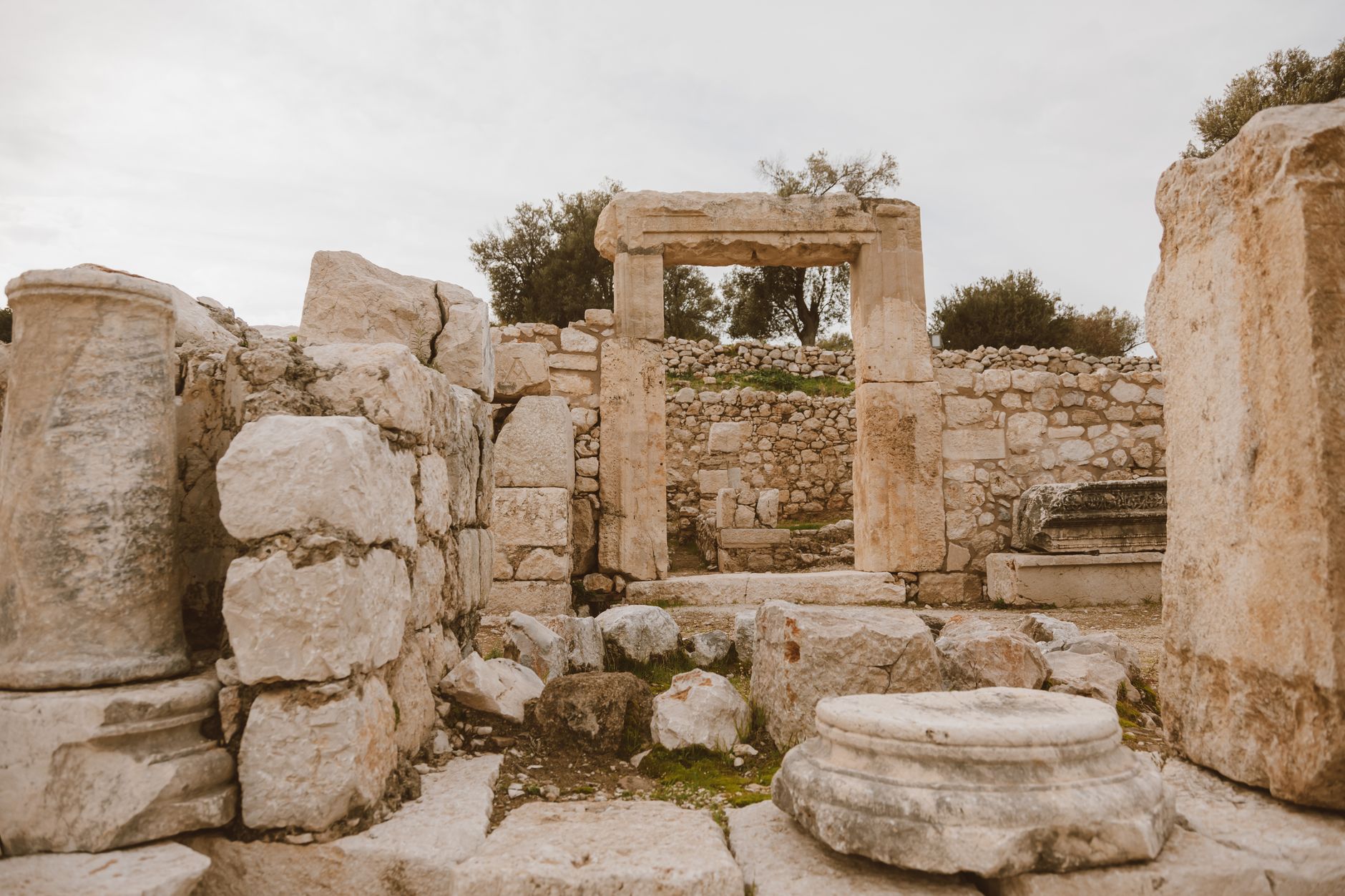
Great Zimbabwe served as the capital of a powerful kingdom in southern Africa from roughly 1000 to 1700 AD. The city’s legacy is visible in its stone architecture, but the more revealing artifacts sit outside the walls – clusters of iron-smelting furnaces, now collapsed into mounds of rubble at sites surrounding the city. At Mashava, a village 25 miles northwest of the ruins, fragments of those furnaces still survive. Some bear the fingermarks of workers who smoothed wet clay across the interior walls by hand, a detail that collapses the distance between then and now in an oddly immediate way.
The furnaces were large. Some reached nearly an adult’s arm span in width. Their walls were built thick and dense, engineered to hold internal temperatures exceeding 2,100 degrees Fahrenheit – the threshold required to smelt iron from raw ore. That is roughly the operating temperature of a modern glass-blowing furnace, sustained without digital controls, without refractory bricks sourced from an industrial supplier, and without any heat-monitoring equipment whatsoever.
What made these structures genuinely unusual, though, was not their scale or their heat tolerance. It was the airflow mechanism. Standard iron-smelting furnaces of comparable eras required workers to actively force air into the chamber using bellows – a continuous physical task that had to be maintained throughout the smelting process. The Great Zimbabwe furnaces were designed differently. Their geometry created a passive draft: air was drawn in naturally, then pulled out through a chimney by convection alone.
No bellows. No workers stationed at the mouth of the furnace pumping air in shifts. The structure itself did that work. The iron produced in these furnaces was then shaped into hoes, axes, and arrowheads – practical tools and weapons that supported the kingdom’s economy and military capacity. The engineering was not decorative. It was output-focused, designed to increase production by reducing the human effort required per unit of metal.

The Draft Mechanism as a Design Problem, Solved
It is worth pausing on what a self-drafting furnace actually required to function. Passive airflow in a combustion chamber depends on precise relationships between the inlet opening, the combustion chamber volume, the chimney height, and the temperature differential between inside and outside the structure. Get any of those ratios wrong and the draft collapses – the fire smothers, the temperature drops below the smelting threshold, and the ore does not yield usable metal. These are not forgiving tolerances.
The builders at Great Zimbabwe arrived at a working design without finite element analysis, without fluid dynamics simulation, and without iterative prototyping documented in any surviving record. What they had was empirical knowledge – accumulated observations about how clay structures behaved under heat, how airflow changed with chimney geometry, how wall thickness affected heat retention. That knowledge was encoded in the physical form of the furnaces themselves, passed forward through craft tradition rather than written specification.
In contemporary engineering terms, this is a solved problem. Industrial furnace designers use induced-draft and natural-draft configurations routinely, and the thermodynamic principles governing them are fully understood. The interesting thing about the Great Zimbabwe furnaces is not that passive drafting was eventually discovered – it is that it was discovered there, then, by a civilization that left its record in clay and rubble rather than patents and papers. The fingermarks pressed into the walls at Mashava are, in a narrow sense, the closest thing to a design signature those builders left behind.
The chimney-based convection system would have produced a meaningful productivity difference. Removing the bellows requirement meant removing a dedicated labor role from the smelting process – one that was physically demanding and had to be sustained continuously. That labor could be redirected. It also meant the furnace could operate more consistently, since human-powered bellows introduced variability in airflow that a fixed chimney geometry did not. Consistency in airflow means more consistent temperatures, which means more predictable metal quality.
The hoes, axes, and arrowheads coming out of these furnaces were not artisan curiosities. Iron agricultural tools change what a farming community can cultivate and how quickly. Iron weapons change military dynamics. The furnace design was not an isolated technical achievement – it was infrastructure, in the same functional sense that a supply chain or a manufacturing process is infrastructure. The kingdom at Great Zimbabwe used it to produce at scale.
What the rubble mounds at the smelting sites represent, then, is not a relic of lost knowledge. The underlying physics never went anywhere. What collapsed with the furnaces was the specific institutional context that produced them – the craft lineages, the production organization, the demand that made large-scale iron smelting at that location worthwhile. That context is what archaeologists are working to reconstruct, one fingermark at a time.

The Gap Between the Object and the Record
There is an uncomfortable asymmetry in how engineering history gets written. Industrial processes documented in European and East Asian contexts from the same period survive in manuscripts, guild records, and illustrated technical treatises. The Great Zimbabwe furnaces survive as rubble. The knowledge they embodied was oral and embodied – held in the hands of the people who built them – and it did not survive in a form that archives could absorb. What remains is the fired clay, the dimensions, the chimney placement.
Scientists tracing the Bantu expansion – the broad demographic and cultural movement that reshaped sub-Saharan Africa’s languages, genetics, and material culture over millennia – are still working out how iron technology traveled, evolved, and adapted across that migration’s range. The furnaces near Great Zimbabwe represent one data point in that reconstruction. The fingermarks at Mashava are another. Whether the specific passive-draft design was an independent invention or traveled along migration routes with the people who built it remains an open question, one that the rubble alone cannot answer.