





A Rocket Company Rewrites Its Cost Sheet
Blue Origin stood up at the UP.Summit conference at Kennedy Space Center’s Shuttle Landing Facility in Florida on Thursday and said something that most aerospace companies whisper rather than announce: it is building a higher-performing rocket engine at one quarter of the current manufacturing cost. The upgrades apply to New Glenn, the company’s orbital-class rocket, and they touch two of the most financially loaded variables in the launch business – what it costs to build the vehicle and how much mass it can actually deliver somewhere useful.
Blue Origin CEO Dave Limp framed the ambition plainly at the event. “There has never been higher demand for launch, ever,” he said – a line that doubles as both a market observation and a justification for the scale the company is now openly targeting.
What “1/4 the Cost” Actually Means in Practice
The two announced upgrades run in parallel. The first is a new engine design that Blue Origin says will deliver higher performance than what currently powers New Glenn, while cutting manufacturing costs by 75 percent. The second upgrade expands New Glenn’s payload capacity to geostationary orbit and to the Moon – two destinations that sit at the premium end of the commercial and government launch market, where contracts tend to be larger and clients less price-sensitive about the per-kilogram figure.
Geostationary orbit sits roughly 35,786 kilometers above Earth and is where communications satellites and weather platforms park themselves for long-duration missions. Getting mass there requires more energy than low Earth orbit, which means payload capacity numbers drop sharply compared to what a rocket can lift to a lower altitude. Any meaningful expansion of New Glenn’s performance to that orbit changes what the rocket can compete for.
The Moon destination reference matters separately. NASA’s Artemis program and commercial lunar payload delivery contracts have created a small but growing category of launches where the destination is lunar orbit or the surface itself. Blue Origin already has ties to that ecosystem through its Blue Moon lunar lander program, so expanded New Glenn performance feeding into that pipeline is a logical pairing rather than an incidental one.

The 1,000-Launches-Per-Year Target
The figure Limp put forward – more than 1,000 New Glenn launches annually – is not a near-term operational target. It is a directional statement about where Blue Origin believes the launch market is heading and what production scale would be required to participate seriously in it. For context, the entire global launch industry across all providers managed roughly 250 to 260 orbital launches in 2023. Getting to four times that number from a single rocket family would require a manufacturing and pad infrastructure that does not currently exist anywhere.
That said, the cost reduction announcement is the more concrete piece of news. Engine manufacturing costs are a real and recurring expense in rocket programs – unlike development costs, which are paid once, production costs scale with every vehicle that rolls out of a factory. Cutting that number by 75 percent per engine changes the unit economics of each launch in a way that compounds over time, particularly if launch cadence increases.
New Glenn’s Position in a Crowded Field
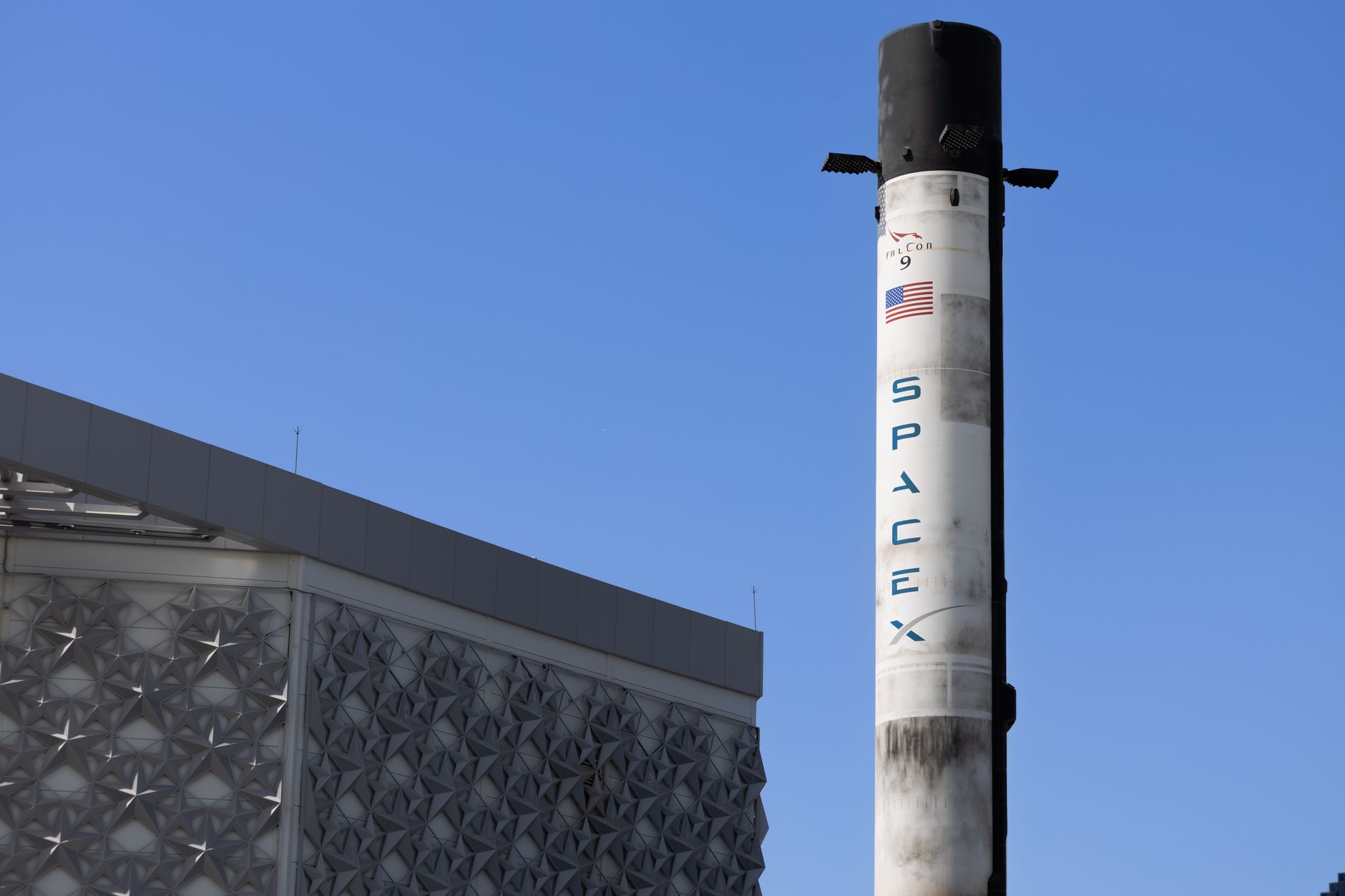
New Glenn flew its first orbital mission in January 2025, making Blue Origin a relatively recent entrant to the operational heavy-lift market that SpaceX’s Falcon 9 has dominated for years. SpaceX completed 134 Falcon 9 launches in 2024 alone, a cadence that reflects years of reusability refinement and production investment. Blue Origin is trying to close that gap not by matching SpaceX’s current tempo but by redesigning the cost base of its hardware so that scaling becomes economically viable rather than financially punishing.
The geostationary and lunar payload upgrades also point to a specific competitive strategy. Rather than chasing low Earth orbit rideshare volume – where Falcon 9 and Rocket Lab’s Electron have established positions – Blue Origin appears to be angling New Glenn toward higher-value individual missions where payload mass to difficult destinations commands premium pricing. It is a narrower slice of the market, but potentially a more defensible one for a company still building launch frequency.
What Blue Origin has not detailed publicly is the timeline for these upgrades entering service, the specific payload numbers the expanded-capacity New Glenn will be able to carry to geostationary transfer orbit, or how the new engine integrates with the existing BE-4 engines that power the first stage. The BE-4, which also powers United Launch Alliance’s Vulcan Centaur, is a liquefied natural gas engine that Blue Origin spent years developing before New Glenn’s first flight.

The announcement was made at the UP.Summit conference held at the Shuttle Landing Facility – the same 15,000-foot runway at Kennedy Space Center where NASA’s Space Shuttle orbiter once landed after returning from orbit. Blue Origin chose that venue to deliver a message about where it sees launch demand heading. Whether the manufacturing cost cuts arrive fast enough to matter against a competitor that has already internalized reusability across dozens of missions per month is the question that remains open.