




Old Bones, New Methods
A collection of skulls pulled from Egyptian tombs during 1920s excavations has spent roughly a century sitting in relative scientific silence. Now, a study published in the journal Frontiers in Environmental Archaeology has put those remains through modern forensic analysis – and the findings reopen one of the oldest arguments in Egyptology: did First Dynasty pharaohs go to their graves accompanied by servants and officials killed specifically to serve them in death?
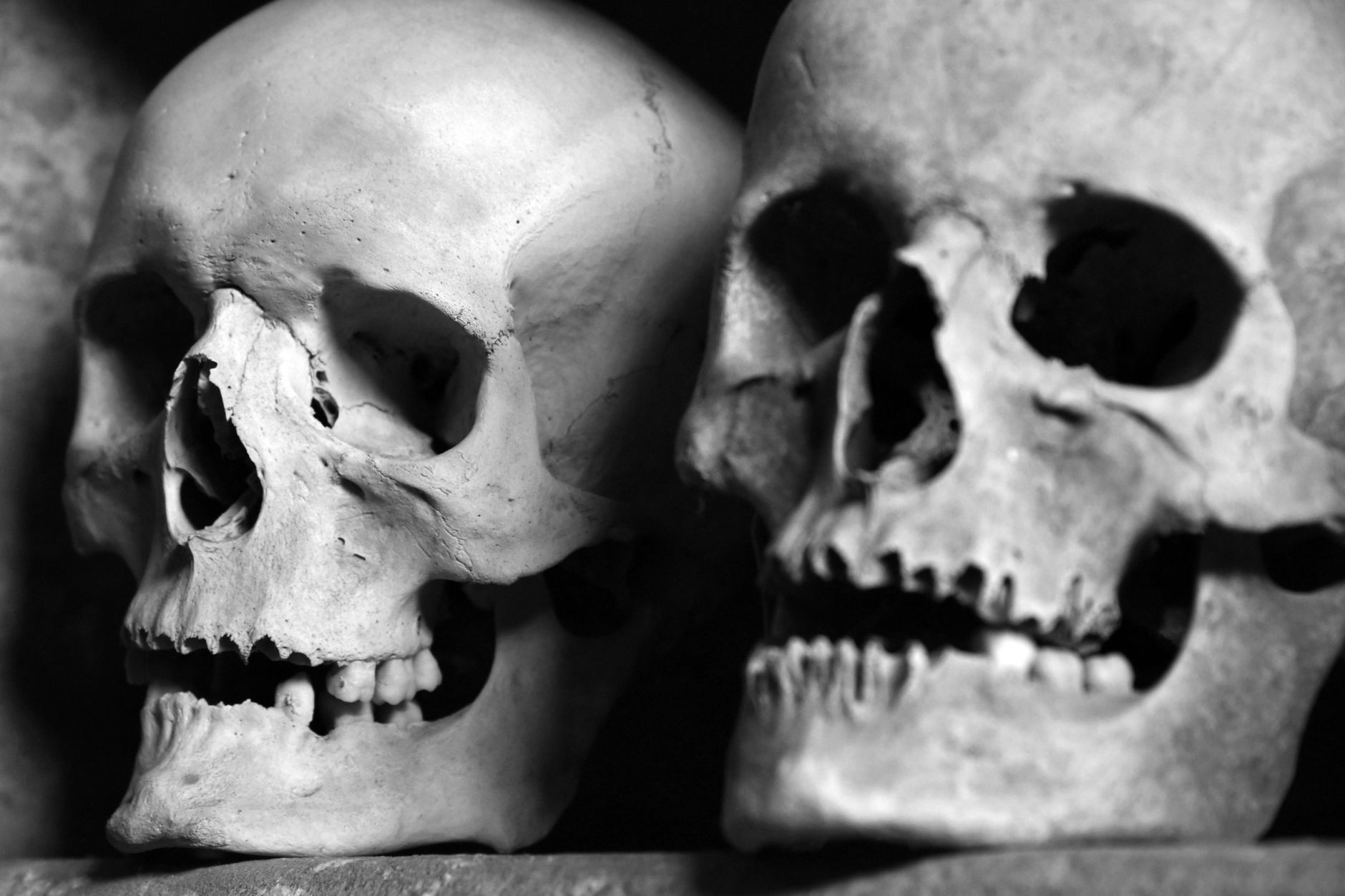
The answer, at least statistically, leans toward yes. Bioarchaeologist Roselyn Campbell of Purdue University reanalyzed the skull collection and found that over one-third showed evidence of blunt force trauma – physical markers consistent with what researchers call “retainer sacrifice,” the deliberate killing of attendants to accompany a ruler into the afterlife.
Why This Debate Has Dragged On So Long
The question of whether Egypt’s earliest rulers practiced retainer sacrifice is not new. Egyptologists have argued over it for generations, largely because the physical evidence to settle the matter has been maddeningly scarce. Many of the oldest Egyptian tombs – dating to the First Dynasty – were plundered before any systematic study could occur. Others were excavated hastily, meaning the archaeological record was incomplete before it was even properly documented.
What makes Campbell’s work different is the tool she’s applying: forensic science as it exists today, not as it existed when these skulls were first catalogued. The discipline has advanced considerably over the past hundred years, allowing researchers to identify trauma patterns, wound timing, and cause of death with far greater precision than early twentieth-century methods allowed. The bones themselves haven’t changed. The ability to read them has.
Campbell is direct about why this reanalysis matters beyond the specific historical question. “I’m interested in how we as human beings decide which types of violence are okay and which are not, and how we even define violence,” she told Ars Technica. That framing positions the research less as a verdict on ancient Egyptians and more as an exercise in understanding how cultures construct meaning around death and power. She added that researchers have to be careful not to project modern assumptions onto historical practice – especially given that so much early Egyptian archaeology came loaded with European and colonial preconceptions about what that civilization was and wasn’t capable of.
The colonial archaeology problem is not a minor footnote here. The scholars who first excavated these sites and catalogued these remains arrived with frameworks that shaped what they looked for, what they recorded, and what conclusions they drew. Campbell’s point is that the legacy data – the physical collections and written records that survive – carries that interpretive baggage. Working with older remains means working through layers of prior assumption before you can get anywhere near an objective reading of the physical evidence.
Then there is the purely practical problem of the bones themselves. Older skeletal collections are frequently incomplete. Remains are sometimes modified during preservation processes – procedures that, while necessary for long-term storage, can destroy exactly the forensic markers researchers now need most. A cut here, a chemical treatment there, and the information that modern technology could have extracted is simply gone. Campbell’s study had to navigate all of this while still producing findings strong enough to meaningfully contribute to the debate.
She describes the existing scholarly split with characteristic bluntness: “People tend to fall into one of two camps. Either retainer sacrifice definitely happened, end of discussion, or it definitely didn’t happen, end of discussion. But nobody’s actually looked at the bones in a very long time.” That stalemate – entrenched positions held without fresh physical evidence – is precisely the kind of problem that updated forensic methodology is positioned to break.
What “Blunt Force Trauma” Actually Tells Us
Finding blunt force trauma on more than a third of the skulls is significant, but it isn’t a closed case. Trauma markers can result from multiple causes – violence at the time of death, post-mortem handling, structural damage from burial conditions, or damage during excavation itself. Part of what forensic bioarchaeology does is distinguish between these possibilities by examining the nature of fractures, their location, and whether they occurred before or after death. Campbell’s paper concludes the pattern is consistent with retainer sacrifice, though the broader scholarly community will now have the task of interrogating that interpretation.
What the study does accomplish, regardless of whether every detail holds up to scrutiny, is forcing the debate back onto empirical ground. For decades the argument has largely been conducted through interpretation of written records, iconography, and tomb layouts. The bones were there the whole time.
The Technology Gap That Defined the Delay
There is something worth sitting with in the timeline here. These skulls were excavated in the 1920s. The forensic tools capable of properly analyzing them did not exist at that point – or existed only in rudimentary form. The gap between when the evidence was collected and when the science caught up to it spans roughly a century. During that entire period, the debate continued without the one thing most likely to resolve it: a close, technically sophisticated look at the physical remains.
Campbell’s paper, published in Frontiers in Environmental Archaeology, does not claim to end the discussion. It claims, more modestly and perhaps more usefully, that the discussion should be grounded in what the bones actually show rather than in theoretical positions held at a distance from the physical evidence. That is a methodological argument as much as a historical one – and it has implications for how researchers approach other ancient collections sitting in storage, waiting for the right tools to catch up with them.
The skulls have been in collections for over a hundred years. More than a third of them show damage consistent with a killing blow. Whether that constitutes proof, strong evidence, or merely a suggestive pattern is now the question Campbell’s colleagues will spend the next several years arguing about – with the bones finally back at the center of the room.