




Four Biopics, One Detour
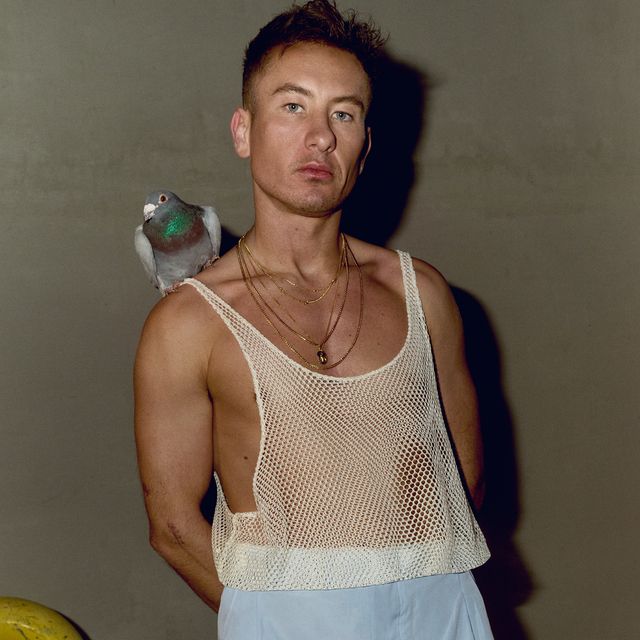
Barry Keoghan is, by any reasonable measure, in the middle of one of the most logistically demanding stretches of his career – currently shooting across four separate star-studded Beatles biopics simultaneously. That is the project the industry keeps talking about, the one with the weight of cultural mythology behind it. And yet Keoghan found time, and the motivation, to redirect his attention toward something considerably quieter and considerably closer to home.
Lemonade is that detour.
The film is a drama set in and around the Irish foster-care system – a subject that Keoghan has described as “very, very personal,” language that carries particular weight when you know that the actor himself spent time in the Irish care system as a child. This is not a project he picked from a development slate because the script was strong and the timing worked. The draw was something older and harder to explain away.
Why This Film, Why Now
There is a specific kind of actor who gravitates toward material that mirrors their own biography – not out of vanity, but because the alternative, playing it at arm’s length, produces something hollow that an audience can feel even when they cannot name it. Keoghan belongs to that category. His work in The Banshees of Inisherin, in Saltburn, in Eternals – across all of it, there is a quality of genuine exposure, a sense that he is not constructing a character so much as allowing one to form around something real he brought into the room. Lemonade demands exactly that quality, and he seems aware that few other projects in his current slate would.
The Irish foster-care system as subject matter does not arrive with glamour attached. It is not the kind of setting that generates awards-season anticipation on its own terms, not without a star willing to make the material matter. What Keoghan brings to Lemonade is the credibility of lived proximity – a relationship to that world that no amount of research or preparation can manufacture. That is presumably what drew the production to him, and what drew him back.
He is doing this while actively filming four Beatles biopics, which is its own strange fact to sit with. The Beatles project is vast, coordinated, and built around cultural iconography. Lemonade is the opposite of all of that – smaller in scale, Irish in geography and feeling, and grounded in a social institution that most people outside Ireland encounter only as a footnote in someone else’s origin story.
The Weight of the Personal in Performance
When an actor calls something “very, very personal,” the phrase can function as promotional shorthand – a signal that this is the film they want you to take seriously, the one that is supposed to recalibrate how you understand their range. That reading is always possible, always worth holding onto. But in Keoghan’s case, the biographical overlap with Lemonade‘s subject is documented and not recent. He has spoken about his childhood, about the care system, in interviews predating this film’s existence. The personal claim here is not manufactured for a press cycle.
What the film appears to be doing – setting its drama in and around the Irish foster-care system, using that world as both setting and subject – is treating an institution that shapes thousands of childhoods as something worthy of the same narrative attention usually reserved for family trauma in more conventionally cinematic forms. Whether Lemonade lands that ambition is a question only the finished film can answer. What Keoghan’s involvement does, before a single frame is seen, is signal that the people behind it are not treating the subject as backdrop.
His current position in the industry is worth naming plainly. After Saltburn and The Banshees of Inisherin in close succession, Keoghan is not a character actor accepting whatever comes with good rates. He is being cast in the Beatles biopics – plural, four of them – which means he is operating at the level where projects come to him with considerable force behind them. That he said yes to Lemonade alongside that, rather than instead of it, says something about how he is choosing to use that position.
The grooming and style conversation around Keoghan tends to track the same arc as the career conversation – an actor who does not dress or present like someone trying to occupy a particular lane, whose red carpet choices register as personal rather than managed. That quality, whatever it is, runs through the professional choices too. Lemonade is not the obvious next move. It is the specific one.

What Comes After Four Beatles
The Beatles biopics will dominate his schedule, his press, and probably a significant portion of his public identity for the next several years. Four films built around one of the most documented bands in history, each presumably approaching the same myth from a different angle or through a different member’s perspective – that is the kind of project that can flatten an actor into a single cultural association if they are not careful. Lemonade, arriving in the middle of that, functions as something like a reminder of what Keoghan was doing before the machinery of legacy IP came for him, and what he is apparently unwilling to leave behind entirely.
The Irish foster-care system does not make for easy drama. The details of that world – the institutional rhythms, the uncertainty, the specific texture of growing up in a structure designed to be temporary – resist the kind of narrative compression that makes films satisfying to watch and easy to market. That resistance is probably part of what makes the project interesting to Keoghan. And it is probably part of what will make Lemonade difficult to watch in exactly the right way, if it gets there.
Somewhere between the four Beatles productions and this one smaller Irish drama, Keoghan is quietly making the argument that scale is not the same thing as significance – and that the most personal work does not wait for a convenient gap in the schedule.
The question sitting underneath all of this is a practical one: what does the Irish foster-care system look like when it is the center of the frame rather than the backstory, and does Keoghan’s proximity to that world produce something the film could not have found any other way?