



A Week of Heavy Reading, Organized for You
On September 14, 1956, the First International Congress of Black Writers and Artists opened at the Sorbonne in Paris. Organized by the publishing house Présence africaine, the gathering brought together Richard Wright, Léopold Senghor, Aimé Césaire, and Frantz Fanon – four writers whose collective range stretched from American existentialism to Caribbean surrealism to Algerian psychiatry to Senegalese poetry. The Congress was not a literary salon. It was a political confrontation with colonial culture, held inside one of Europe’s most prestigious academic institutions. Seventy years later, the ideas debated in those halls still organize the questions literary culture keeps circling back to.
This week’s reading spread is wide: opera pilgrims at Bayreuth, Simone Weil on boredom, Jackie Collins, Mark Twain, Anthony Bourdain’s crime novels, and a psychoanalytic history of the sea. There is also Maris Kreizman’s case that nonfiction is not in crisis – she has 14 forthcoming titles to make the argument. Below, the week’s most substantial pieces, gathered and considered.
The Fall Nonfiction Case and the Lists Behind It
Kreizman’s 14-title nonfiction preview for the remainder of 2026 arrives as a direct rebuttal to a complaint that surfaces every few years – that the essay form is exhausted, that the memoir has eaten itself, that narrative nonfiction no longer knows what it wants to say. Her list does not make that argument rhetorically. It makes it by pointing at specific books and authors arriving in the next quarter, letting the calendar do the persuading.
Separately, Lit Hub condensed the fall reading list ecosystem – the dozens of individual “best of fall” roundups published each September – into a single Ultimate Fall Reading List. The logic is practical: most readers encounter five or six of these lists, notice the same dozen books appearing repeatedly, and then feel no closer to knowing what to actually read. A consolidated version at least surfaces the consensus titles and the outliers in one pass. Mysteries, thrillers, and crime novels get their own dedicated list, alongside a full breakdown of literary film and television arriving on streaming platforms this season.
Bo Wang’s craft essay approaches the reading-list moment from a different angle entirely. Wang writes about raising a multilingual child and how that experience reshaped her fiction – specifically, how she came to incorporate English and Mandarin into her work not as a stylistic choice but as a consequence of living inside two languages simultaneously. The essay is less about technique than about what it costs to keep two linguistic systems running in the same household and the same sentence.
Wagner at 150, and What Happens When Opera Changes You
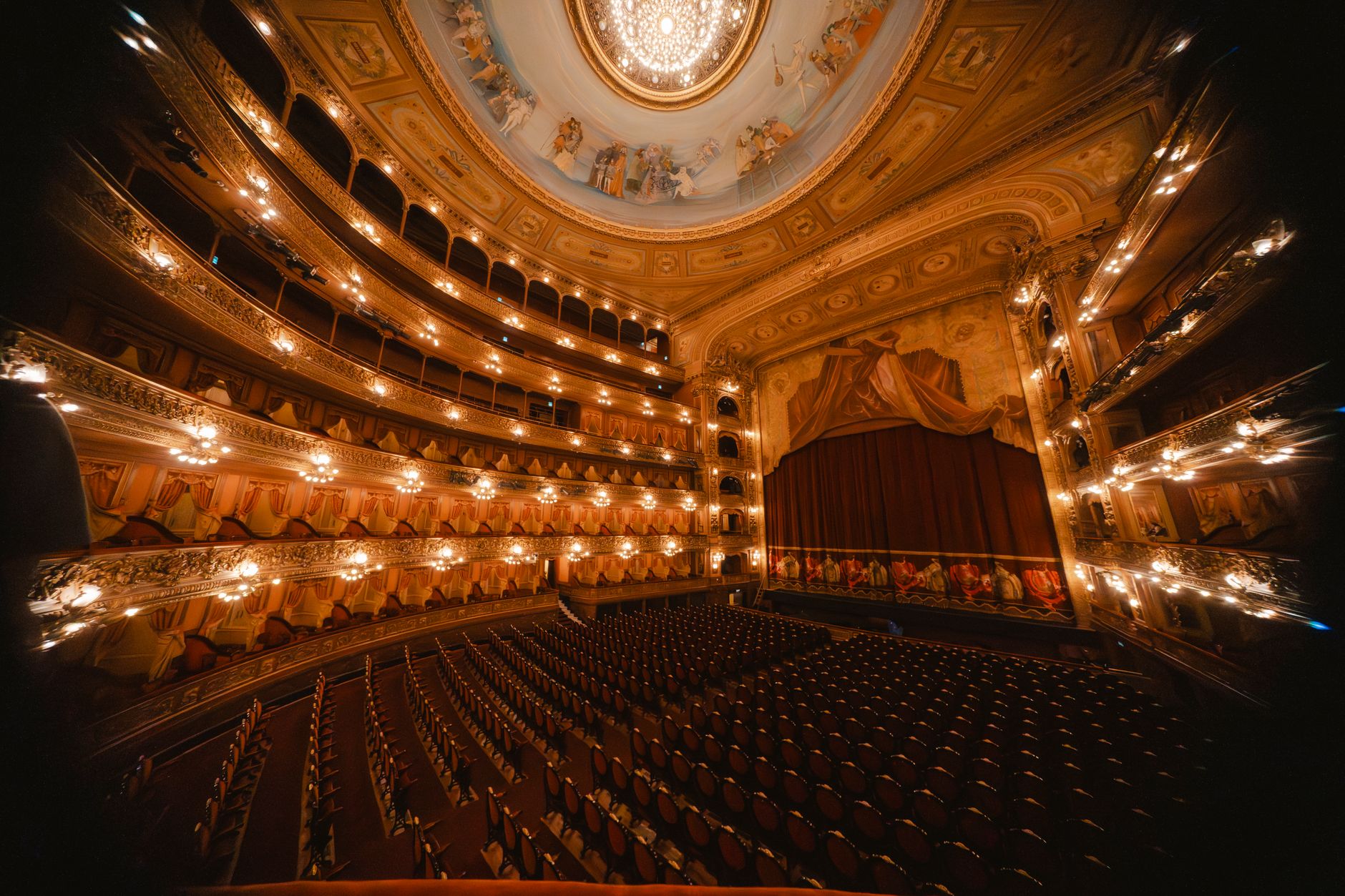
Krithika Varagur traveled to Bayreuth for The Paris Review – the festival Richard Wagner established for his own work, now more than 150 years old. Varagur’s account is honest about her starting position: she arrived uncertain whether she even liked Wagner. She left changed. “Something had certainly happened to me,” she writes, without quite being able to name what. The piece is a useful reminder that opera criticism written from outside total devotion tends to be more interesting than writing that assumes the reader already believes.
Kevin Dettmar’s essay on “Love Will Tear Us Apart” for Lit Hub Music goes deep on the tragic history behind Joy Division’s most recognized track – Ian Curtis’s epilepsy, his deteriorating marriage, his death by suicide in May 1980, two days before Joy Division was scheduled to depart for their first American tour. The song arrived posthumously as a single in June 1980. Dettmar’s framing treats the track not as post-punk mythology but as a document with a specific and painful biography.
Mark Twain, Jackie Collins, and the Weight of Popular Taste
Ivan Kenneally’s essay on Mark Twain’s patriotism, published in The Hedgehog Review, works from a single quote: “We can’t help but love our own country, because in refusing it affection, in hating it, we can’t help but hate ourselves.” Kenneally uses Twain’s complicated relationship with American identity – satirist, nationalist, moralist, entertainer – to think through what it means to hold a country accountable without severing from it. Twain is a productive figure for this because his critique of American violence and imperialism was always inside his love for the country, not opposed to it.
Sophie Gilbert’s Atlantic essay on Jackie Collins asks what the world Collins built in her fiction actually looked like and what it was for. Collins published 32 novels between 1968 and 2015, selling more than 500 million copies. Gilbert is not recovering a lost serious writer – she is interested in what the Collins universe offered readers that literary fiction decided it didn’t need to provide. Beth Blum’s piece for the Chronicle of Higher Education runs a parallel track, revisiting Erich Segal, who was simultaneously a Yale classicist and the author of Love Story – a combination his academic colleagues found difficult to process. Blum describes his story as “a historical window onto the ongoing tension between academic and popular taste,” a tension that has not resolved since Segal published the novel in 1970.
Meghan O’Gieblyn’s essay for the New York Review of Books connects Simone Weil and Arthur Schopenhauer on the question of the individual under total automation. Weil’s argument – that if humans ever reached a point of complete automation, they would destroy themselves out of boredom and restlessness – reads differently in 2026 than it did when she wrote it. O’Gieblyn uses both philosophers to think about what work does to and for human beings, not economically but psychologically and spiritually. Weil’s position is not that labor is ennobling in a romantic sense but that the absence of resistance destroys something necessary in people.
Elsewhere in this week’s reading: H.M.A. Leow traces how pop music in Cambodia survived the Khmer Rouge, an act of cultural preservation that required hiding recordings, rebuilding destroyed instruments, and reconstructing an entire industry from memory. Emma Claire Foley remembers the late writer and historian Carol Ginzburg in The Baffler. A group of academics has constructed an archive to document and remember Palestinian scholars murdered in the Gaza genocide, published through Public Books. Naomi Klein and Astra Taylor examine Trump’s fixation on AI in Cultured. And a psychoanalytic history of the sea – framed around the observation that “we navigate the world by means of a tiny ocean enclosed within our heads” – arrives via Pioneer Works.
Also from Lit Hub this week: Rabih Alameddine on writing humor inside tragedy, Emily St. John Mandel in conversation with Jane Ciabattari, an examination of who actually benefits from MFA workshop structures, Lydia Mathis recommending books about the body, an analysis of white supremacist literature’s circulation inside prisons, and a piece on what UFO fanaticism reveals about American conspiracy culture. Francesca Giangiulio considers Anthony Bourdain’s recently reissued crime novels – books that existed before Kitchen Confidential made him famous and that most readers have never encountered. Natalia Kucirkova’s essay for Aeon makes the precise and uncomfortable observation that “a child can look intensely engaged while being given very little time to think” – a sentence that applies to children’s media and to quite a bit of adult media as well. The Wired piece arguing that using chatbots to generate fiction about your personal fantasies instead of writing it yourself constitutes “loser behavior, actually” is, at minimum, the week’s most direct headline.