




A Sentence About a Box of Zines That Changes Everything
Bookseller Ana Bell’s brother, Daniel Sanchez Estrada, received a 30-year federal prison sentence for moving a box of zines. Not weapons. Not contraband in any conventional sense – zines, stickers, poetry. Bell, speaking to The New Republic, put the situation plainly: “If you were going to tell me that the contents of the box, the zines, the stickers, the poetry, that’s the crime – then we have a bigger problem here, which is free speech.” It is the kind of sentence that lands differently depending on what you believe literature is for.
The case sits at an uncomfortable intersection of law, publishing, and the question of what reading material is allowed to circulate freely in America.
That question – who controls what gets read, who gets punished for distributing it, and what counts as dangerous text – runs beneath nearly every story worth paying attention to in literary culture right now. From medieval traveling booksellers to AI companies harvesting old books for training data, the fight over who owns words and who gets to move them around has never really stopped.
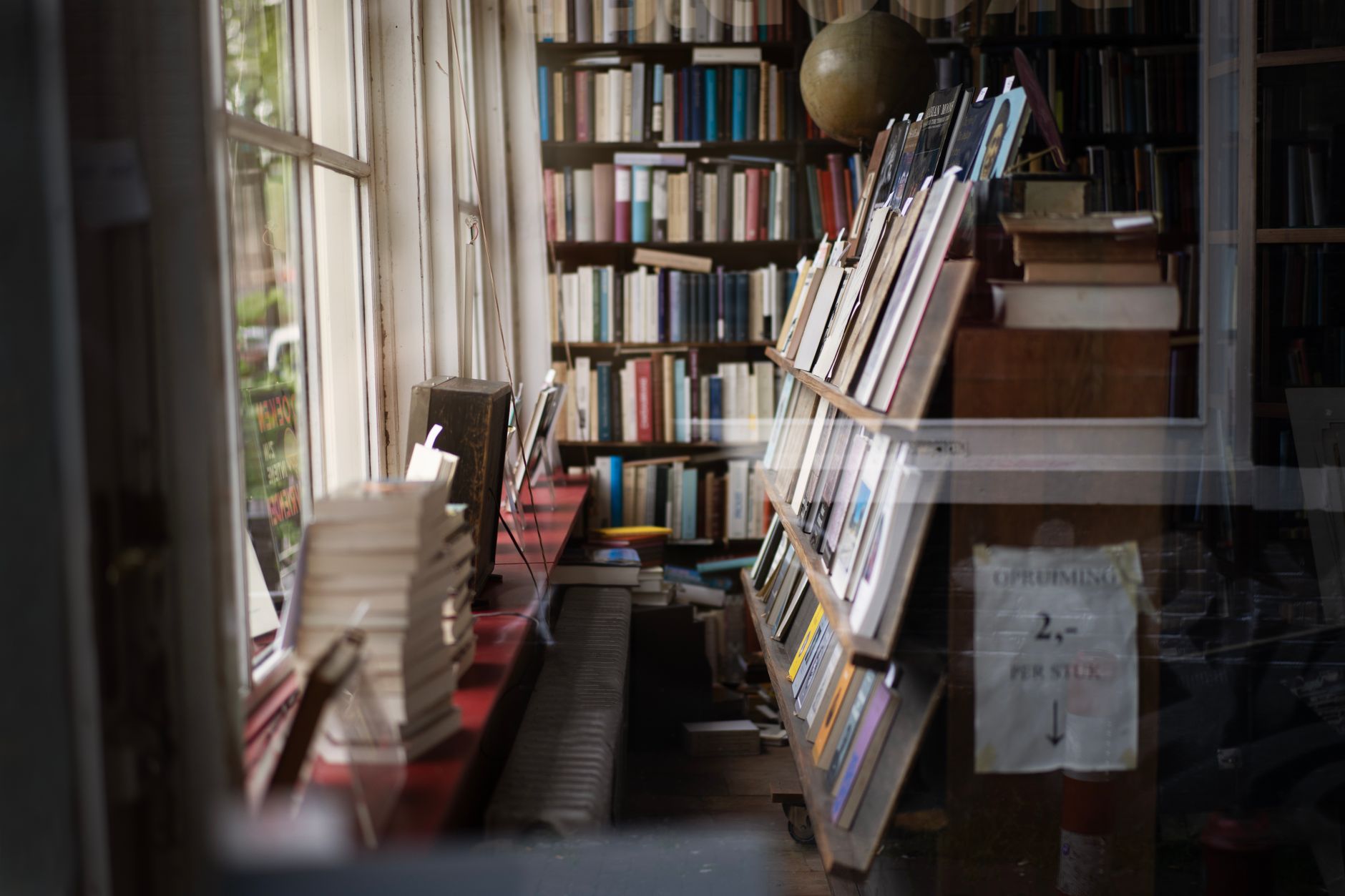
The Data Problem Nobody in Publishing Wants to Talk About
AI companies are purchasing old books to train large language models, according to reporting from 404 Media. The reason is direct: contemporary digital sources have become so saturated with AI-generated content that the data is effectively polluted. Old books – printed before the current wave of machine-generated text – represent a relatively clean corpus. The literary archive, built over centuries by writers who had no idea their work would one day be fed into a prediction engine, has become a resource.
The appetite for pre-AI text explains something about why the integrity of human writing has taken on new economic weight, not just cultural weight. A novel written in 1974 is now more valuable to a technology company than a blog post written last month, because the novel is statistically less likely to contain machine-generated sentences. Literary authenticity, long treated as an aesthetic concern, is becoming a data-quality concern.
Meanwhile, Wired reports that while the United States is navigating a broad literacy crisis, educators in Jefferson County, Mississippi are producing measurably different outcomes. The specifics of what they’re doing right deserve more attention than the national conversation typically gives to rural school districts – places that rarely appear in coverage of education innovation unless the story is about failure.

What the Writers Were Actually Doing
April Dávila, writing at Lit Hub, turns to neuroscience to examine writer’s block – not as a creative failing or a personality defect, but as a biological state with identifiable causes and, importantly, things that can actually be done about it. The framing shifts the conversation away from the romantic mythology of the struggling artist and toward something more practical.
A Lit Hub History piece traces the collaborative traveling booksellers of medieval Italy’s countryside, introduced by Antonio Romani – itinerant figures who moved books between communities before fixed bookshops became standard. The parallel to Ana Bell’s situation, a person whose identity is bound up in moving books between people, is not forced. It simply exists.
Separately, Lit Hub’s history coverage examines how Langston Hughes, Zora Neale Hurston, and other writers of the Harlem Renaissance engaged with disability and medical racism in their work – a body of literature that anticipated debates still active in American healthcare and civil rights discourse. David Schurman Wallace considers Fanny Howe’s posthumous This Poor Book, approaching the question of what a writer does with a remaining creative impulse near the end of life, when it feels like the available material has been exhausted. Poetry gets space too: Maya C. Popa’s “The Romantics,” from her collection If You Love That Lady, corrects the historical record on who actually discovered the Pacific – not Cortez, as Keats famously assumed, but Balboa, standing on a peak in Darien. A poem doing the work of fact-checking a more famous poem, 200 years later.
Christian Kracht’s novel Air, translated by Daniel Bowles, offers this in excerpt: “This life, this sorrow. Both were imagined. It was a time when many things were quickly bought and just as soon forgotten.” The sentence could describe the 1990s. It could describe right now.
Homer, the Internet, and the Anniversary Nobody Planned
Today marks the birthday of Hella Wuolijoki, born July 22, 1886 – Finnish playwright and political figure whose work has spent decades underread outside Scandinavia. Lit Hub also takes up the craft question of writing alt text image descriptions, arguing the practice functions as a form of literary translation: a discipline of precision and interpretation that forces the writer to decide what an image actually means, not just what it contains.
And then there is The Odyssey. Jacobin reports that Homer’s epic won its fight against what the piece calls “the chudosphere” – a term for the online cluster of reactionary voices that attempted, by various means, to discredit or dismiss the poem’s continued cultural relevance. The Odyssey is approximately 2,700 years old. It outlasted this particular campaign, as it has outlasted others. Literary culture’s ongoing arguments about which old texts deserve protection have a way of resolving slowly and unevenly.
Ana Bell’s brother is serving 30 years. The zines are still a crime.