





Federal Dollars, State Rules
California is walking a narrow line: accept $1.42 billion in federal broadband funding while refusing to follow the condition that comes with it. The Trump administration wants the state to stop enforcing its net neutrality law and other telecom regulations as a price for participation in the $42 billion Broadband Equity, Access, and Deployment program, known as BEAD. California’s response has been to take the money and simultaneously reserve the legal right to fight the attached demand.
The state has called the condition “preposterous” – and that description does a lot of work. California is not simply pushing back on a technicality. It is contesting whether the federal government can use infrastructure grant funding as leverage to erase state-level consumer protections that exist entirely outside the grant program’s original scope.

What BEAD Actually Requires
The National Telecommunications and Information Administration, which administers the BEAD program, ruled last year that any state receiving funds must agree to not enforce rate regulation or net neutrality rules against ISPs that accept money from the program. That condition was not written into the original BEAD legislation. The NTIA added it through administrative interpretation, which is exactly the kind of regulatory maneuver that tends to end up in federal court.
California’s allocation is specifically designated to bring broadband to 270,571 locations currently without adequate service. Those are real addresses – homes, small businesses, rural properties – that have been waiting years for connectivity that meets the federal definition of broadband. The grant was always going to be complicated to distribute across a state of California’s size and regulatory complexity, but now that complexity has a new dimension: the state may delay or cancel broadband deployment plans entirely depending on how the legal standoff develops.

California could ultimately receive up to $1.86 billion from BEAD when non-deployment projects are factored in alongside the core infrastructure spending. That larger number covers planning, digital equity initiatives, and administrative costs – the scaffolding around the actual fiber and equipment. All of it is now in question, not because California rejected the funding, but because it accepted it while explicitly not agreeing to the conditions the NTIA attached.
That maneuver sets up a legal situation with at least three parties in potential conflict. California and the federal government are the obvious opponents. But ISPs that want to draw on BEAD funds are caught between a state that intends to enforce its telecom laws and a federal agency that says those laws cannot apply to grant recipients. An ISP that takes BEAD money and then gets hit with a California enforcement action over net neutrality violations would almost certainly sue – probably both sides.
Net Neutrality’s Complicated Geography
California passed its own net neutrality law in 2018, after the Federal Communications Commission repealed the Obama-era federal version. The law prohibits ISPs from blocking or throttling internet traffic and from creating paid fast lanes. It is one of the strongest state-level broadband consumer protection statutes in the country, and California has been defending it in court on and off since it was first challenged by the Justice Department under the first Trump administration.
The NTIA’s condition doesn’t technically ban net neutrality laws – it just bars states from enforcing them against ISPs that take BEAD money. In a state like California, where the largest ISPs are the most likely BEAD participants, that distinction would functionally hollow out the law. California isn’t willing to accept that outcome quietly, and the state has made it clear it considers the condition legally vulnerable.
Broadband Infrastructure as a Policy Battleground
The BEAD program was designed to solve a hardware and geography problem: too many American households lack access to high-speed internet because building the infrastructure to reach them is expensive and the financial return isn’t there for private carriers. Congress appropriated $42 billion to close that gap, distributing money to states to run their own competitive grant processes for ISPs and municipal providers willing to build the last mile of network. California’s $1.42 billion was always going to be one of the larger and more watched state deployments.
What nobody quite anticipated – or at least nobody wrote into the law – was that the program would become a vehicle for reshaping state telecom regulation. The NTIA’s decision to add the net neutrality condition transformed a broadband infrastructure bill into something more politically charged: a mechanism for the federal government to override state consumer protection frameworks by controlling access to federal construction money.
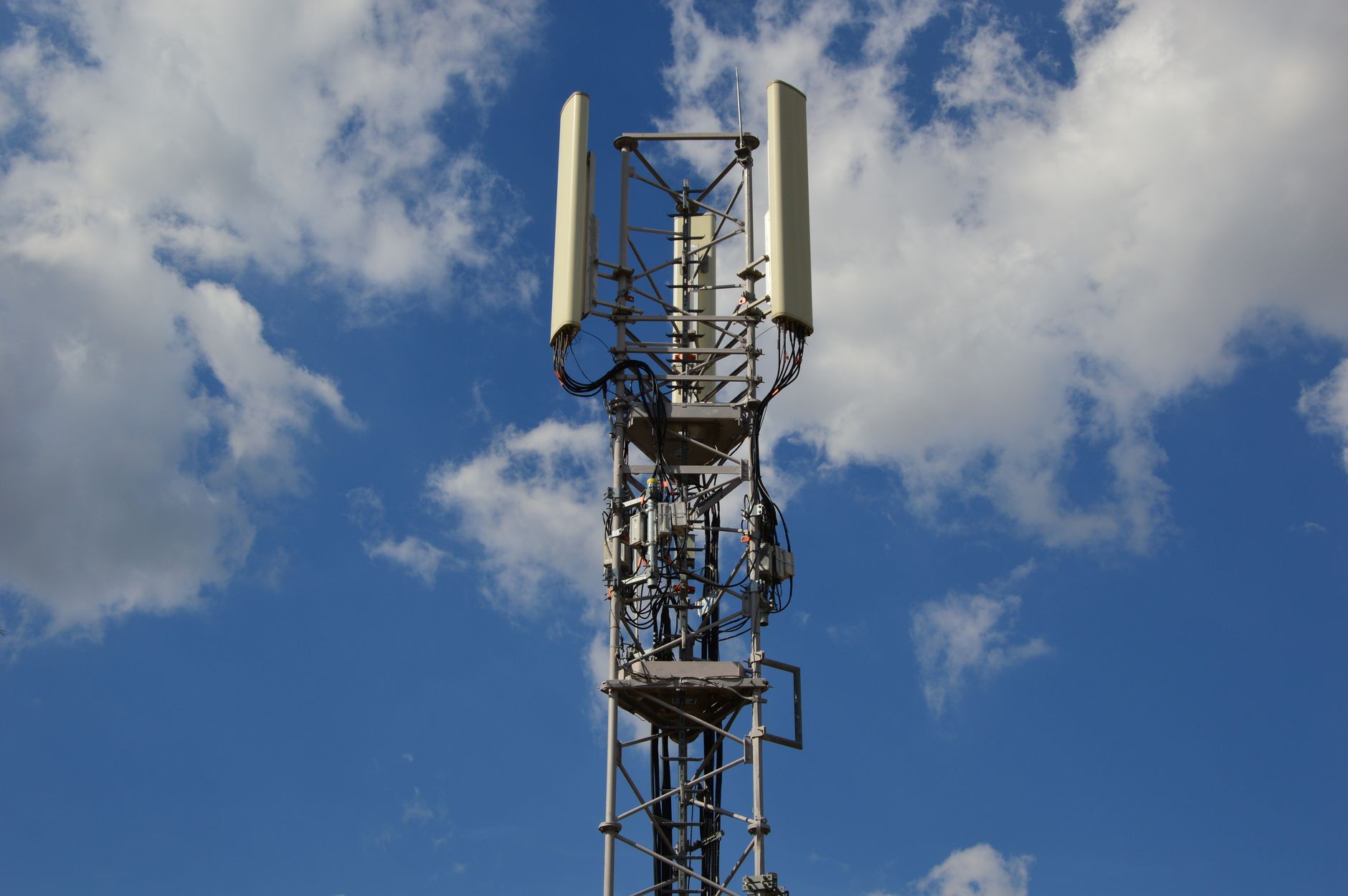
California’s resistance may encourage other states with net neutrality laws or rate regulation frameworks to take similar positions. Several states have passed or are considering broadband consumer protections that could run into the same BEAD condition. If California succeeds in legally separating its acceptance of the grant money from its obligation to comply with the NTIA’s regulatory condition, the precedent would significantly constrain the federal government’s ability to use funding conditions as a backdoor deregulatory tool.
The 270,571 locations waiting for broadband in California are still waiting. The fiber isn’t going to lay itself, and every month spent in legal standoff is a month those addresses stay off the network. California has the money, the deployment plan, and a list of locations ready to go. What it doesn’t have yet is a resolution to the question of whether accepting that money requires it to become a state that doesn’t enforce its own laws against the companies spending it.