





The Writer Who Wears What Others Won’t Touch
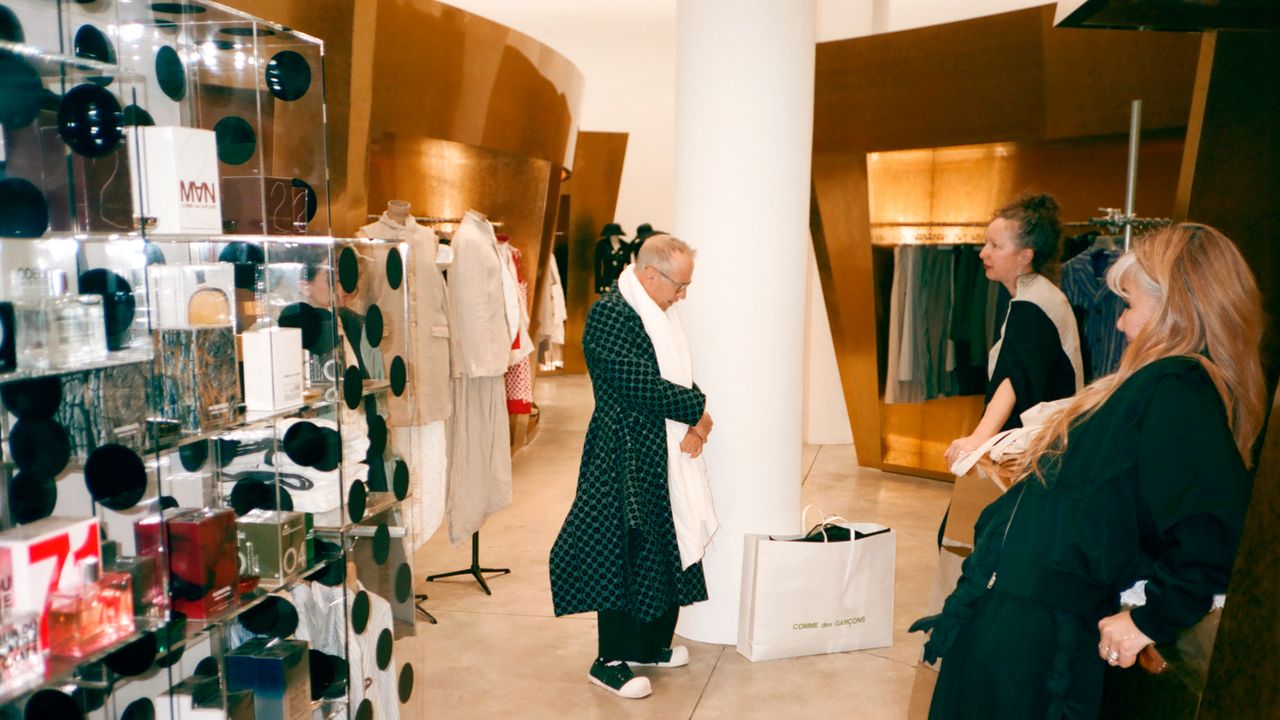
David Sedaris walked into Comme des Garçons’ Manhattan store and said something that most men who’ve stood in front of a Rei Kawakubo garment have probably thought but quickly dismissed. He felt at home there. Not in spite of how the clothes look, but because of it.
Sedaris, speaking to GQ during the visit, pushed back against a dismissal he’d heard about Kawakubo’s work – that the severity of her menswear signals some kind of contempt for the men expected to wear it. He didn’t buy it. “Somebody said to me that she obviously hates men because everything she designs for men is ridiculous,” he said. “But I don’t think it’s ridiculous. It feels like she’s making it for me.”
Why Comme des Garçons Divides the Room
Rei Kawakubo founded Comme des Garçons in Tokyo in 1969, and when she brought the label to Paris in 1981, the reaction from the fashion press ranged from bafflement to hostility. The clothes – asymmetrical, deconstructed, deliberately uncomfortable in their aesthetics – were described at the time as “Hiroshima chic.” The criticism said more about the critics than the work. What Kawakubo was doing wasn’t about destruction; it was about refusing the assumption that clothing exists to flatter the body that fills it.
Her menswear has always carried that same refusal more quietly. Where womenswear in the Comme des Garçons universe can be architecturally extreme, the men’s pieces often work through strangeness at the level of proportion, cut, and material rather than outright silhouette shock. Jackets sit wrong in ways that feel intentional. Trousers break where you don’t expect them to. The garments ask the wearer to participate in a visual argument rather than simply get dressed.
That’s where Sedaris’s comment lands with some precision. The accusation that Kawakubo “hates men” mistakes provocation for hostility. If anything, designing clothes that demand something from the person wearing them – attention, confidence, a tolerance for being looked at strangely – is a form of respect. It assumes the wearer can handle it.
The Particular Customer This Work Attracts
Sedaris has spoken and written for years about his relationship to clothes as objects of personal meaning rather than social signaling. He is not, by most conventional measures, the demographic menswear brands target when they want to move volume.
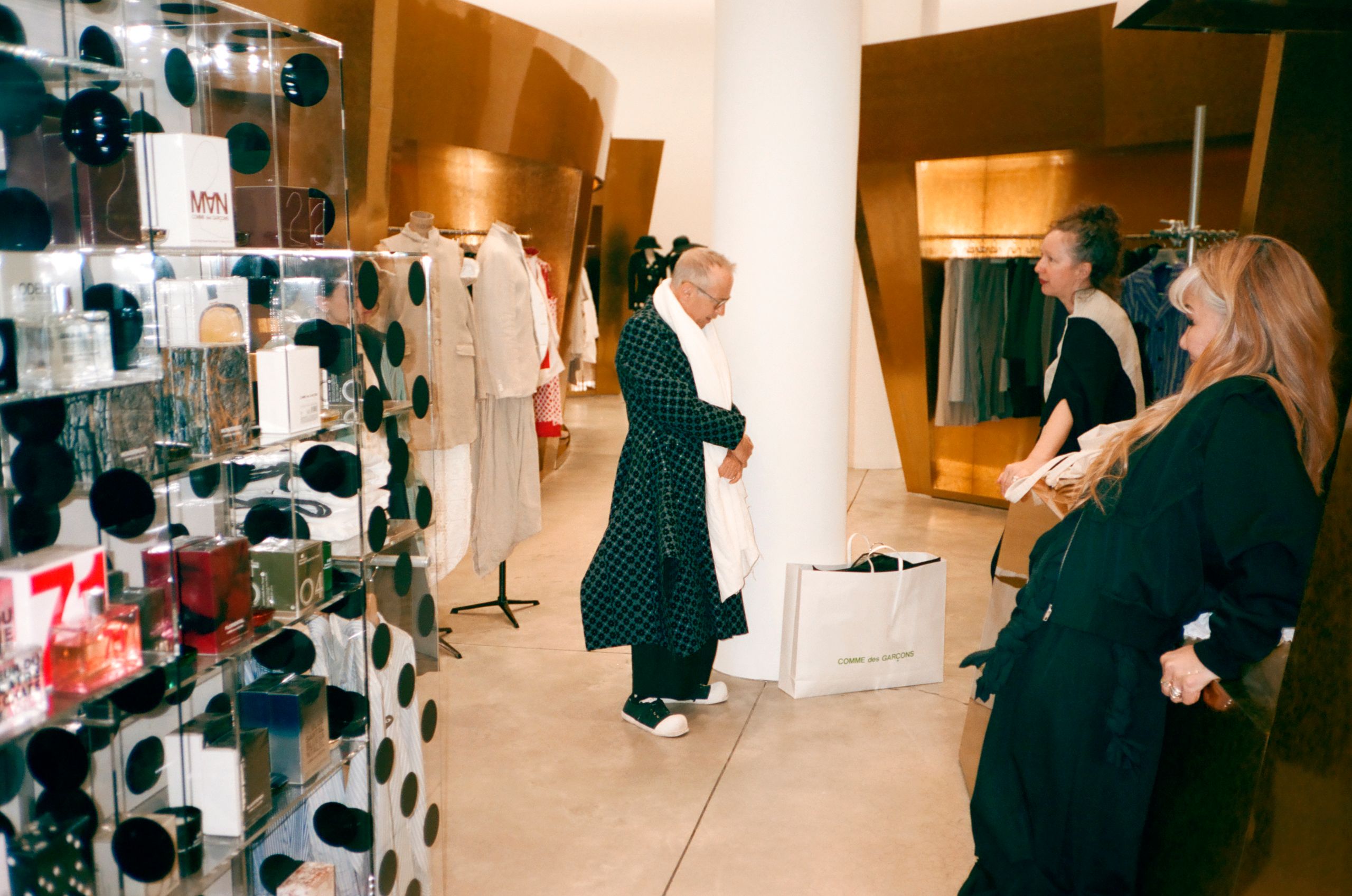
Which is exactly the point. The Manhattan flagship on West 22nd Street – the brand’s Chelsea location – isn’t designed to move volume. It’s designed to function as a kind of filter. The people who walk in and feel, as Sedaris does, that the clothes were made for them are a specific type: unbothered by whether the look reads as “correct,” more interested in wearing something that reflects an inner logic than an external one.
What “Ridiculous” Actually Means in Fashion
There’s a productive tension in the word Sedaris chose to quote back – “ridiculous.” In fashion criticism, ridiculous is almost always deployed as a terminus, the point where analysis stops and eye-rolling begins. But ridiculous is also the condition that precedes every shift in what eventually gets considered normal. Platform shoes were ridiculous. Wide lapels were ridiculous. Dropping the shoulder seam off the shoulder entirely was, for about fifteen minutes in the mid-2000s, considered ridiculous, and then it wasn’t.
Kawakubo’s work doesn’t chase that cycle. It doesn’t wait to be validated by normalization. A jacket that looks strange in 2010 tends to look equally strange in 2025, because the design isn’t making a bet on trend trajectory – it’s operating according to its own internal criteria. That consistency is part of what builds the almost devotional following the brand has accumulated over five decades.
Sedaris’s instinct – that what looks ridiculous to one person feels like personal address to another – maps onto how the brand has always functioned. Comme des Garçons doesn’t try to convert skeptics. It waits for the people who already speak the language. When Sedaris says it feels like Kawakubo is making clothes for him specifically, he’s describing the experience of encountering a sensibility that matches yours before you could articulate what yours even was.
That experience is rarer than fashion marketing would have you believe. Most clothing is designed to be acceptable to the widest possible group, which means it carries almost no point of view at all. A Comme des Garçons piece carries a very specific one. Whether it’s your point of view is something you know inside about thirty seconds of looking at it. Sedaris apparently knew.

The question hanging over that Manhattan store, over every piece on the rack, is the same one it’s always been: what does it mean to dress for yourself when yourself is something most clothing was never designed to accommodate?