




A Quarter-Century of Chosen Violence
Next month, Johnny Knoxville and the core Jackass crew mark 25 years of organized self-destruction with Jackass: Best and Last – a title that functions simultaneously as a victory lap and a retirement notice. The project pulls together the franchise’s most celebrated and most stomach-turning moments into what the group is positioning as their definitive career statement.
It is a strange thing to build a legacy around physical suffering, and stranger still to watch that legacy hold. But Jackass has outlasted most of the cultural movements that dismissed it, and the upcoming release forces a genuine question: what exactly are we celebrating when we celebrate this?
What “Best and Last” Actually Means
The Best and Last framing does real work. For anyone who has followed Knoxville’s career through multiple facial reconstructions and a genuinely alarming number of bull-related injuries, the word “last” carries weight that “best” alone never could. These are not men who stopped because the ideas ran out. The body, eventually, submits its own editorial notes.
The 25-year anniversary positions the franchise alongside cultural institutions that have achieved longevity through craft, which is a disorienting thing to type about a group of men who spent two decades drinking each other’s sweat and being launched from cannons. Yet the math is undeniable – Jackass premiered in 2000 and has sustained audience investment through television runs, multiple theatrical films, and direct-to-platform releases without ever meaningfully changing its formula.
The Architecture of the Stunt
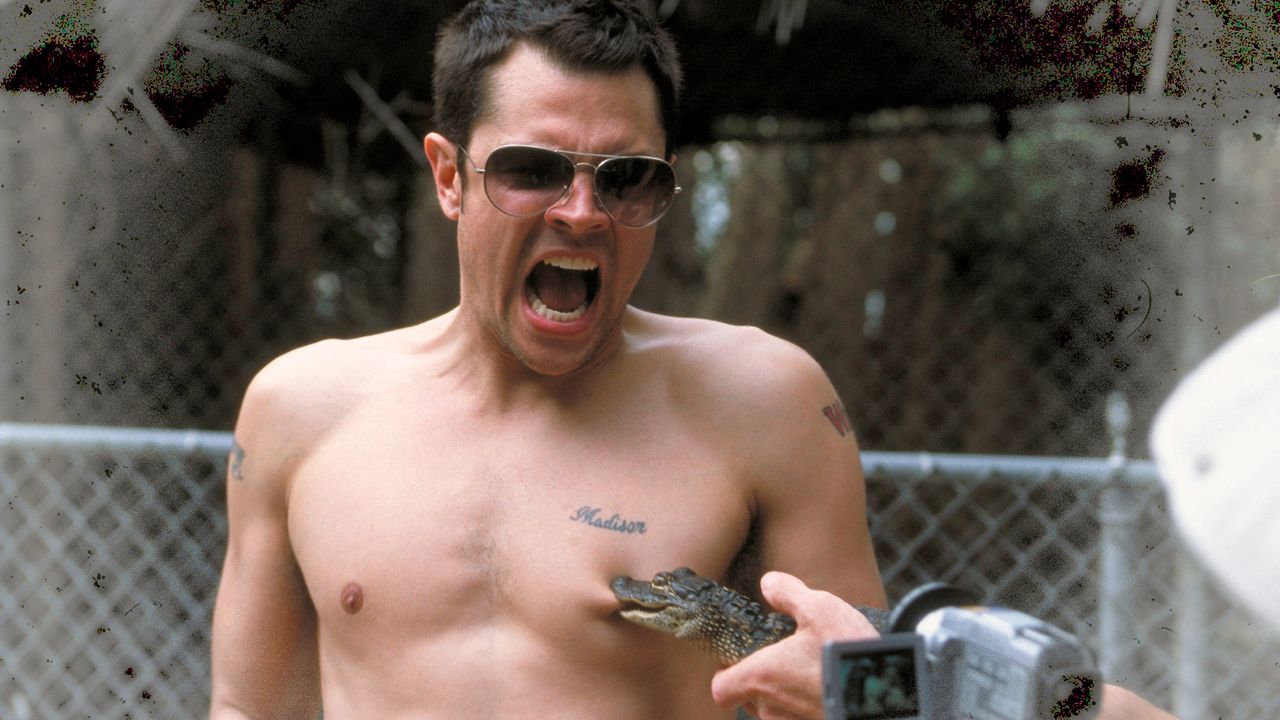
What the Best and Last ranking format reveals, perhaps unintentionally, is that not all Jackass material is created equal. The crew themselves categorize their work into proudest moments and grossest moments – a distinction that maps roughly onto spectacle versus endurance. The proudest stunts tend to involve genuine physical danger with some athletic component: the ramp jumps, the animal encounters, the large-scale contraptions. The grossest occupy a different register entirely, one built on disgust and involuntary reaction.
There is a craft argument hiding inside that taxonomy. The stunts that generate the most sustained cultural conversation are almost never the purely gross ones. Shock dissipates. The moments that get re-watched, clipped, and referenced are the ones where something could have gone catastrophically wrong and somehow didn’t – or where it did go wrong in ways that produce a specific, almost operatic quality of consequence. Knoxville walking away from something no reasonable person should walk away from occupies a different emotional register than a gross-out gag, and the franchise has always understood that difference even when it refused to favor one over the other.
The gross material, though, deserves its own analysis rather than easy dismissal. There is a democratizing quality to disgust – it bypasses class, education, and taste entirely. A reaction to something genuinely revolting is one of the few universal human experiences, and the Jackass crew weaponized that universality with real consistency over 25 years. The gross stunts are not the franchise’s proudest work by its own admission, but they are part of why the thing holds together.
What both categories share is consent – enthusiastic, documented, occasionally regretted consent from people doing things to themselves and each other. That structural feature separates the Jackass model from cruelty in ways that critics of the franchise routinely underweighted. Nobody in the crew is a victim of the material. Several of them are its architects.
Knoxville at the Center
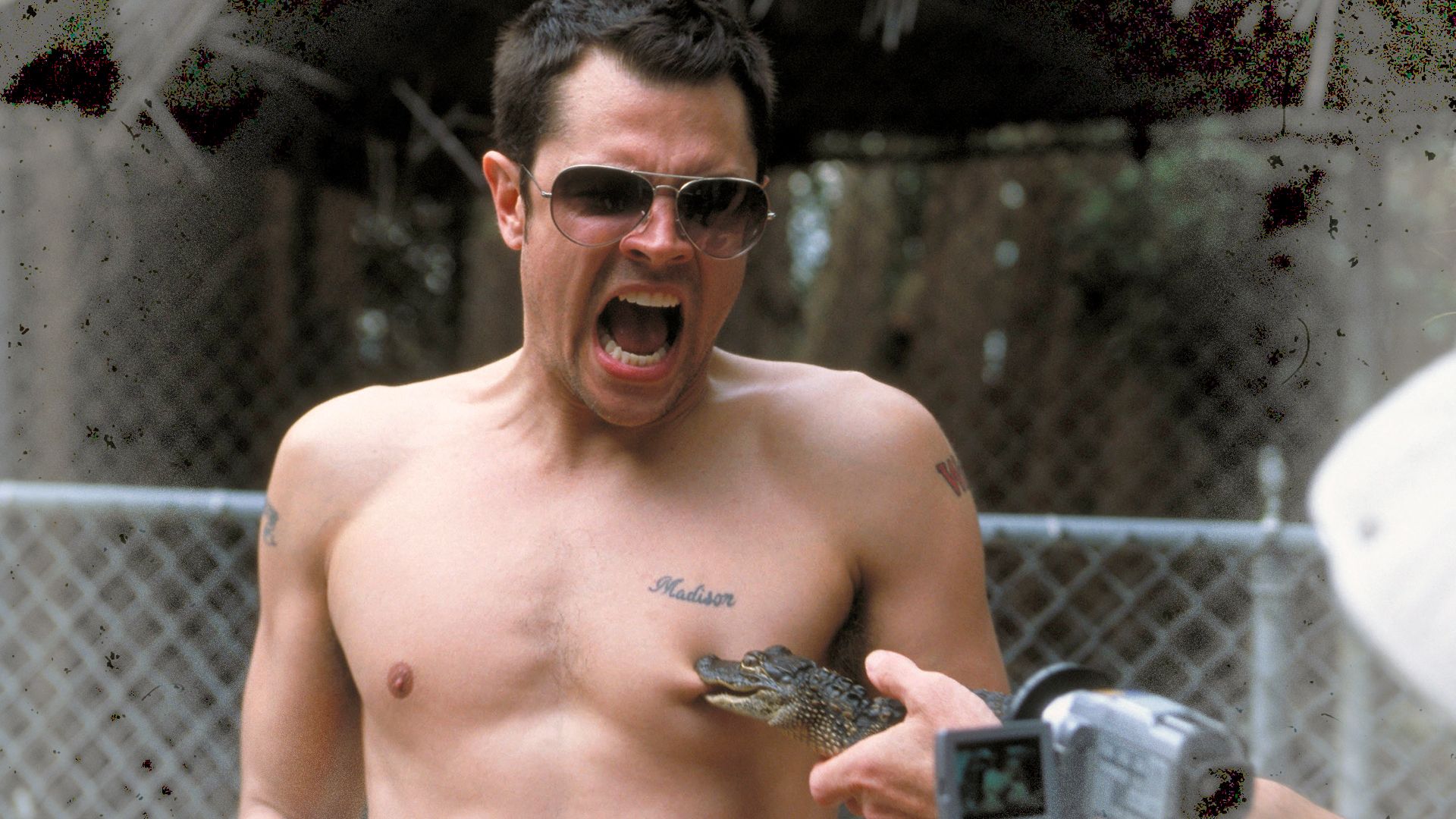
Knoxville himself functions as the franchise’s gravitational point, and the anniversary release keeps him there. At this stage in his career, his continued participation in physical stunts reads less like recklessness and more like a considered position – a refusal to step into the role of executive producer who watches younger talent absorb the damage.
His injuries over the decades are well-documented and include brain trauma, broken bones across multiple categories, and damage sustained from bull riding that accumulated across multiple productions. That he is releasing a film called Best and Last rather than simply Best suggests some acknowledgment that the account has been running a deficit for a while.
Style, Stupidity, and Staying Power
From a cultural style perspective, Jackass is an interesting case of anti-aesthetic persistence. The visual language of the franchise – low-resolution early footage, chaotic framing, the specific palette of parking lots and backyards – became its own recognizable signature. The intentional rawness that looked like limitation in 2000 reads as authenticity now, at a moment when production value is abundant and often indistinguishable between projects.
The crew’s wardrobe across 25 years also functions as an inadvertent archive of American casual – the skatewear brands, the transition from wide-leg to slim denim, the way helmets and protective gear became stylistically integrated into the visual identity rather than treated as interruptions of it. None of this was intentional. That’s precisely the point.
Jackass: Best and Last arrives next month with the weight of a genuine anniversary and the awkward energy of a group of people who built something that arguably should not have worked for as long as it did. The ranking format – proudest moments, grossest moments – gives audiences a structure for re-engaging with material some of them have been watching since they were teenagers. Whether “last” means what it says, or whether it functions as punctuation before another ellipsis, is the question the franchise is currently carrying without answering.
Knoxville has said versions of “last time” before. The difference now is that the body’s tally and the franchise’s branding have finally aligned on the same word at the same time.