





October 28, Three Centuries After Swift
On October 28, 1726, Jonathan Swift published Gulliver’s Travels. Three hundred years on, the book still generates serious critical attention – and it shares today’s literary conversation with emergency medicine, co-written memoirs, French complaint notebooks, and the suspicious frequency of small dogs in European oil paintings.

What Writers Are Actually Saying About the Writing Life
Jung Yun’s argument is direct: choosing to write professionally is a risk, and the rewards justify it. That kind of frank accounting of the writing life – neither romanticized nor defeatist – appears alongside a parallel piece on post-apocalyptic fiction, where the genre’s value isn’t spectacle but revelation. Writing about collapsed worlds, the argument goes, surfaces what actually matters about people and the societies they build, then lose.
Mindy Misener draws an unexpected line between preaching and fiction. Having committed to religious texts with their fixed limitations, she found the discipline transferable: “I saw that I would have to commit to a story the way a preacher commits to a text, accepting its limitations before I could explore its depth.” It’s a useful frame – one that treats constraint not as a problem but as the condition under which depth becomes possible.
Josie Adams takes on something more personal. Her memoir piece covers the experience of co-writing a book with her father, actor Tony Shalhoub, which required her to imitate his voice on the page. That particular challenge – capturing a living person’s cadence closely enough to pass as them, with their full knowledge and participation – sits in unusual territory between collaboration and impersonation.
Joanna Cannon, who worked as a doctor in emergency departments, writes about what those wards taught her about death. The line that carries the weight: “Ten years later, long after I left those wards, I still carry these moments around with me.” Her piece connects medical experience to the kind of material that feeds fiction – not trauma as literary device, but the specific gravity of having been present in those rooms.
Criticism, Recovery, and the Cost of Losing Independent Publishers
Laura Miller’s piece in Slate argues for a serious reconsideration of Edgar Allan Poe – not rehabilitation exactly, but a demand that readers and critics extend to his work the kind of respect it has historically been denied or qualified. Poe is easy to condescend to, and Miller is asking people to stop.

Emma Cole writes about Alfred Hitchcock for Lit Hub Film, focusing on the intersection of romance and horror across his most iconic films. Her central observation: “Hitchcock knows there must be some emotional investment from the audience.” It’s a point about craft more than genre – the horror only works if the viewer is already attached, which means the romantic mechanics aren’t decoration but structural load-bearing elements.
In The Paris Review, Walker Rutter-Bowman examines the strange second life of Cynthia Buchanan’s novel Maiden, described as “fizzy and jagged, tart and parodic.” Books that disappear and return occupy a specific category of literary history – their recovery always raises the question of what determined the original obscurity, and whether the conditions that buried them have actually changed.
Léo Keler’s piece, translated by Katie Assef in The Dial, documents the cahiers de doléances – notebooks made available in more than 16,000 town halls across France so that citizens could record their concerns and frustrations in writing. Those notebooks were eventually left to fade into obscurity. The piece treats them as a document of collective voice that was solicited, filled, and then quietly forgotten by the institutions that requested it.
The Chicago Review of Books runs a piece on what indie publishers provide that larger houses structurally cannot: “the heartbeat of the industry, offering the few spaces to truly develop authors across their careers and take chances on projects.” When independent publishers close, they take with them a particular kind of editorial relationship – one built around long-term author development rather than individual book acquisitions. The industry has watched a number of these closures recently, and the argument here is that each one removes something that cannot simply be absorbed or replicated elsewhere.
Annie Ernaux appears in Vulture discussing student protests, her Nobel Prize, and the practice of autofiction. Ernaux has been one of the more publicly engaged Nobel laureates since her 2022 prize, and her willingness to connect her literary method – autofiction as a way of examining individual experience inside larger social forces – to present political events makes these conversations substantive rather than ceremonial.
Mental Hospitals, Tiny Dogs, and a 300-Year-Old Satire
Livia Gershon writes for JSTOR Daily about psychiatric institutions and their role in horror as a genre. Her framing is historical and political: “Instead of building better systems of community care, federal, state, and local governments had largely abandoned individuals who had previously been institutionalized in psychiatric hospitals.” Horror’s obsession with asylums, on this reading, isn’t arbitrary atmosphere – it maps onto a real abandonment, and the genre keeps returning to those buildings because the social failure they represent was never resolved.
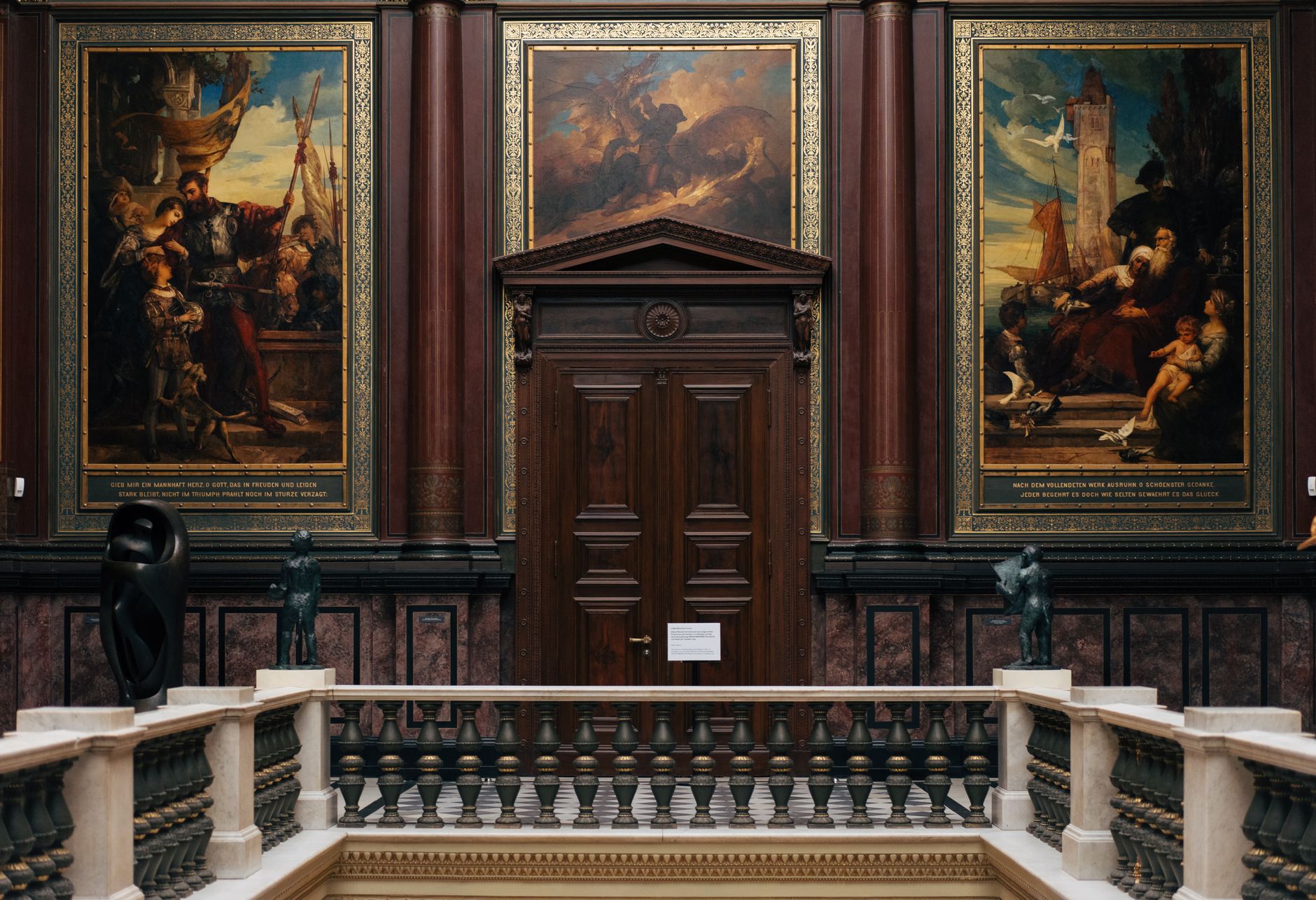
Lit Hub Art runs a piece on why small dogs appear with such persistence in major European paintings – a question that sounds trivial until you consider what pet ownership signaled in aristocratic portraiture, and how artists used animals to communicate status, intimacy, and character in ways their subjects couldn’t always express directly. And anchoring the day: the 300th anniversary of Gulliver’s Travels, with Lit Hub Criticism arguing the satire retains genuine instructive force. Swift wrote Lemuel Gulliver as a vehicle for dismantling British imperial self-satisfaction – the question the piece leaves open is which contemporary institutions would survive the same treatment.