




A Movie, a Boycott, and a Blueprint
In 1988, Martin Scorsese released The Last Temptation of Christ – and before most audiences had seen a single frame, the campaign to bury it was already underway.

The Anatomy of a Moral Panic
Universal Pictures had barely announced the film when organized religious groups launched what became one of the most coordinated assaults on a single work of art in American entertainment history. The pressure began not in theaters but in boardrooms. Conservative Christian leaders contacted MCA, Universal’s parent company, urging executives to cancel the release outright. When that failed, the focus shifted to the public – shareholders, advertisers, and ticket buyers – in an attempt to make the film financially toxic before its opening weekend.
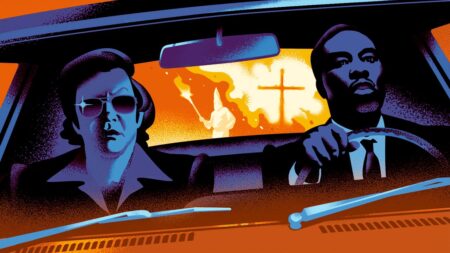
The 1988 protests drew an estimated 25,000 demonstrators outside Universal’s gates in Universal City, California. That number alone made it a spectacle the press could not ignore. But the crowd was almost beside the point. What mattered was the machinery behind it: a network of Christian broadcasters, direct-mail operations, and political organizations that could mobilize bodies and dollars on short notice. The infrastructure was new. The grievance was manufactured at speed.
The film itself – adapted from Nikos Kazantzakis’s 1955 novel of the same name – depicts Jesus as a man tormented by doubt and human desire. In the sequence that drew the most outrage, Jesus experiences a vision of an ordinary life, including a sexual relationship with Mary Magdalene. Scorsese and screenwriter Paul Schrader framed this explicitly as a temptation, not a statement of theological fact. That distinction did not matter to the protesters. It was not meant to.
What the opposition understood, perhaps better than the film’s defenders, was that the actual content of The Last Temptation of Christ was secondary to its symbolic value. A Hollywood studio had made a film that treated scripture as literature open to interpretation. That precedent – not the movie – was what needed to be stopped. The goal was to establish that certain subjects were off-limits, and that cultural institutions would face organized financial and political consequences for crossing those lines.
The Playbook Gets Written
The campaign against Scorsese’s film did not emerge from nowhere. It drew on tactics that conservative political organizers had been developing since the late 1970s – the same networks that had mobilized around the Moral Majority, around school textbook battles, around the early fights over public arts funding. What made 1988 different was the target. Hollywood was bigger, more visible, and more symbolically loaded than a school board in Tennessee. A victory here would mean something.
The Reverend Donald Wildmon, head of the American Family Association, was among the most prominent figures driving the opposition. Wildmon had spent years building a boycott infrastructure aimed at television advertisers, and the Scorsese film gave him a chance to apply that model to theatrical cinema. His organization sent out alerts to its mailing list, framing the film as an attack on Christianity and calling for action against Universal and its parent company. The language was calibrated to produce maximum outrage with minimum engagement with what the film actually said.
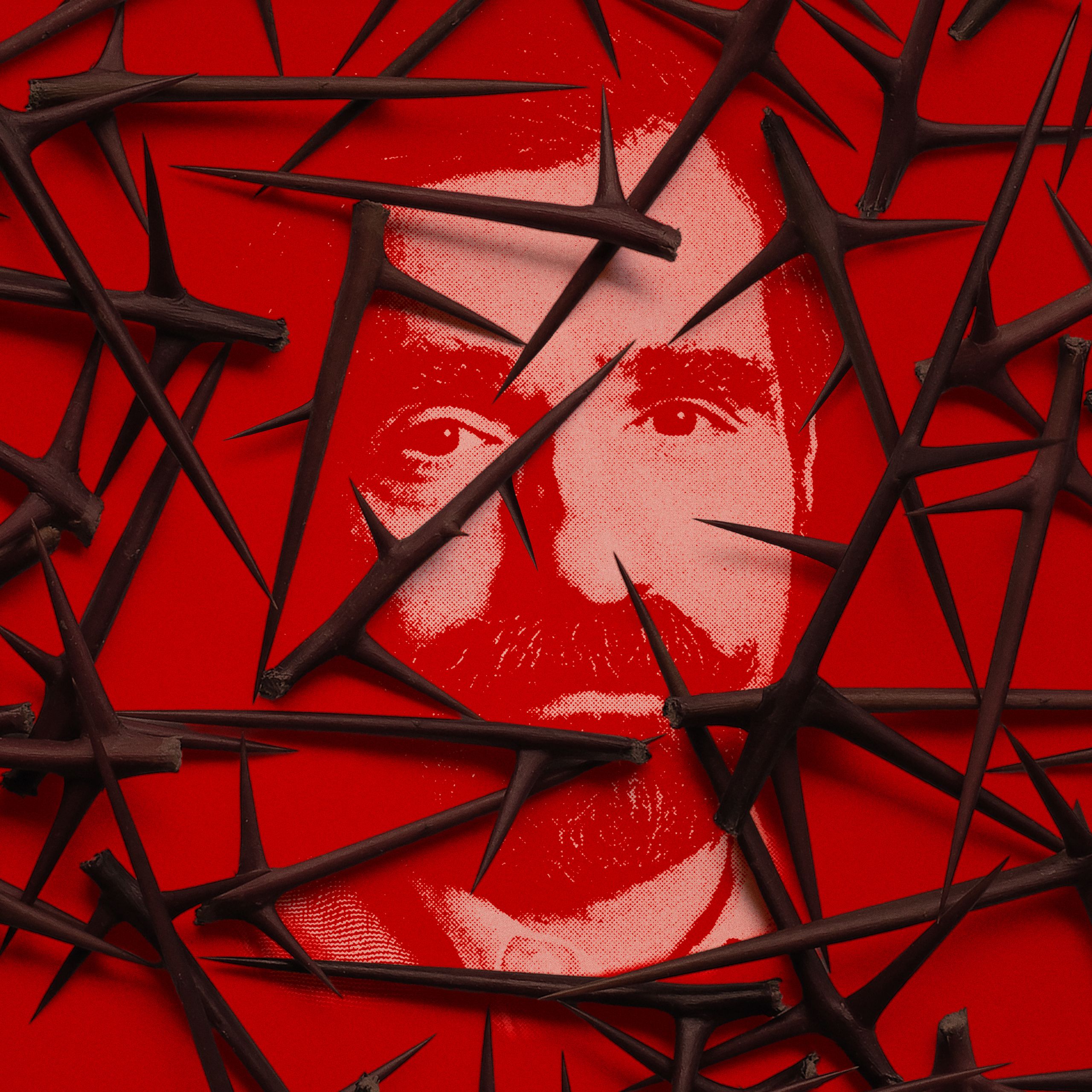
Universal did not capitulate entirely, but it did respond. The studio moved up the release date – a decision that has been read both as defiance and as a practical attempt to limit the window for further pressure. Some theater chains refused to screen the film. Others pulled it after brief runs. In several cities, screenings required a level of security typically associated with political events rather than art-house cinema. The film earned around $8.3 million at the domestic box office – a modest return that its opponents cited as proof of their influence, regardless of whether the boycott was the actual cause.
What the 1988 episode codified was a specific approach to cultural combat: identify a target with religious or moral resonance, build outrage through broadcast and direct-mail channels before the general public has formed an opinion, apply financial pressure at the institutional level, and then claim the outcome – whatever it is – as a victory for the faithful. The sequence is now so familiar it barely registers as a strategy. In 1988, it was being stress-tested in real time.
The parallels to later culture-war episodes are not subtle. The campaign against The Last Temptation of Christ anticipated the fights over NEA funding for artists like Andres Serrano and Robert Mapplethorpe in 1989 and 1990. It prefigured the protests over Dogma in 1999, again organized in part by Wildmon’s network. It established the logic that would later animate boycotts of companies, school curricula, and streaming platforms – the idea that cultural products are political acts, and that political acts require political responses. The specific complaint changes. The architecture stays the same.
Scorsese himself has spoken about the period as professionally isolating. The film found its defenders – Roger Ebert gave it four stars and called it one of the year’s best films – but the institutional support that might have countered the organized opposition was largely absent. Studios watched. Exhibitors calculated. The lesson absorbed by the industry was not that the attack had failed. It was that the attack had cost something, and that future projects with similar profiles would need to be weighed accordingly.
The Template Holds
Thirty-seven years later, the mechanics of the 1988 campaign read like a manual that has been updated for digital distribution but never substantially revised. The mailing list became the email list became the social media account. The television broadcast became the podcast became the viral clip. The underlying logic – that cultural legitimacy is a resource to be seized or denied, not a condition to be earned – has only grown more central to how certain political movements understand their relationship to art and media.

What remains unresolved is a question the Scorsese episode raised but never answered: at what point does the target of organized cultural pressure stop calculating the cost of resistance and start absorbing it? Universal released the film. Some exhibitors did not show it. The movie exists. And yet the 25,000 people outside the studio gates in 1988 were not protesting a film most of them had seen – they were protesting the right of the film to exist at all.