




A Morning Ritual That Baffled Planetary Science for Seven Years
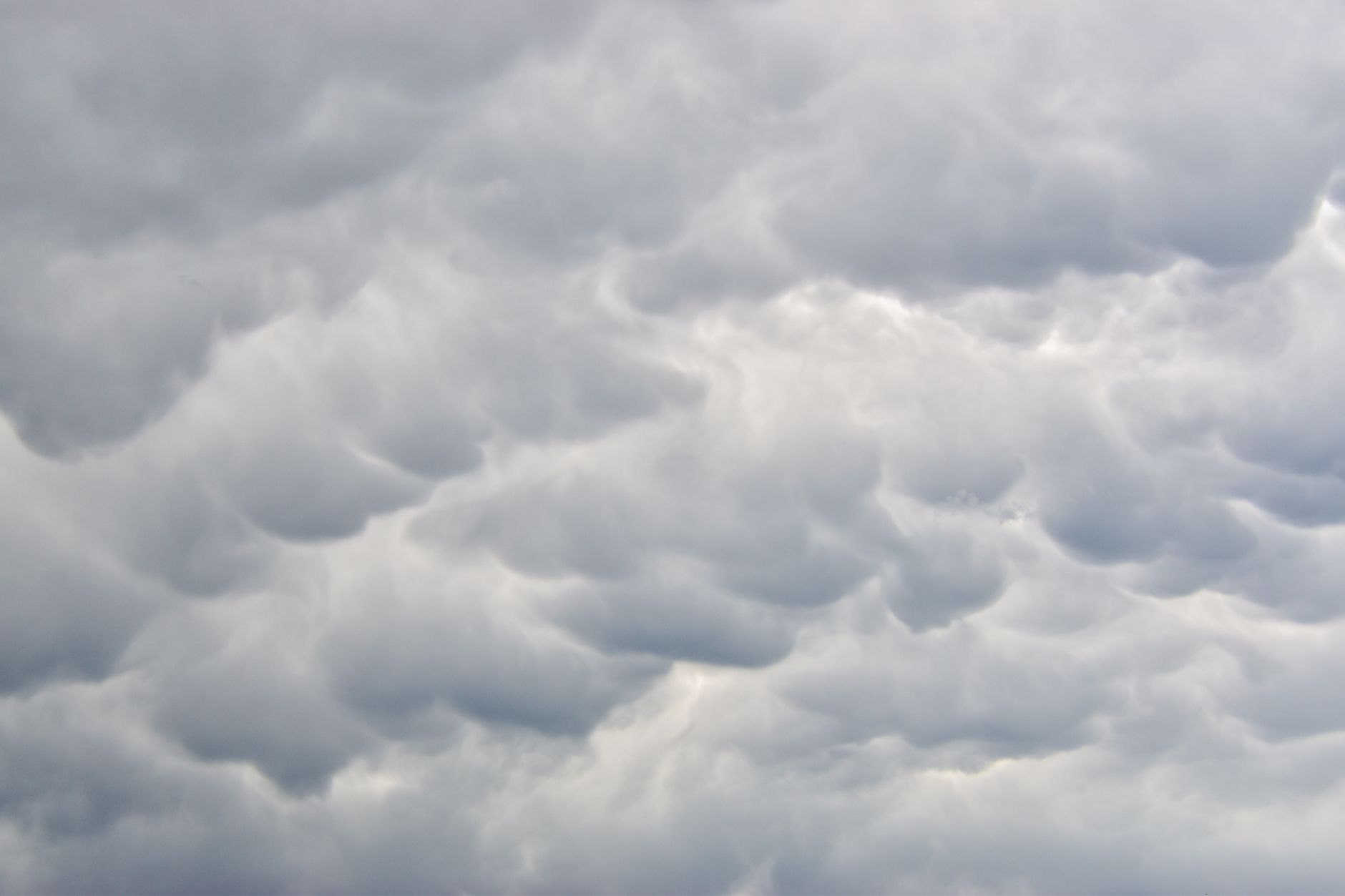
Every Martian spring and summer morning, something strange happens near the volcano Arsia Mons. A thin, elongated cloud materializes, stretches across more than 1,000 miles of the planet’s surface – roughly the overland distance between New York City and Kansas City – then dissolves before the day is out. The next morning, it does it again. For several months at a stretch, this cycle runs like clockwork, forming and vanishing with a regularity that somehow made it harder, not easier, to explain.
The cloud, formally called the Arsia Mons Elongated Cloud (AMEC), was first captured by an orbiting probe in 2018.
Since that initial detection, researchers had no working model for how the AMEC actually forms. That gap just closed – and the explanation involves atmospheric physics that scientists had, until now, treated as strictly theoretical: real in textbooks, absent from any observed planetary atmosphere. The implications stretch beyond Mars.
What the Simulations Finally Got Right
Jorge Hernández-Bernal, a planetary scientist at Sorbonne Université in Paris and lead author of the new study, described what changed when his team’s simulations finally succeeded. “We found that we needed to include some exotic physics,” he said in a press release, “physics that, while included in textbooks, is treated as theoretical and usually thought not to happen in nature. It certainly hasn’t been seen in action before.” The moment those physical processes were added to the model, the AMEC appeared in the simulation exactly as it does on Mars.
Hernández-Bernal’s team had essentially spent time ruling out every conventional atmospheric mechanism before arriving at something that most planetary scientists would have dismissed as a dead end. The exotic physics in question remains, for now, more specifically described in the study itself than in any press summary – but the key point is structural: this marks the first time researchers have successfully modeled the cloud’s formation at all, after seven years of failed attempts.
What makes this particularly striking for anyone tracking planetary science through a technology lens is the role of simulation fidelity. The AMEC didn’t emerge from a rough approximation of Martian atmospheric conditions – it required a model detailed enough to include physical processes previously considered non-functional in real atmospheres. In other words, the computational tools had to catch up to the question before the question could be answered.
Why a Martian Cloud Has Broader Meaning
Arsia Mons sits in the Tharsis volcanic region, one of the most geologically dramatic areas on Mars. The volcano itself is enormous by any planetary standard, and its elevation plays a direct role in how the AMEC behaves – the cloud originates near its slopes before stretching outward each morning. The seasonal pattern, confined to Martian spring and summer, adds another layer: whatever atmospheric mechanism is responsible, it’s sensitive to conditions that shift with Mars’s orbit around the Sun.
For context on what “1,000 miles long” means as a physical object: it would span the entirety of California and Oregon combined, appearing and disappearing within a single Martian day, repeatedly, over months. No equivalent structure has been documented in Earth’s atmosphere, which is part of why the physics driving it was considered theoretical rather than observational.
There’s also a practical dimension for future Mars missions. As the number of active and planned orbital operations around Mars grows, understanding atmospheric behavior near major surface features becomes operationally relevant – not just scientifically interesting. A cloud formation that wasn’t understood at all is now, at minimum, a formation that can be modeled.
Hernández-Bernal’s phrasing – “exotic physics” now confirmed to operate in a real planetary atmosphere – is the kind of language that tends to arrive quietly in a press release and land loudly in the literature that follows. The AMEC has been cycling through its morning routine over Arsia Mons since before the research team had any mechanism to explain it, and now the question sitting underneath the answer is which other atmospheric phenomena across the solar system have been misclassified as impossible for similar reasons.