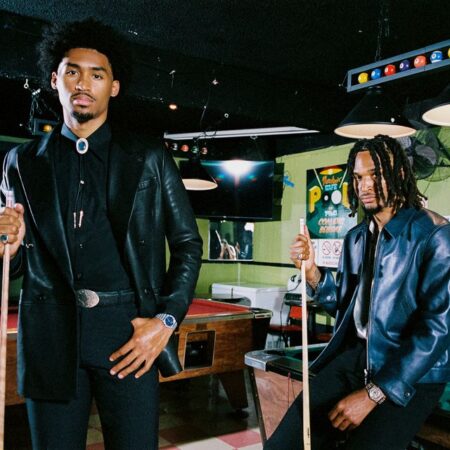





The Director Who Kept Unusual Company
Lance Oppenheim turned 30 with a filmography that most directors twice his age would struggle to match – and a recent personal history that reads less like a career biography and more like a fever dream someone assembled from celebrity tabloid clippings. The Florida-born director behind Primetime and You Can See Everything spent the last few years in the gravitational pull of three figures who have almost nothing in common: Nathan Fielder, Robert Pattinson, and Elizabeth Holmes.
That is a genuinely strange trio.
What Oppenheim’s candid conversation with GQ reveals isn’t just the texture of those relationships but something about how a young filmmaker navigates proximity to extreme fame, extreme notoriety, and extreme creative intelligence – sometimes all at once, sometimes in ways that blur together. His willingness to talk about it openly, at 30, is either brave or reckless, and the line between those two things has always been thin in Hollywood.

Living Adjacent to Elizabeth Holmes
The Holmes detail is the one that stops people mid-sentence. Oppenheim has spoken openly about what it was actually like to share space with the disgraced Theranos founder – a woman whose name functions, at this point, as cultural shorthand for a specific brand of Silicon Valley delusion and spectacular collapse. Holmes built a blood-testing company on fraudulent science, convinced some of the most powerful investors and board members in America that she had revolutionized diagnostics, and then watched the entire structure fall apart under federal scrutiny. She was convicted of fraud in 2022. To actually know her – to have lived in proximity to her in any domestic or day-to-day sense – is an experience almost nobody outside her immediate circle can speak to firsthand.
Oppenheim can. And the fact that he’s willing to describe what that was like gives his interviews a quality that most director profiles entirely lack. There’s no careful publicist-filtered distance here. He’s describing a lived reality that happens to involve one of the most written-about women of the last decade, and he’s doing it without the protective layer of irony that younger cultural figures often default to when the subject matter gets genuinely uncomfortable. The “odd trio” framing his GQ profile uses is accurate – but it also undersells how specifically bizarre that particular leg of the triangle is. Shacking up, even loosely defined, with Elizabeth Holmes is not a thing that happens to most people. It happened to Oppenheim.
What that experience produced creatively, or whether it produced anything directly at all, is the kind of question his films circle without always answering. You Can See Everything is already a title that suggests a particular relationship to transparency and surveillance – the idea that visibility and understanding are not the same thing. Whether Holmes sharpened that instinct in him, or whether Oppenheim was already drawn to people whose public image and private self diverge dramatically, is impossible to say from the outside. But the circumstantial evidence is hard to ignore.
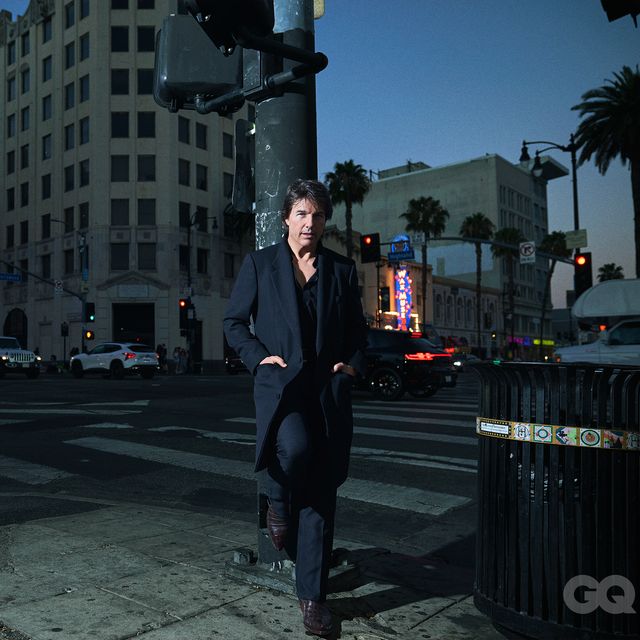
Nathan Fielder, Robert Pattinson, and the Art of Controlled Strangeness
The other two names in Oppenheim’s recent orbit operate in a very different register. Nathan Fielder has spent the better part of a decade building a career around discomfort as an aesthetic – his work on The Rehearsal and Nathan For You treats social awkwardness not as something to be resolved but as a subject worth examining with the patience and rigor of a documentary naturalist. For a young director interested in the gap between performance and authenticity, Fielder is exactly the kind of collaborator or influence that would leave a mark. Robert Pattinson, meanwhile, has spent the years since Twilight executing one of the more deliberate image reconstructions in recent film history – moving steadily toward the art-house end of the spectrum through work with directors like Robert Eggers and David Cronenberg, accumulating a body of work that nobody predicted from his early career trajectory. He is, at this point, an actor defined by refusal: refusal to play it safe, refusal to repeat himself, refusal to give audiences exactly what they expect.
What connects all three figures – Fielder, Pattinson, Holmes – is a relationship to persona that is anything but accidental. Each of them, in radically different contexts and with radically different consequences, has constructed or inhabited a version of themselves that functions almost as a separate entity from the person underneath. Fielder’s on-screen character is an exaggerated, painfully sincere version of himself that is clearly a construction. Pattinson’s post-Twilight persona is built on visible effort and self-aware eccentricity. Holmes built a persona so total and so carefully maintained that courts eventually had to determine where performance ended and criminal intent began. For a director whose films are interested in what people reveal when they think they’re being observed – or when they don’t realize they are – this is not an accidental social circle.
Oppenheim at 30 is articulate about all of it in a way that suggests he’s been thinking about these dynamics for a while, not just processing them in real time for the benefit of a magazine profile. Other directors his age are starting to speak with similar candor about their influences and relationships, but few have material this specific to work with. The Fielder connection is the one most likely to shape his long-term reputation among film people; the Pattinson connection signals a certain level of access and creative legitimacy; the Holmes connection is the one that will follow him in ways he probably can’t fully anticipate yet.

What Happens When the Film Ends
There is something worth sitting with in the image of a 30-year-old filmmaker who has already made two features, moved through the orbit of a convicted fraudster, and developed working relationships with two of the more deliberately strange figures in contemporary entertainment – and who is now talking about it openly, in GQ, at an age when most directors are still trying to get their first short film into a festival. Primetime and You Can See Everything exist as films independent of all this biography, and they’ll be judged on their own terms eventually. But the biography keeps intruding, partly because Oppenheim keeps inviting it in, and partly because the specific people involved make distance feel dishonest.
The question nobody in his profile quite gets around asking is whether living that close to Elizabeth Holmes – whatever “shacking up” means in specific logistical terms – changed what he believes about people, or only confirmed what he already suspected.