




A Mother’s Voice, Then a Mother’s Grief
Rachel Goldberg-Polin spent months as the most recognizable face of a cause the world watched from a distance. After her son Hersh Goldberg-Polin was taken hostage in Gaza, she became the public spokesperson for the families of Israeli hostages – speaking at rallies, addressing the United Nations, appearing before cameras in the kind of sustained, deliberate anguish that most people never have to perform. She wore a piece of tape over her heart printed with the number of days Hersh had been held. The number kept rising.
Hersh was murdered in Gaza before he could be freed. He had been held for 330 days. Now Goldberg-Polin has written a memoir, When We See You Again, that attempts to hold all of it – the captivity, the advocacy, the death, and the specific kind of pain that does not resolve on any timetable a publisher sets.
What the Memoir Carries
Writing a book about a son who was killed while the world watched is not a conventional publishing project. When We See You Again is Goldberg-Polin’s account of what it meant to fight publicly for a child’s life, and to lose him anyway. The title itself contains a weight that shifts meaning depending on where a reader is in the text – early on, it reads as anticipation; by the end, it reads as something else entirely.
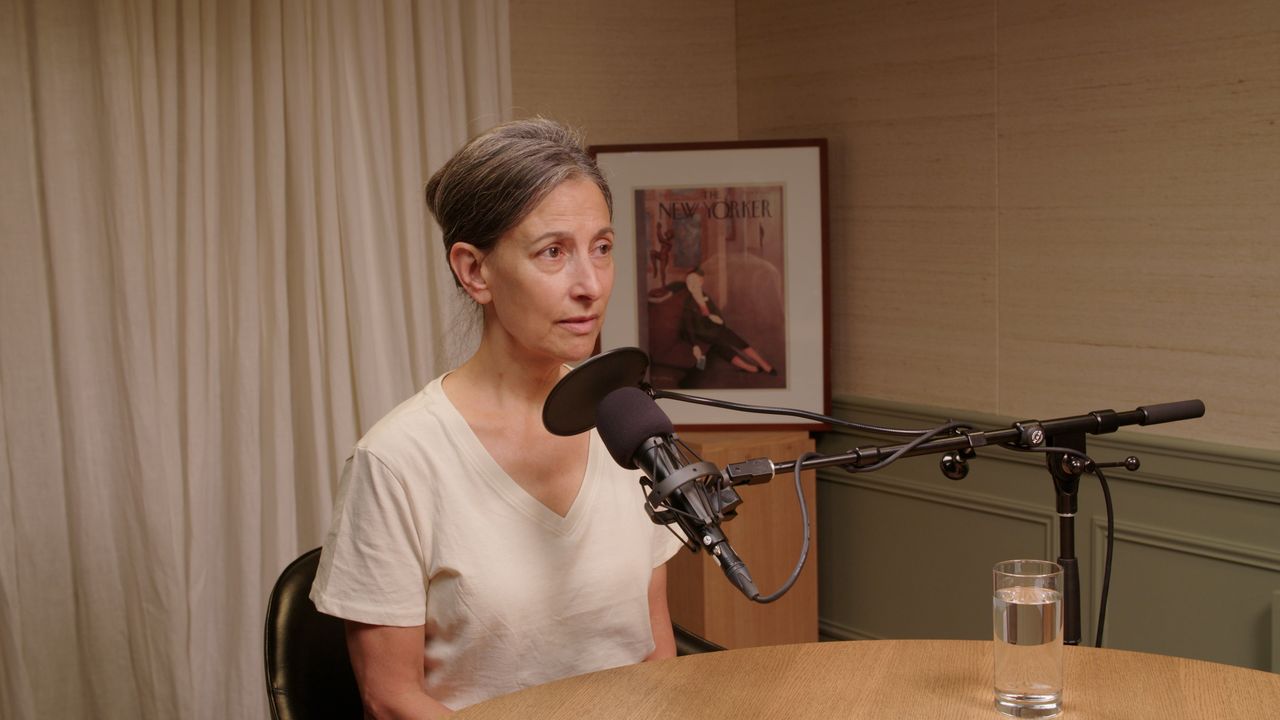
Goldberg-Polin spoke with The New Yorker about the book, about the experience of captivity that her son endured, and about what she described as unending pain. That phrase – unending – is doing real work here. Grief literature often promises, or at least implies, some arc toward integration. Goldberg-Polin does not appear to be offering that. What she is offering is testimony, and the distinction matters.

The Weight of Public Advocacy
The families of Israeli hostages held in Gaza occupied a specific and brutal position in public discourse – simultaneously victims, lobbyists, symbols, and news subjects. Goldberg-Polin became the most visible among them. She addressed heads of state. She spoke at the Democratic National Convention in August 2024. She kept a count of days on her chest. All of this while not knowing whether her son was alive.
That kind of prolonged public exposure while carrying private terror is almost impossible to describe without flattening it into abstraction. The memoir is, among other things, an attempt to resist that flattening – to put actual texture onto what the advocacy felt like from inside, rather than from the angle of news coverage, which necessarily reduces a person to their most legible moments.
Hersh Goldberg-Polin had been taken at the Nova music festival on October 7, 2023, during Hamas’s attack on Israel. He was 23. He had lost part of his arm in the assault before being taken. His parents, Rachel Goldberg-Polin and Jon Polin, spent the following months in sustained, public pursuit of his return. That pursuit did not end the way they fought for it to end.
There is a particular cruelty in the structure of that story – the months of visibility, the speeches, the meetings, the hope sustained enough to keep speaking, and then the news of his death in late August 2024. It is the kind of cruelty that does not lend itself to the language of closure, and Goldberg-Polin has said, plainly, that she is not operating within that language.
Memoir as a Form That Can Hold This
Memoir is a strange form to choose for a grief this recent, this public, and this politically entangled. It requires a narrator who has enough distance to shape the material into sentences, but Goldberg-Polin is writing about something that has not passed. The pain she describes is unending – present tense, ongoing. That puts pressure on the form in ways that might be the most honest thing about the book.
Writers working through loss in real time often face the same structural problem: the ending of the book and the ending of the experience are not the same event. For Goldberg-Polin, the book ends. The grief does not. She has said as much. That gap – between the final page and the ongoing life – is where the memoir lives.

What Remains After 330 Days
Hersh Goldberg-Polin was held for 330 days. His mother counted them publicly, on her body, in her appearances, in the sustained performance of hope-as-protest that defined her public presence during that period. The number 330 now has a different meaning than it did when it was still climbing. It is the full count. It does not go higher.
When We See You Again exists inside that number. It is a book that was, in some sense, written before anyone knew what the title would finally mean. Rachel Goldberg-Polin gave the world a front-row seat to a mother’s fight, and now she is asking whether the world is willing to sit with what came after the fight – not a resolution, but a woman still standing inside a loss she has said will never end, asking what it means that she is still here to write about it at all.
The tape she wore over her heart is not on her chest anymore. The number stopped at 330.