




Fashion Meets Political Architecture in Paris
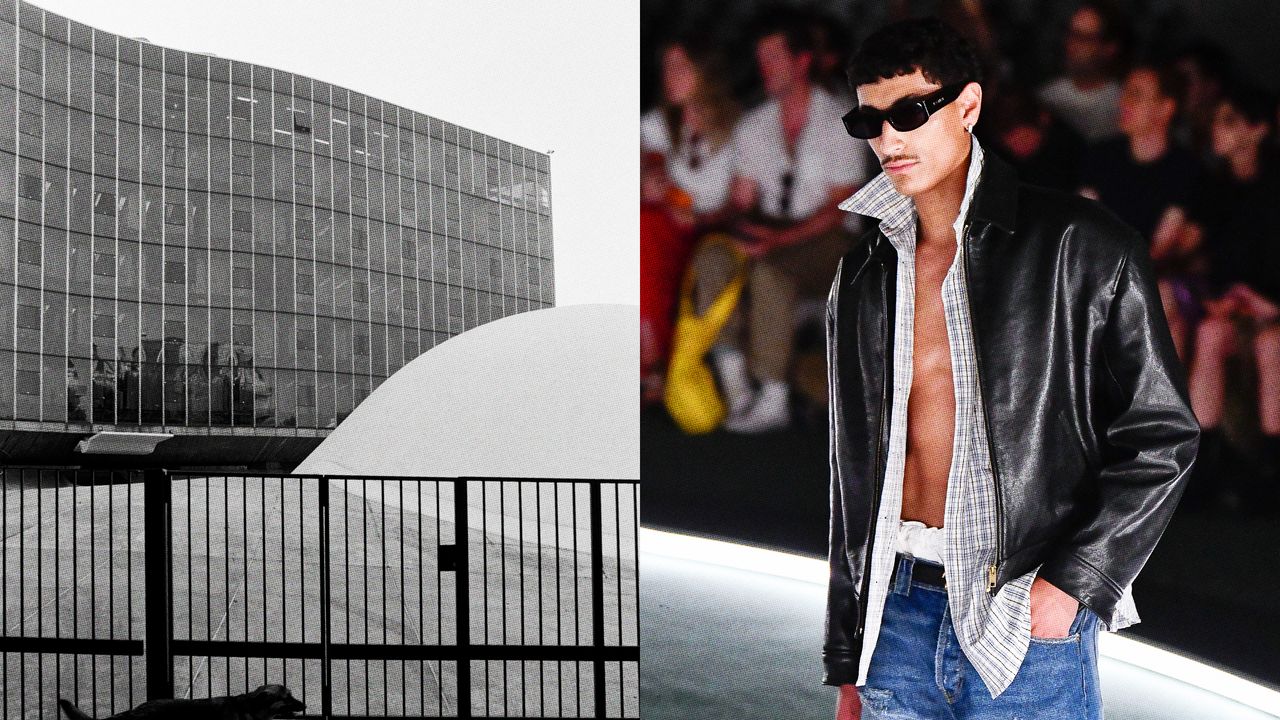
Willy Chavarria staged his spring 2027 runway show inside the Espace Niemeyer building in Paris – the headquarters of the French Communist Party – turning a futurist concrete landmark into a backdrop for a collection built around community.
Why the French Communist Party’s Building
The Espace Niemeyer is not a neutral venue. Designed by Brazilian architect Oscar Niemeyer, the building sits in the 19th arrondissement and carries one of the more politically charged addresses in Paris fashion week history. Its domed main hall and curved white facade read less like a party headquarters and more like a vision of a society that never quite arrived – which may be exactly why Chavarria chose it.
The designer was direct about his reasoning. “I thought the backdrop of communism was appropriate, just given the influence of government in our daily lives,” he said. That statement isn’t dressed up as provocation for its own sake. It lands as something more considered – a designer who thinks about where power sits and what clothing does in relation to it.
Chavarria has built his label on clothing that speaks to working-class Latino identity, to masculinity outside its default settings, and to the kind of dignity that doesn’t require a luxury price point to mean something. Placing that work inside a building associated with collective politics rather than individual accumulation has a logic to it. The venue isn’t ironic. It’s consistent.
Fashion weeks regularly colonize churches, museums, and private estates. A communist party headquarters is a different kind of statement – not because communism is fashionable, but because the building asks a different set of questions about who spaces are built for and who gets to inhabit them.
The Collection and What It Says About Now
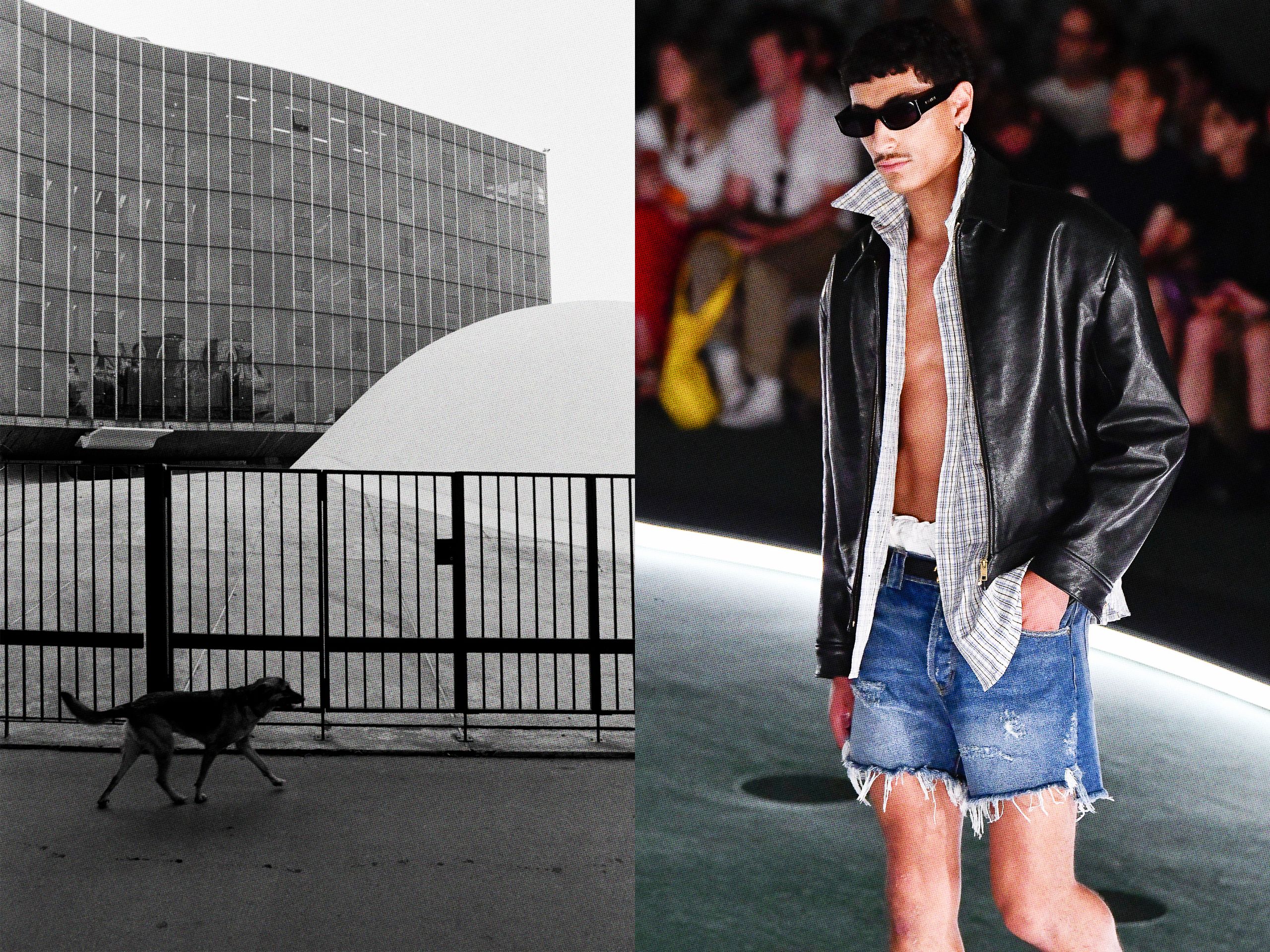
The spring 2027 collection carried Chavarria’s signature – tailoring with weight and intention, silhouettes that don’t apologize for taking up space. Where much of Paris fashion week trends toward the ethereal or the deliberately unwearable, his work tends to stay close to the body and to the person wearing it. Spring 2027 kept that commitment intact.
Describing it as sophisticated undersells the specificity of what Chavarria does. The clothes don’t read as sophisticated in the way that word usually gets deployed in fashion coverage – meaning expensive-looking or emotionally remote. They’re precise without being cold. There’s craft in the construction and something personal in the result, which is a harder combination to pull off than it sounds.
The community theme running through the show connected directly to the location. An Espace Niemeyer audience watching a collection about collective identity, inside a building designed to house a political movement premised on collective ownership – Chavarria was working with the architecture, not against it. The building’s space-age curves and the collection’s measured elegance occupied the same register.
It also matters that this is spring 2027, shown during a Paris fashion week cycle that increasingly rewards spectacle over substance. Chavarria’s choice to anchor his show in political history and community identity rather than in fantasy or escapism says something about where his priorities sit relative to the industry around him. Whether buyers and editors follow that lead is a separate question from whether the work demands it.
His position as creative director at Calvin Klein – a role he’s held while continuing his own label – gives him an unusual dual standing in American fashion. The Chavarria brand operates from a different set of assumptions than a heritage American corporation, but both are now part of his public identity. The spring 2027 Paris show was entirely his own territory.
What Stays After the Show
Fashion venues get forgotten quickly. The Espace Niemeyer is harder to shake. A building commissioned by a political party whose century of history includes both genuine idealism and significant human cost doesn’t offer easy meaning – and Chavarria didn’t try to flatten it into one. His comment about the influence of government in daily life is precise and open-ended at the same time.
The spring 2027 collection will move toward production, buyers will place orders, and the show images will circulate through the usual channels. But the question Chavarria planted at the Espace Niemeyer – about what fashion owes to the people it claims to represent – doesn’t have a seasonal answer.