




A Runway Built on Belief
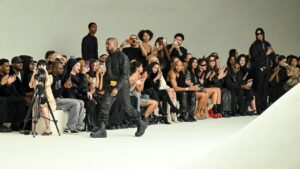
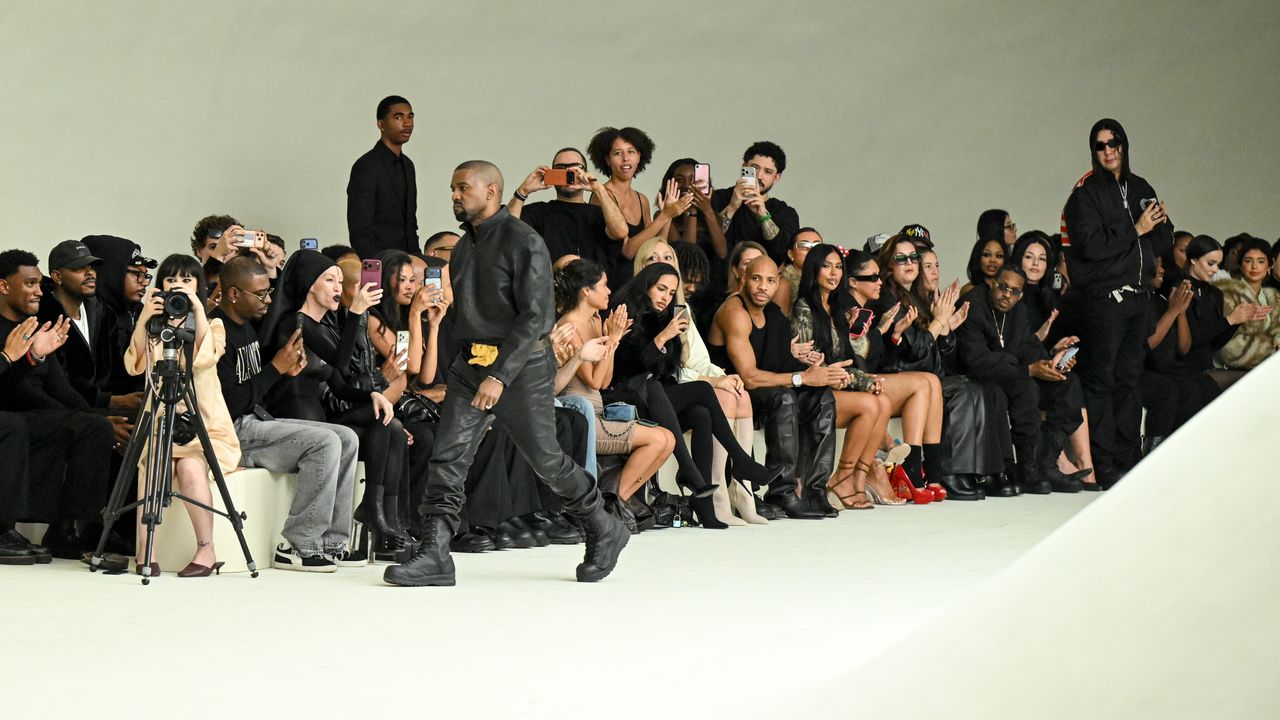
Ye held a Yeezy Season 01 fashion show in Los Angeles, and GQ’s Frazier Tharpe was there to document what it looked like when a designer decides the clothes – not the controversy, not the press, not the apologies – are supposed to carry the weight. The show’s premise was stripped down: let the garments speak. Whether anyone outside Ye’s core audience was positioned to hear them is a different question entirely.
What Tharpe’s scene report makes clear is that Ye played the hits, musically and aesthetically. The devoted showed up. The energy inside the room was not the tentative, wait-and-see atmosphere of a brand trying to claw back credibility – it was closer to a congregation that had already decided what it believed before the first look walked out.
What “Letting the Clothes Talk” Actually Means in 2025
The phrase Ye attached to this collection – “let the clothes do the talking” – is worth taking seriously as a strategic position, not just a quote. After years in which almost everything surrounding Yeezy drowned out the actual garments, the Season 01 framing signals an attempt to reorder the hierarchy. Put the product back at the center. Stop feeding the media cycle. Make the runway do the work it was originally designed to do.
That is a reasonable instinct, and fashion history has examples of designers who survived cultural exile by retreating into craft and emerging with something that demanded attention purely on aesthetic terms. The challenge for Ye is that the machinery he built around Yeezy – the hype, the scarcity, the personality-driven marketing – was never really separable from the clothes in the first place. The brand was always a total environment. Asking people to evaluate the garments in isolation now is asking them to forget the conditions under which they originally fell in love with them.
The Los Angeles setting reinforced a certain insularity. This was not a show positioning itself to persuade skeptics or recapture wholesale partners or re-enter the conversation at fashion week in Paris. It read more like a homecoming for people who never left – a proof-of-life event staged for an audience that required no convincing. That is not necessarily a failure of ambition. It may be an accurate read of where Yeezy actually stands and who its viable market is right now.
What the music added is harder to quantify but impossible to ignore. Ye playing his own catalog during the show collapsed the distance between the fashion presentation and the broader Ye mythology. The clothes walked out against a soundtrack that carries enormous emotional weight for his long-term fans. It is a smart piece of theater – it makes the product feel continuous with something people already have a deep relationship with, rather than asking them to evaluate a new chapter cold.
The Disciples and the Distance
Tharpe’s reporting draws a distinction that matters: the strategy appears to be working for the unflagging disciples. That qualifier – unflagging – does real descriptive work. These are not casual observers who drifted back because the cultural temperature shifted. These are people who made a decision to stay committed to Ye’s output through a period when that commitment carried social cost. For them, a show that delivers on the aesthetic promises of the original Yeezy seasons, set to music they know by heart, is not a soft landing – it is validation.
The harder question is whether that group is large enough to sustain a fashion operation at any meaningful scale, and whether the show in Los Angeles was designed to grow it or simply to serve it. Fashion brands can survive – even thrive – on devoted smaller audiences, particularly when they control their own distribution and avoid the margin compression of department store relationships. But that requires a different kind of infrastructure than the one Yeezy built during its peak Adidas years, when the volume was industrial and the reach was genuinely global.
Who the Audience Is Now
The title of Tharpe’s piece poses the question directly: who’s listening? It is worth sitting with that rather than rushing to answer it. The Yeezy audience that existed in 2015 – which stretched from streetwear obsessives to luxury consumers to mainstream sneaker buyers who had no particular investment in fashion as a category – was assembled under conditions that no longer exist. The Adidas partnership that gave Yeezy its distribution spine ended in 2022. The cultural consensus around Ye as a creative force, already complicated before that, fractured further.
What remains is something smaller and more intensely committed. The Los Angeles show did not appear designed to address the gap between those two versions of the audience. It was not a recruitment event. It was a show for people who already knew why they were there – which makes it coherent as a creative statement and genuinely complicated as a business proposition.
Style brands that survive ruptures of this magnitude usually do so through one of two routes: a product that is so undeniably good it forces a reassessment, or a community so tight and self-sustaining that external validation stops mattering. Yeezy Season 01 in Los Angeles seems to be making a bet on the second path. The clothes walked. The music played. The faithful watched.
Whether any of that generates a second wave of interest beyond the room – or whether the room is now the whole story – is the tension the brand is living inside right now, and nothing from the Season 01 show resolves it cleanly.