



Four Thousand Dollars and a Lot of Stares
Spending $4,000 on a quadruped robot from China and then walking it to the office on a sunny June morning turns out to be the fastest way to become the most interesting person on any city block.
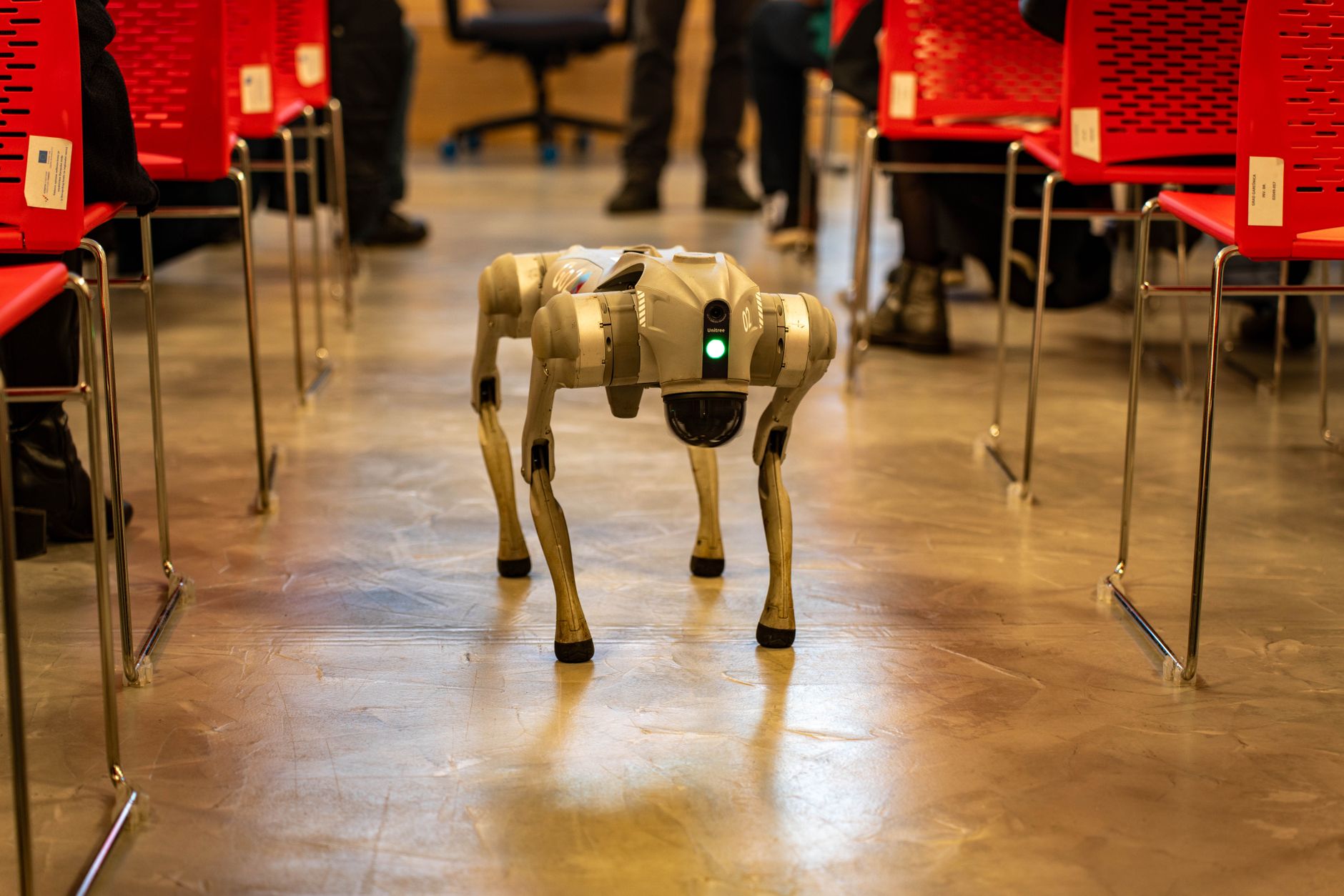
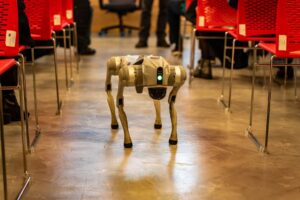
The robot dog drew the kind of unsolicited social engagement that most people spend years trying to manufacture. Strangers stopped. Phones came out. Cameras clicked. The sidewalk, normally a place where people stare at their shoes or their screens, became something closer to a slow-moving press event — except the subject of all the attention had four mechanical legs and no interest in talking to anyone.
The questions came fast and followed a predictable pattern. Was the robot yours? Yes. Did you build it? No. Was it being used for surveillance? Also no — though the fact that this was the third question, not the tenth, says something about where public intuition has landed on robots in public spaces. Nobody asked what it cost. Maybe that number would have changed the mood entirely.
What the $4,000 figure actually buys is a fully assembled Chinese-manufactured quadruped — the kind of machine that, until recently, existed mainly in robotics lab videos and Boston Dynamics promotional reels. That it can now be purchased, shipped, and walked to work is not a small development. The gap between institutional robotics and consumer robotics has been closing, and a four-grand price tag on a functional robot dog is one of the clearest signals yet that the gap is nearly gone.
The dog itself produced a strong reaction from biological dogs. Several kept their distance. Some growled. Others barked. Whatever internal calculus dogs use to evaluate threats apparently flags a four-legged machine as something worth challenging — or at least worth commenting on loudly from across the street.
What a Robot Dog Actually Is in 2026
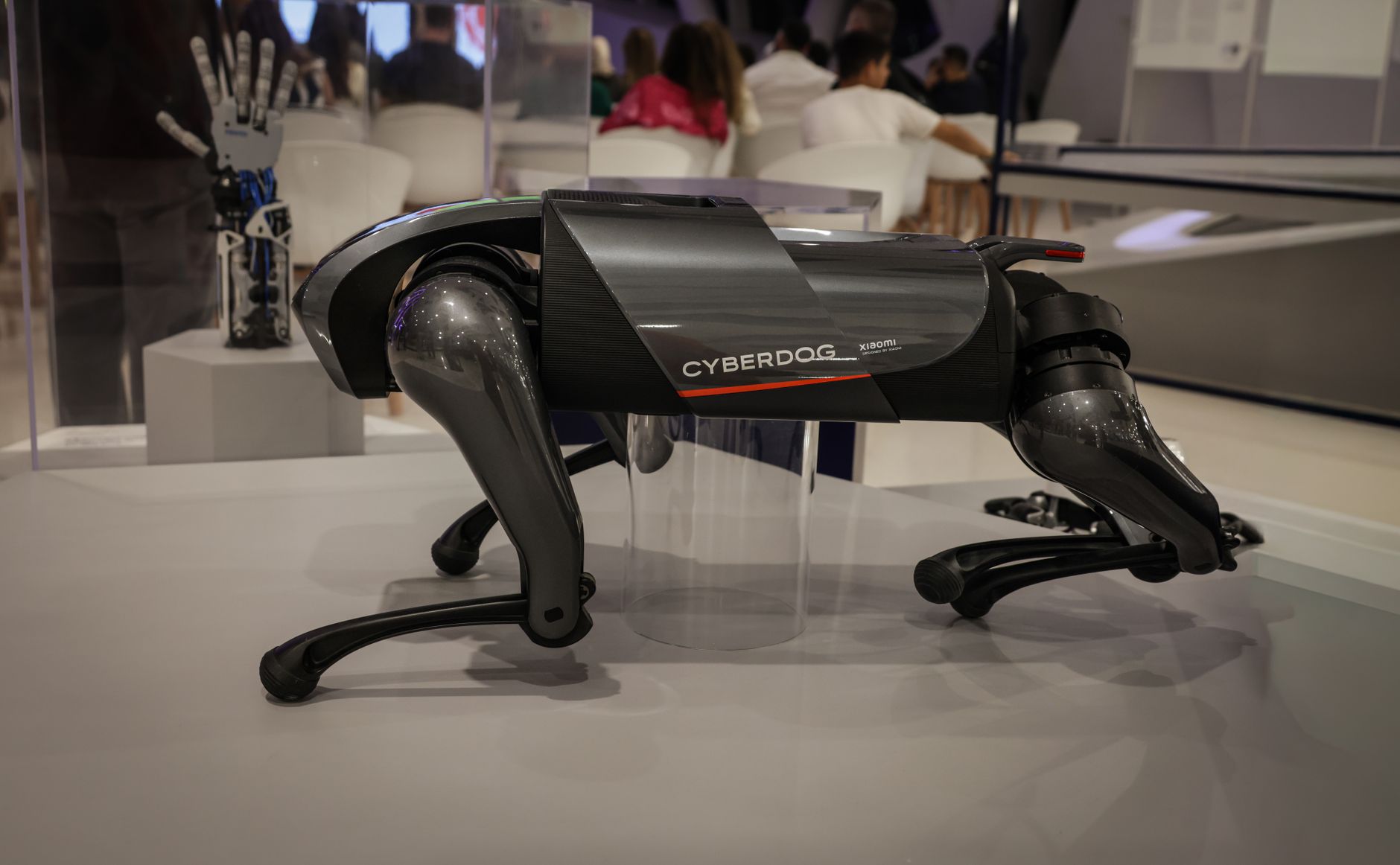
Quadruped robots have been in development for decades, but the Chinese manufacturing pipeline has done to them what it did to drones roughly ten years ago: compressed the price, standardized the components, and made them available to anyone with a credit card and a few weeks of patience for international shipping. The $4,000 price point sits in an interesting position — too expensive for an impulse buy, too cheap to remain the exclusive territory of universities and defense contractors.
The machine in question was not built by its owner. That distinction matters because it points to where the real shift is happening. This is not a hobbyist kit or a DIY project that rewards the technically obsessed. It is a finished product, purchased and deployed without requiring the buyer to understand servo motors, gait algorithms, or sensor arrays. The barrier to entry on advanced robotics used to be knowledge. Increasingly, it is just money.
Walking the robot through a city also exposed something the spec sheets do not cover: how the public has been primed to receive these machines. Surveillance was the first interpretive frame strangers reached for. That reflex reflects a genuine anxiety — robot dogs have appeared in enough law enforcement and military contexts that their presence in civilian spaces carries an automatic question mark. A device that looks like an animal but moves like a machine triggers something that a delivery drone, flying safely overhead, does not.
The animal behavior was harder to explain and more interesting to watch. Dogs, which have presumably never encountered a quadruped robot before, responded as if they had strong opinions about it anyway. Growling and barking at a machine suggests that canine threat detection runs on shape and movement rather than scent — the robot smells like nothing, but it moves like something, and that was enough. Keeping a safe distance was the dominant response, which is arguably the appropriate one.
There is a category question embedded in the whole exercise. A $4,000 robot dog occupies an uncomfortable space between toy and tool. It is too expensive and too capable to be dismissed as a novelty, but it does not obviously do anything that justifies the price for most buyers. It does not herd livestock. It does not carry packages. It does not inspect infrastructure, at least not out of the box. What it does, with considerable reliability, is attract attention — and in 2026, that might be the product. The robot as social object, as conversation starter, as proof of something. For those already thinking about where physical AI agents are headed, the direction of travel is worth watching: Anthropic’s hardware standard for AI agents in physical environments offers some context on what comes after the novelty phase.
The Sidewalk as Test Environment
What a June morning walk to work actually demonstrated is that the friction point for quadruped robots is not technical — it is social. The machine functioned. It moved through the city. People photographed it and asked reasonable questions and then moved on with their days. The infrastructure for a robot dog to exist in public is already in place: sidewalks, observers, and a population that has been exposed to enough science fiction to process what it is looking at without panicking.
What remains unresolved is what any of this is actually for. The owner spent $4,000, walked to work once with a machine that drew a crowd, and answered the surveillance question three separate times before arriving at the office. Is the next step a second walk, a software update, a community of owners swapping firmware? Or does the robot dog sit in a corner while its buyer calculates whether four grand bought an experience or a liability?