



In late spring 2020, an orthopedic trauma surgeon called Jamie D Brooks and could not finish his own explanation.
A Voice Stripped Raw
The call is the opening scene of “America, The Never Event,” an excerpt from Brooks’s book The Fleeing Season, and it begins mid-sentence, with the surgeon already unraveling. Dr Gordon is describing a patient with a severe pelvic fracture and damage to the left kidney. The team had to stop the bleed, he says, and moved quickly. Then the account breaks down into fragments: the repair “didn’t, wasn’t somehow, we . . . I . . .” The kidney they had been working on was the wrong one.
Brooks lets the stammering stand on the page without cleanup. That is the strongest choice in the passage. A tidy summary of a wrong-side surgery would read like an incident report, but a man losing his grammar mid-confession reads like a person. She hears twenty-plus years of practice in his voice, the weathering that comes from delivering terrible news to hopeful families, and then she hears something beyond that weathering. The composure he built over decades gives way while she listens.
She does not reach for the easy response. The reflex to say “It’s okay” is there, and she resists it, because it wasn’t okay.
The author describes herself as someone for whom other people’s pain spreads like contagion, and she admits that she could have been carried off in his current of hurt. It is an odd confession for a listener to make, and an honest one. She is not a doctor and has no clinical distance to hide behind. She is just a person on a phone, sitting at her bed-desk, absorbing a stranger’s worst day.
What “Never” Is Supposed to Mean
Brooks takes the next few paragraphs to explain the term, and the explanation carries the weight of an argument. A Never Event is a serious, preventable error that often results in serious harm or death to a patient. Physician Ken Kizer coined the phrase in 2001, the year Brooks started her first year of law school, and the medical community soon settled on that general definition. The name carries a promise: these things should not occur at all.
They do occur, she writes, “a lot, or at least a lot more than we’d like to think they do.” She is careful about scope. Not every iatrogenic death, meaning a death caused by medical activity, counts as a Never Event. Never Events are a tiny subset, the most egregious cases, the ones that signal a complete system failure. They are also often the raw material of valid medical malpractice claims. Iatrogenic death as a whole, though, is the third leading cause of death in the United States, a fact she attaches to a footnote.
She does not frame hospitals as villains. She calls them miraculous institutions of healing, powered by dedicated practitioners. Her complaint is about visibility. The risks inside those buildings are obscured partly by whether and how Never Events get reported, and partly by nondisclosure provisions in medical malpractice settlements. Legal barriers, in her telling, work to shield the public from the scale of the problem. A family that settles may be barred from saying what happened, which means the next family never learns it.
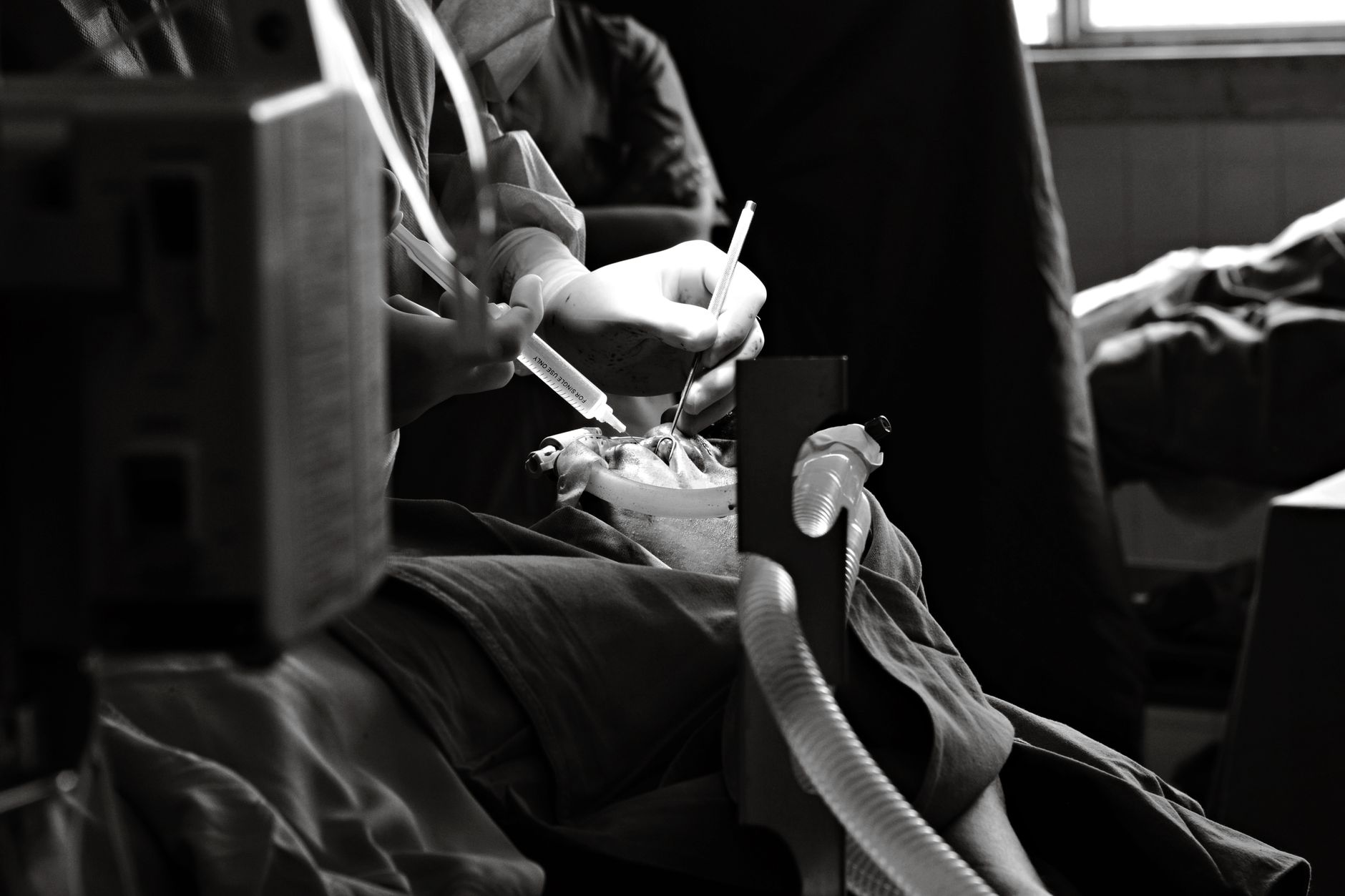
Brooks says Never Events were not new to her. She had, in her words, a front-row seat to their devastating reality. That detail explains why the surgeon’s call landed the way it did. She was not hearing the concept for the first time. She was hearing a human being fall apart inside it, with no courtroom or settlement in between.
Then the timing does its work. The conversation took place during the first COVID-19 lockdown, with hospital intensive care units at capacity across the country, morgues overflowing, and masks and other protective equipment in short supply. Health care officials were still racing to understand how fast and how far the virus spread. Against that backdrop, Brooks turns the term back on the country itself. What was the United States at that moment, she asks, if not a Never Event: a failing system riddled with preventable errors, causing serious harm and death to so many of her people? She repeats the question near the end of the excerpt, and the repetition reads like a thought she couldn’t shake.
The Decision at the Bed-Desk
The excerpt’s own headline, “Broken People Don’t Break the System. Broken Systems Break the People,” names the logic of her argument. Dr Gordon, in her account, is not a careless man. He is a veteran surgeon whose voice cracks because he understands exactly what went wrong. Brooks sees a system that put him, and his patient, in that position, then sees the same pattern in a country struggling through a pandemic. “As something was breaking within him,” she writes, “so too it was within me.”
She made her decision that day, and she calls it drastic. She had been seven weeks into lockdown at the time, working from her bed, and the call was the clearest thing she had managed to put together. A year later she gathered her husband and three children and moved them to unfamiliar soil an ocean away. The decision took one morning; the move took a year.