





A Genre a Century Old, Finally Rewritten
For more than a hundred years, the Americans Abroad novel has run on a familiar engine: a single expatriate, usually white, crosses the Atlantic to a European city in search of reinvention unavailable at home. Langston Hughes did it. Ernest Hemingway did it. James Baldwin did it. Garth Greenwell did it. The geography shifts, the decade changes, but the architecture holds – one American, one foreign city, one interior reckoning with whatever racial inequality, sexual prohibition, or moral compression the US imposed back home. Bobuq Sayed’s debut, No God but Us, does not simply update that architecture. It dismantles the load-bearing walls.
Sayed’s protagonist, Delbar, is American by birth and the child of Afghan refugees, which already puts his claim on American identity in a different register than his literary predecessors. He doesn’t head west across the Atlantic to Paris or London. He travels east to Istanbul, not to escape America’s repressions, but to outrun the social damage of being outed within his DC-area Afghan diaspora community. That distinction matters. The flight isn’t from America into freedom – it’s from one kind of exposure into a city already turning against its own dissident communities, its regressive forces gathering.

The Second Voice Sayed Didn’t Have to Give
In Istanbul, Delbar meets Mansur, an Afghan refugee who has fled Tehran. Sayed grants Mansur his own first-person narration – a structural decision that quietly detonates the Americans Abroad frame entirely. The novel is no longer a single consciousness moving through foreign territory. It becomes two displaced Afghan men, both queer, circling each other and their own sharply different relationships to safety, desire, and the future.
Delbar’s chapters read as a story of love and self-formation. Mansur’s are about the grinding search for security and a way out of statelessness. The contrast isn’t incidental. It exposes the gap between an Afghan-American who carries a US passport – and all the institutional protection that implies – and an Afghan refugee who carries nothing legally recognized at all. Their desire for each other doesn’t erase that gap. It runs directly through it.
Baldwin famously acknowledged that he couldn’t write a character who was simultaneously Black and queer in Giovanni’s Room. That admission has long stood as a marker of what the Americans Abroad tradition could not hold. No God but Us puts a queer, racialized protagonist at its center without treating that combination as a literary problem to navigate around. Delbar’s identity isn’t a complication layered onto the genre’s existing concerns – it is the lens through which the genre’s assumptions become visible as assumptions.
Sayed spoke with writer Leila C. Nadir over Zoom in April, less than six months before the 25th anniversary of the US invasion of Afghanistan on October 7, 2001. That date hangs over the book’s context without needing to be stated on every page. The invasion’s consequences – displacement, statelessness, diaspora fracture – are the water both Delbar and Mansur swim in, even when the novel is focused on something as intimate as the slow development of attraction between two people in a city neither of them belongs to.

Why Istanbul, and Why That Question Matters
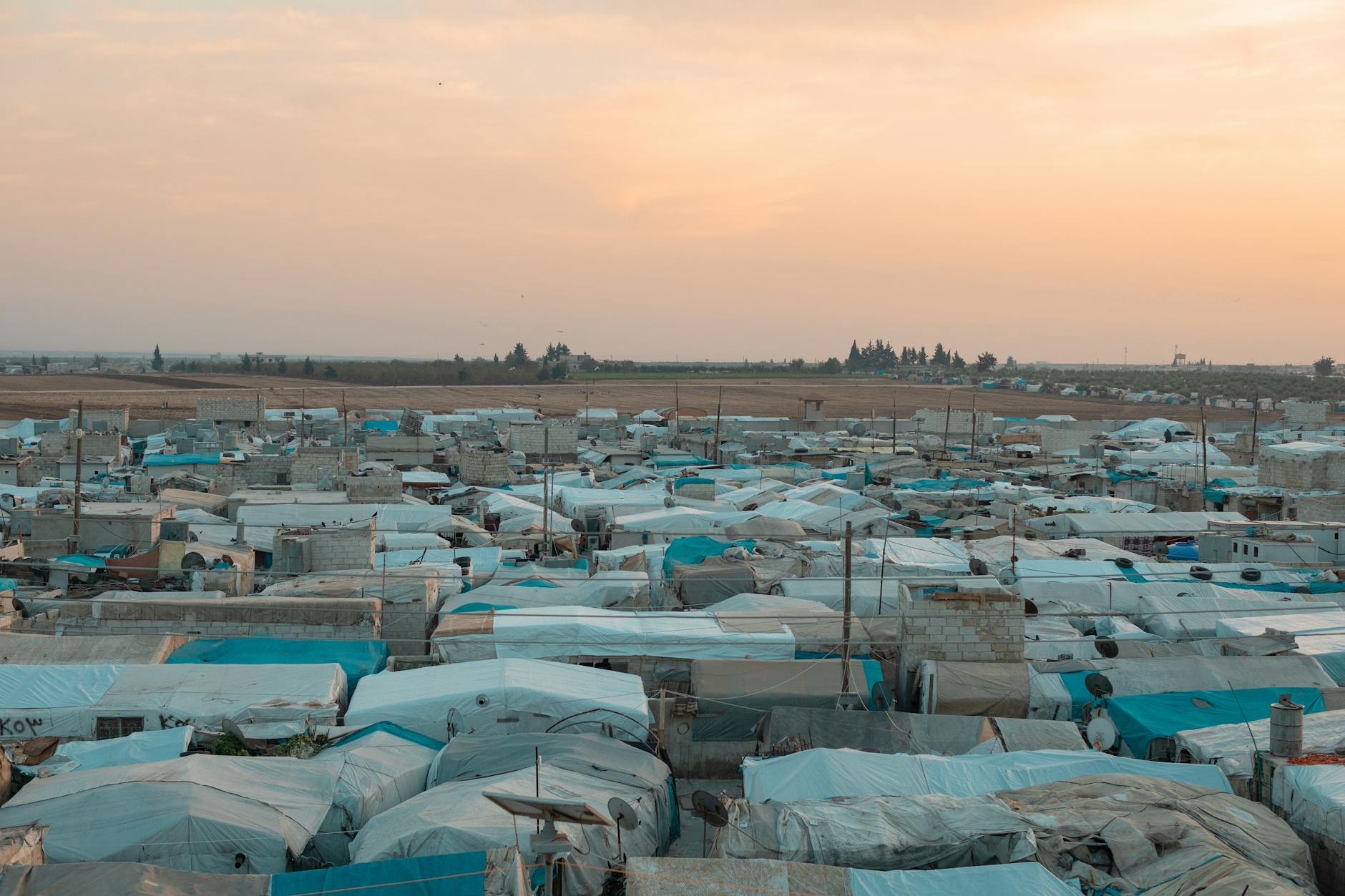
Sayed has said he chose Istanbul as his novel’s third space specifically because it is neither origin nor destination. The city functions as a holding zone – cosmopolitan, porous, populated by refugees and asylum seekers from West Asia and North Africa who have made it as far as Istanbul while waiting, sometimes for years, for resettlement or permanent stability in Europe. That waiting shapes character differently than arrival does. It strips the arrival narrative of its momentum and replaces it with something more exposed.
In conversation, Sayed described a fatigue with immigrant literature that stalls on what he called “rudimentary questions of belonging” – the grief of feeling excluded, the search for ancestral meaning. His argument is pointed: those narratives, by fixating on trauma and self-victimization, fail to account for the complexity of power within diaspora communities, including their complicity in the same imperial structures that displaced them. Istanbul, precisely because it demands that characters shed the language of origin and destination, forces a different set of questions about identity, solidarity, and the obligations that come with relative privilege.
What the Novel Charges the Genre With Ignoring
Sayed is a Steinbeck Fellow, a Lambda Literary scholar, and an award-winning MFA graduate of the University of Miami. His critical engagement with the Americans Abroad tradition isn’t the posture of someone writing against a canon he hasn’t read. The argument embedded in No God but Us is specific: the genre’s canonical examples have consistently centered a protagonist whose claim to American identity is uncomplicated, which means the genre has consistently failed to examine how the US’s imperial wars travel inside the people those wars displaced – shaping desire, imagination, and self-understanding at the most personal level.
That framing positions the novel not as a marginal addition to an existing shelf but as a structural critique of what that shelf has always left out. The queer Afghan-American abroad isn’t a variation on the American abroad. He’s a figure who makes visible what the original figure was designed, consciously or not, to obscure.
No God but Us arrives as the 25th anniversary of the Afghanistan invasion approaches – a timing that is neither coincidental nor something the novel can be reduced to. Sayed has written a book about love, statelessness, and the specific weight of carrying a war inside you across borders, into other cities, into other people’s arms. What remains open is whether the literary establishment that built the genre Sayed is rewriting will recognize the intervention for what it is, or absorb it as a welcome addition without fully accounting for the charge it levels.