




The Chaos Theory Was Always Incomplete
For roughly a decade, the working assumption in neuroscience held that psychedelics throw the brain into disorder – stable communication networks destabilize, regions that normally ignore each other start firing together, and EEG readings spike in complexity. It was a tidy narrative, and it stuck. But a new study published in Nature is complicating that picture in ways that matter well beyond the lab.
Devon Stoliker, a neuroscientist at Monash University, puts the standard model plainly: “Think of the networks of the brain as highways. Under psychedelics, these highways break down into many different directions.” His team’s new experiment asked whether those directions are actually random – and the answer, after feeding drugged and sober brain scans through an AI analysis pipeline, turned out to be no.
How the Study Was Built
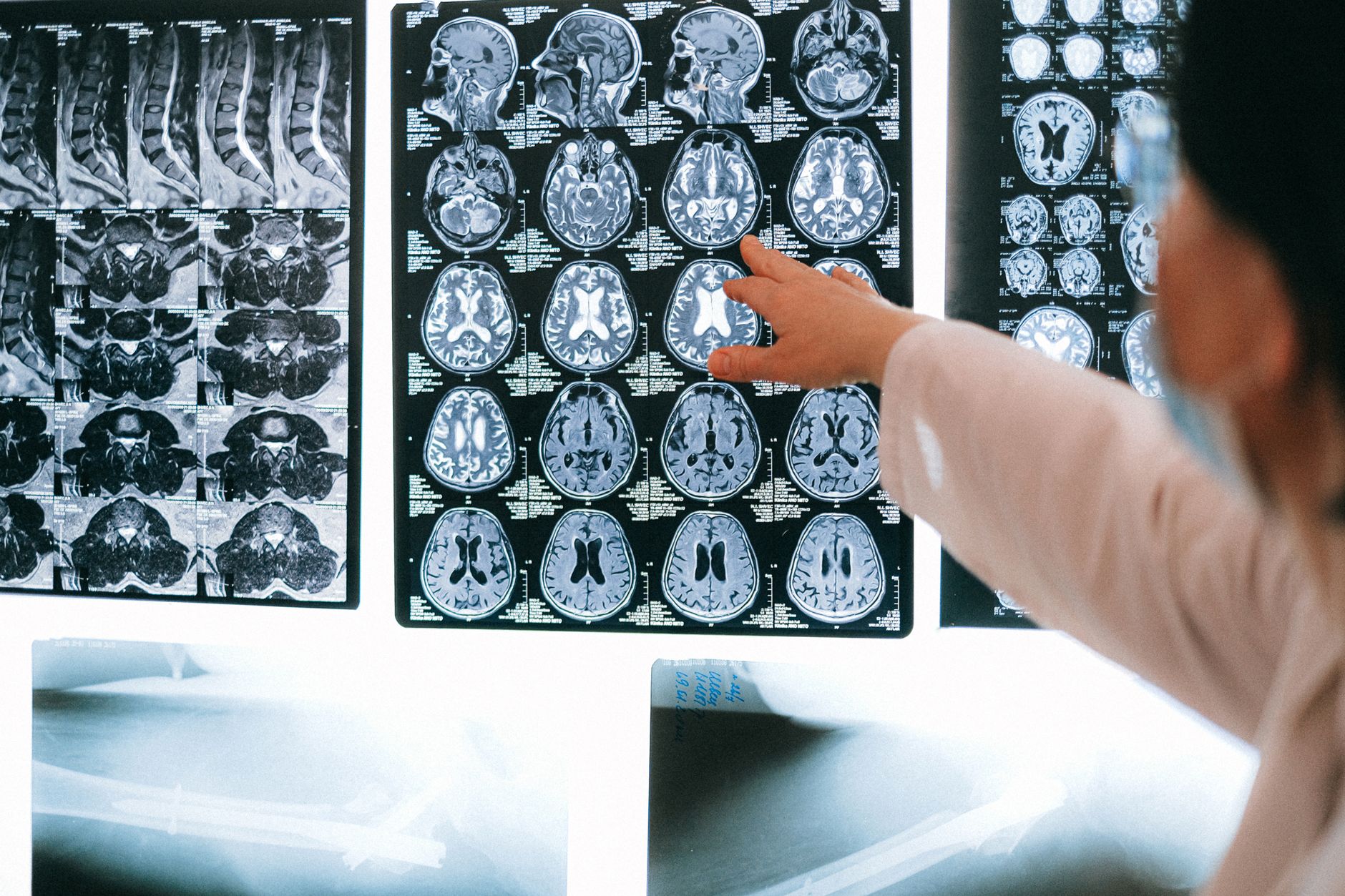
The experiment, which Stoliker and colleagues called PsiConnect, recruited 62 people who had no prior experience with psychedelics. Each participant received 19 milligrams of psilocybin – the active compound found naturally in certain fungi – then had their brains scanned while the drug was active and again while sober. The two sets of scans were then handed off to an AI system designed to find structure within what had previously been described as neural noise.
What the AI returned was not a picture of random chaos. Beneath the surface-level complexity that EEG traces had long flagged – the cross-network chatter, the loosening of normally rigid communication boundaries – there appeared to be underlying order. The brain under psilocybin was not simply dissolving into static. Something more organized was happening.
The distinction matters because the chaos model never had a satisfying answer for the subjective side of the experience. As Stoliker puts it: “It never really explained why an individual would have a meaningful experience, why they might have insight, why they might experience clarity, and why these might translate into positive psychological changes.” A brain in pure disorder does not reliably produce therapeutic outcomes. The fact that many clinical trials involving psilocybin have shown measurable psychological benefits for depression and addiction suggests the underlying mechanism is doing something more purposeful than generating noise.
What “Order Beneath Chaos” Actually Means
The findings suggest that when brain networks break from their standard configurations under psilocybin, they do not simply scatter. Instead, they appear to reorganize into different – but still structured – patterns of communication. The analogy to highways breaking into “many different directions” still holds visually, but those directions are not arbitrary. They follow rules, even if those rules differ substantially from the sober baseline.
This reframing has direct implications for how researchers design future studies and interpret clinical data. If the brain on psilocybin is operating according to a different organizing logic rather than no logic at all, then the AI tools used to decode that logic become central to understanding what the drug is actually doing. The PsiConnect study is, in part, a proof of concept for that kind of analysis – showing that machine learning can pull signal from what looked, at the EEG level, like unintelligible noise.
Why the Technology Angle Cannot Be Separated From the Science
The role AI played in producing this result is worth sitting with. Human analysts reviewing the same brain scans had been reaching for the chaos model partly because the visual and statistical complexity of psilocybin-altered EEG data resists conventional pattern recognition. Machine learning, trained to find structure at scales and dimensions that human reviewers miss, returned a different answer. That does not make the chaos interpretation wrong in all respects – the surface complexity is real – but it suggests the brain is doing more than one thing at once, and the tool you use to look determines which layer you see.
Monash University’s involvement, and the decision to publish in Nature, positions this work at the intersection of psychedelic pharmacology and computational neuroscience. Both fields have attracted significant research investment over the past five years, and their overlap is where the most methodologically interesting questions are currently forming. PsiConnect is early-stage evidence that AI-assisted brain scanning can resolve disputes that purely observational methods could not.
The 62-participant sample size is small by clinical standards, and Stoliker’s team has not yet published a follow-up that tests whether the ordered patterns they identified correspond to specific psychological outcomes – the clarity, the insight, the “meaningful experience” that the chaos model could not account for. That gap between neural observation and psychological effect remains open.
Nineteen milligrams of psilocybin is a substantial dose. It is not the micro-dose range that has attracted separate research attention, nor is it at the ceiling of what experimental protocols have administered. The decision to use that specific figure likely reflects a deliberate effort to capture a full psychedelic response without pushing into ranges where participant safety becomes more difficult to manage – but it also means the study’s findings apply to a particular intensity of experience, not to psilocybin exposure broadly.

Whether AI-decoded brain order translates into something clinicians can eventually use – a way to predict who benefits, who does not, or why some trips produce insight and others produce distress – is the question the PsiConnect data raises without yet answering.