




A Disney Sequel Asks a Question Archaeologists Have Spent Decades Failing to Answer
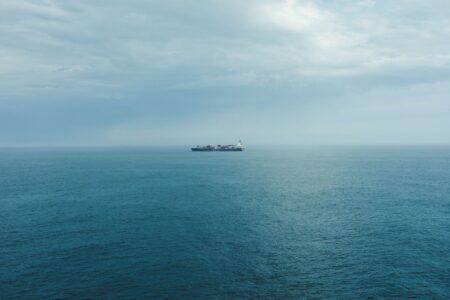
The new live-action Moana film, an adaptation of Disney’s animated original, pulls its emotional core from the same puzzle that has frustrated researchers for generations: why did Polynesian voyagers, after roughly 1,700 years of relative geographical stillness, abruptly begin sailing east across thousands of kilometers of open Pacific Ocean? The films are fiction, but the maritime culture they draw from is not – Polynesian ancestors executed one of the most ambitious sustained exploration campaigns in human history, spreading across islands so remote that even modern navigation finds them humbling.
Now, new climate evidence is being examined as a possible mechanism behind that sudden departure from stability. The timing matters enormously. Whatever triggered the eastward push wasn’t gradual drift – it was a shift sharp enough to leave an archaeological signature, a pattern of settlement that reads less like slow diffusion and more like deliberate, coordinated movement into unknown water.
What 1,700 Years of Staying Put Actually Means
Polynesian seafarers were not idle during those seventeen centuries. They maintained trade networks, refined navigation techniques built around star paths and wave patterns, and developed ocean-reading skills that allowed them to cross distances most contemporary civilizations would have considered impassable. The pause in outward settlement wasn’t a failure of ability. Something else was holding the boundary in place – or, more precisely, something was about to stop holding it.
The archaeological record shows that once the expansion restarted, it moved fast. Islands separated by thousands of kilometers were settled in what is, on a historical timescale, a compressed window. This wasn’t gradual exploration bleeding outward from the edges; it looks more like a population that had made a decision and was executing it with the navigational confidence accumulated over those preceding seventeen centuries. The tools were already there. The question is what released them.
Climate is the most recent candidate to enter the explanation seriously. Researchers studying Pacific climate patterns have been building a picture of how wind systems, ocean currents, and weather cycles across the region shifted over time. Eastward sailing against prevailing winds is genuinely harder than sailing west – Polynesian navigators knew this, and it shaped where they went first. A change in wind behavior, even a temporary one, could have opened corridors that were previously expensive or dangerous to attempt.
Where the Climate Evidence Points
The specific nature of the climate data being examined connects to broader research into Pacific atmospheric and oceanic variability – cycles that affected everything from fishing yields to the practicality of long-distance sailing. If conditions shifted in ways that made eastward winds more favorable, even periodically, then the decision to push into uncharted water becomes less mysterious and more rational.
What makes this framing interesting from a research standpoint is that it reframes the question slightly. Instead of asking why Polynesians suddenly became capable of eastward expansion, it asks what conditions made expansion worth attempting – and worth the risk of the people who did not come back.
The Moana Connection Is Thinner Than It Looks – and More Interesting
Disney’s Moana films take obvious liberties. The story is fictional, the characters invented, the mythology adapted for an audience that may have no prior contact with Pacific Islander cultures. But the central dramatic tension – a protagonist compelled outward by something larger than personal ambition, into waters that carry real danger – mirrors the archaeological reality more closely than most historical fiction manages.
The people who actually settled the remote Pacific weren’t doing it on a whim. Settlement voyages of this kind required provisioning, navigation knowledge, and almost certainly some understanding that the journey was one-way until a return route was established. Families, not just explorers, made these crossings. The social machinery required to move a founding population across open ocean is substantial, and it only gets organized when the reason to go is compelling enough to outweigh everything being left behind.
That’s where the climate hypothesis gains traction outside of pure academic interest. If shifting conditions were reducing the viability of existing island environments – changing rainfall, disrupting fishing, affecting agriculture – then eastward expansion stops being adventurism and becomes a resource calculation. The same logic that drives migration in every other human context: the place you’re going has to look better than the place you’re leaving, and sometimes that calculation gets forced by the environment rather than chosen.
The live-action Moana adaptation arrives in a period when Pacific Islander heritage is receiving significantly more mainstream attention than it did a decade ago. Whether the film engages seriously with the archaeological and climate research underlying its premise is a separate question from whether that research matters – and it does, on its own terms, independent of anything Disney produces.
What the Research Doesn’t Settle
Climate evidence can establish correlation between environmental shifts and settlement patterns, but it can’t fully account for cultural readiness – the specific social and technological configurations that allowed one population to attempt what others, facing similar conditions elsewhere, did not. Polynesian navigation was a genuine technological achievement, built over generations, and its sophistication is not explained by climate alone.
The seventeen-century pause itself remains only partially understood. If the navigational skill existed throughout that period, and climate eventually changed enough to open eastward corridors, the remaining variable is something harder to measure: why this generation, this island group, this particular social organization was the one that went. Archaeological research continues to add resolution to the settlement timeline, narrowing the windows, refining the sequence of which islands were reached when. Each data point tightens the puzzle rather than solving it – and the eastern Pacific, which Polynesian navigators crossed to reach South America and back, still holds distances that make the question feel very physical rather than purely academic.