



A Particular Kind of Screen Dad
Sam Neill, who died today at 78, built one of cinema’s most underappreciated specialties – playing men constitutionally unsuited to children who, by the final act, turned out to be exactly the father figure the story needed.
The Archetype He Made His Own
There is a specific type Neill owned across his career: the man caught off guard by his own capacity for care. He didn’t play warm. He didn’t play approachable. He played resistant – a quality that, in the hands of a lesser actor, reads as cold, but in Neill’s hands always carried something buried and stubborn underneath.
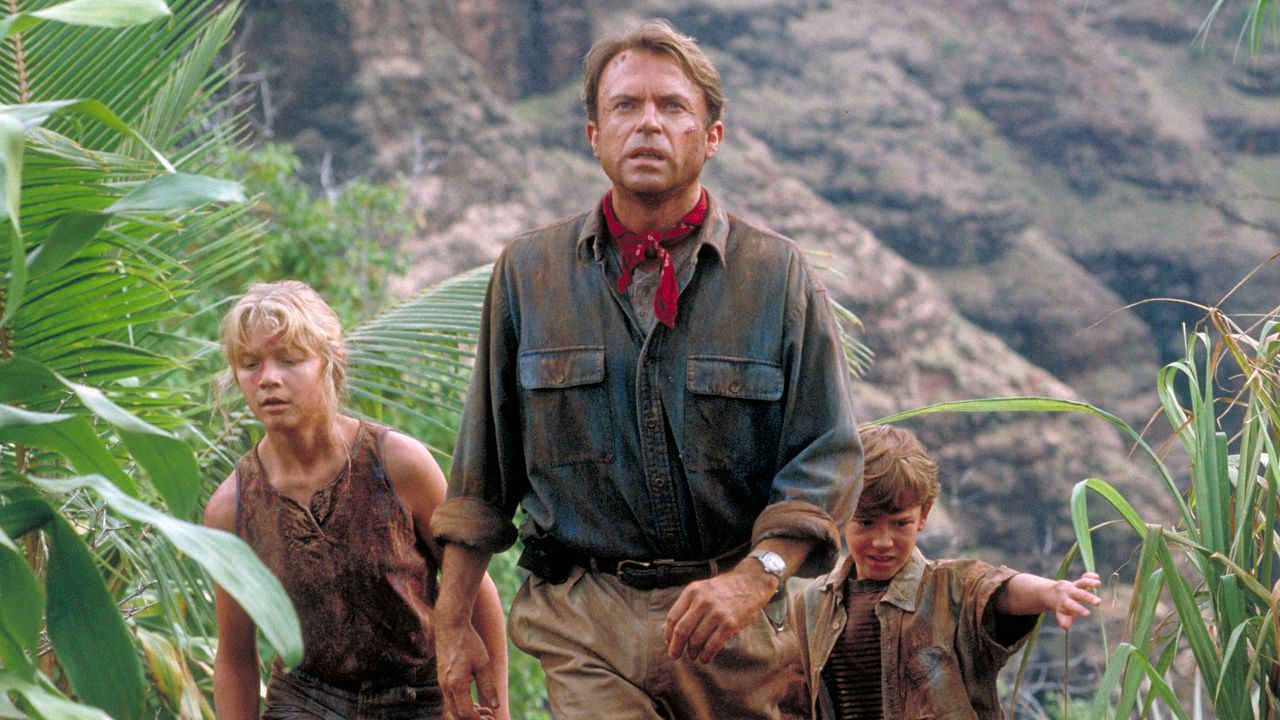
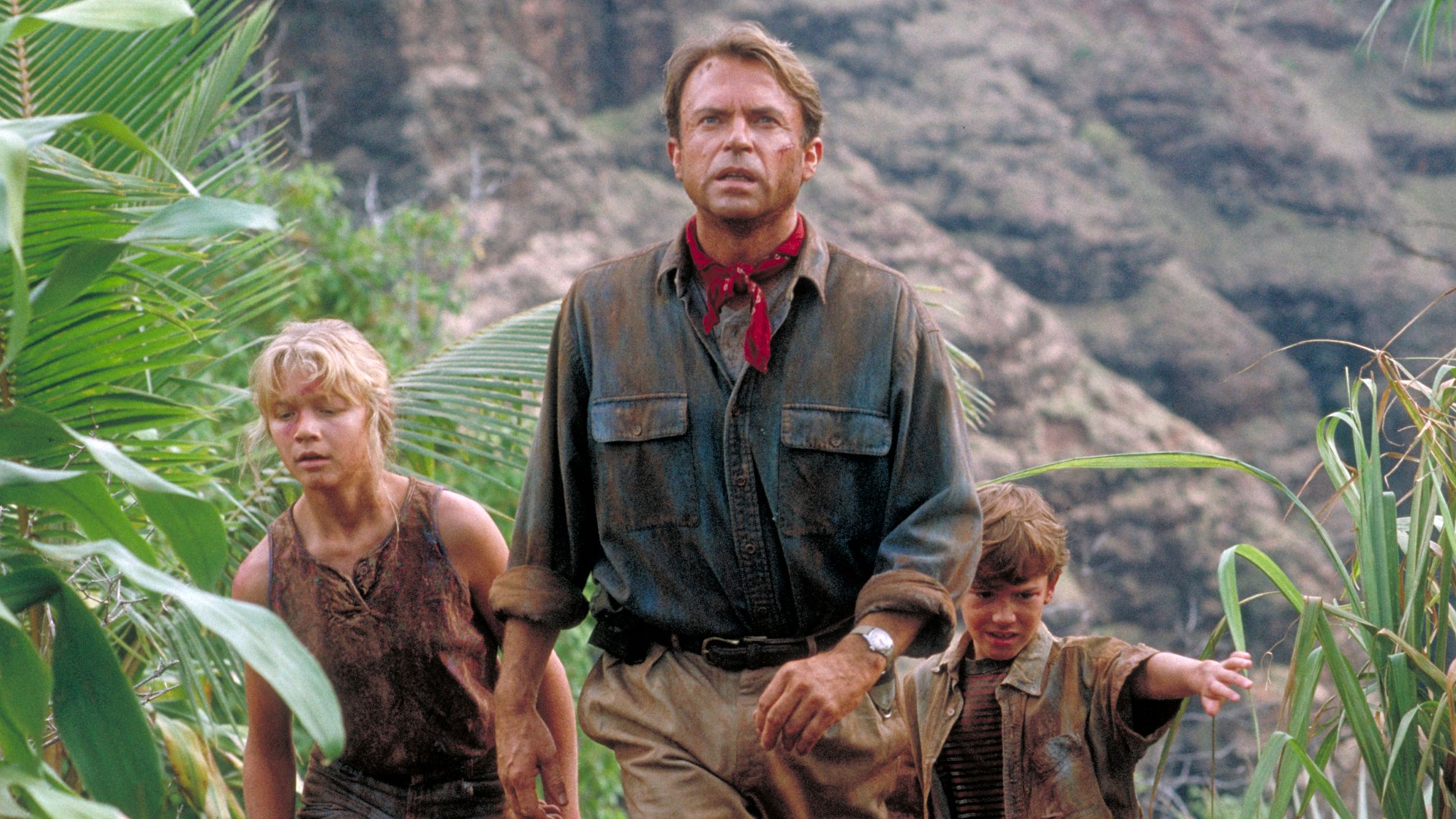
In Jurassic Park, his Dr. Alan Grant arrives on screen practically allergic to children. The bit is introduced early and played for easy laughs – Grant demonstrating to a smug kid exactly what a velociraptor claw would do to soft tissue, not because he’s cruel but because he simply does not register children as beings who require softness. He is a scientist. He is interested in animals that have been dead for 65 million years. Living small humans are not his department.
What Steven Spielberg’s 1993 film understood – and what Neill’s performance made credible – is that the arc from reluctance to devotion only works when the reluctance is genuine. Grant doesn’t warm to Tim and Lex Murphy because the script tells him to. He warms to them because the island keeps putting them in his path and he keeps choosing, under pressure, to stay. The scene where he improvises a seatbelt from two female-ended buckles and explains it to Tim – “life finds a way” – is so quiet against the film’s scale that it almost disappears. It shouldn’t. That small gesture is where Grant’s fatherhood actually begins.
Neill’s performance never announces the change. There’s no swelling score cue attached to the moment he decides these children are worth protecting. One shot he’s dragging them forward to survive. The next, without ceremony, he’s theirs. That refusal to editorialize is what separated him from actors who play the same archetype as a redemption arc requiring maximum visibility.
Taika Waititi Gave Him Room to Do It Again
More than two decades later, Neill did the same thing again in The Hunt for the Wilderpeople, Taika Waititi’s 2016 New Zealand film, and in some ways did it better. His Hec is older, rougher, and far more explicit about not wanting the boy named Ricky Baker anywhere near his life. Where Grant was professionally distracted, Hec is personally closed – a man who has worked for years at keeping the world at a manageable distance, and who greets the arrival of a foster child into his home with something close to offense.
The film earns its comedy precisely because Neill plays Hec without apology. He doesn’t signal to the audience that this gruffness is a performance, that somewhere inside Hec is warmth waiting to be unlocked. He commits to the character’s resistance so fully that when the shift comes – slowly, grudgingly, across weeks of wilderness survival – it arrives as revelation rather than inevitability.
What makes Wilderpeople interesting in this context is that it strips the dynamic down to just two people and a lot of New Zealand bush. There’s no dinosaur chasing anyone into connection. The forced proximity is quieter and longer, which means Neill has to do more with less. A scowl held a beat too long. The way Hec says Ricky’s name after the first month versus the second. The audience tracks the softening through accumulation of detail, not declaration, and Neill understood that this was the only way to make it land.
The film earned widespread attention – Waititi directing, Julian Dennison playing Ricky with a charisma that matched Neill’s stillness – but Neill’s work is the load-bearing wall. His Hec is the reason the film’s emotional logic holds. A warmer, more signaling performance would have collapsed the whole thing into sentiment by the third act.
Taken together, the two roles form a kind of case study. Same structural device, different decades, different directors, different tones – one a summer blockbuster about dinosaurs eating lawyers, one a deadpan New Zealand comedy about a boy wanted by the national news. Both films built their emotional center on the same question: what happens when a man who has decided fatherhood is not for him gets no choice about it?
What Gets Left Behind
Neill’s passing at 78 removes an actor who understood economy – who knew that restraint, held long enough, communicates more than display. That’s a rare skill in any era of filmmaking, and particularly rare in the register of screen fatherhood, where sentiment is the default currency and sincerity usually comes announced.
The shot that keeps returning is near the end of Wilderpeople. Hec stands a few feet from Ricky. He doesn’t say much. He doesn’t have to. After everything the film has put them through together, the distance between them – smaller now than it was, measured in silence rather than words – says the rest. It is vintage Neill: present, contained, and entirely unwilling to explain itself.