




Hardware, Finally
New York waited a long time for this moment, and when it arrived at the season opener, it came set in metal and stone. The New York Knicks received their championship rings at the ceremony, each piece carrying nearly 800 diamonds and sapphires – a count that puts it firmly in the upper tier of sports jewelry produced in recent memory.
Hollywood jeweler Jason Arasheben designed the rings.
Arasheben, who has built a reputation crafting championship hardware for professional sports franchises, didn’t approach this commission as a glitter exercise. “It’s got to tell a story beyond just being pretty,” he told GQ. That framing – functionality of meaning over surface spectacle – shaped every decision that went into the piece, from stone selection to structural layout. A ring worn by an athlete, after all, goes on the hand of someone whose hands are already the story.

What Goes Into 800 Stones
Getting nearly 800 diamonds and sapphires onto a single ring without it reading as chaotic requires a design logic that most people never consider. Each stone has to earn its placement. The overall silhouette needs to hold at a distance – visible across a locker room, legible on a raised fist in front of a crowd – while still rewarding close inspection. That’s not an aesthetic problem so much as an architectural one.
Sapphires carry specific weight in this context. Where diamonds function as the expected vocabulary of championship jewelry, sapphires introduce color and specificity. Blue, in the case of the Knicks, is not incidental. The franchise colors are built directly into the stone count, which means the ring’s palette is less a decoration and more a declaration. Every angle catches a different ratio of white and blue light depending on how the hand moves.
Arasheben’s background in Hollywood – dressing celebrities for red carpets and award seasons – gives him a particular sensitivity to how jewelry performs under pressure and camera flash. Championship rings exist in that same high-exposure environment. They get photographed thousands of times. They end up in display cases and documentaries. The craftsmanship has to survive that scrutiny, which is a standard most commercial jewelry never faces.

When Sport Meets Style
Championship rings occupy a strange position in the jewelry world. They are not fashion objects in the conventional sense – nobody buys one, nobody chooses to wear one based on personal taste – and yet they function as some of the most photographed and discussed pieces of wearable design produced each year. Watches in the same price and craftsmanship tier rarely get the same cultural attention, which says something about how context shapes the value we assign to objects.
The Knicks’ ring arriving at the season opener also means it debuts in front of the people who will wear it daily – players who will eventually decide whether the ring lives in a box or on their finger. That’s the real audience Arasheben was designing for. Not the cameras, not the ceremony broadcast, but the athlete who looks down at his own hand six months from now and either feels something or doesn’t.
There is a version of this commission that produces a ring heavy with stones and light on intention. Arasheben’s stated approach – narrative over prettiness – suggests he was steering away from that outcome deliberately. Whether the final piece lands that way depends entirely on the person wearing it and the specific memories those 800 stones are meant to carry.
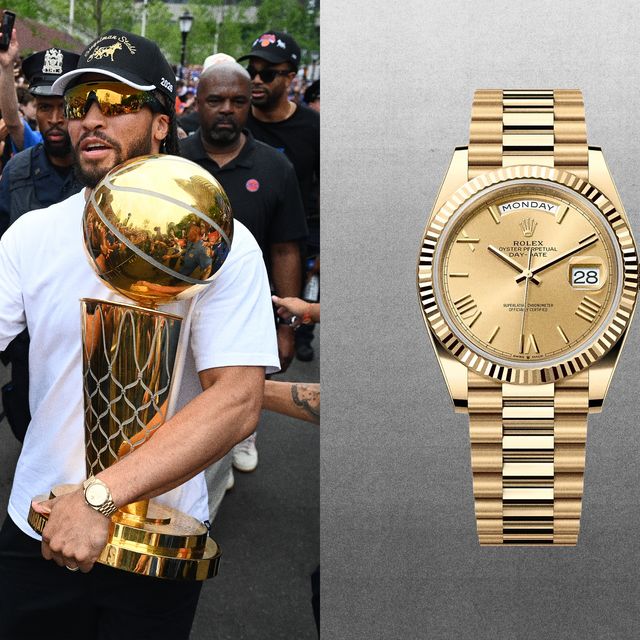
The ring was revealed at the season opener, the night the Knicks began the work of defending what those stones now represent – which is exactly when you find out if a piece of jewelry was built to last or just built to photograph.