





A Pop Icon Steps Into Plath’s Most Claustrophobic Fiction
Billie Eilish is about to walk into one of American literature’s most scrutinized roles. The singer, who has never appeared in a feature film, is set to play Esther Greenwood in a new adaptation of Sylvia Plath’s The Bell Jar, directed by Sarah Polley. Set photos have already begun circulating, and they show an Eilish that fans of her androgyne cuts and neon hair will not immediately recognize.
Polley’s production is moving fast, and details are accumulating from set reports, trade announcements, and location sightings across Ontario.
Plath devotees – who have taken to calling themselves Plathypuses – are split on the casting. That split is probably inevitable when any beloved novel meets any bold choice, and The Bell Jar has never attracted mild opinions. What’s less debatable is that this adaptation is pulling together a specific, considered vision: of setting, of costume, of period, and of the women surrounding Esther as her mental health fractures across the novel’s mid-century New York.
The Look, the Clothes, and What They Signal
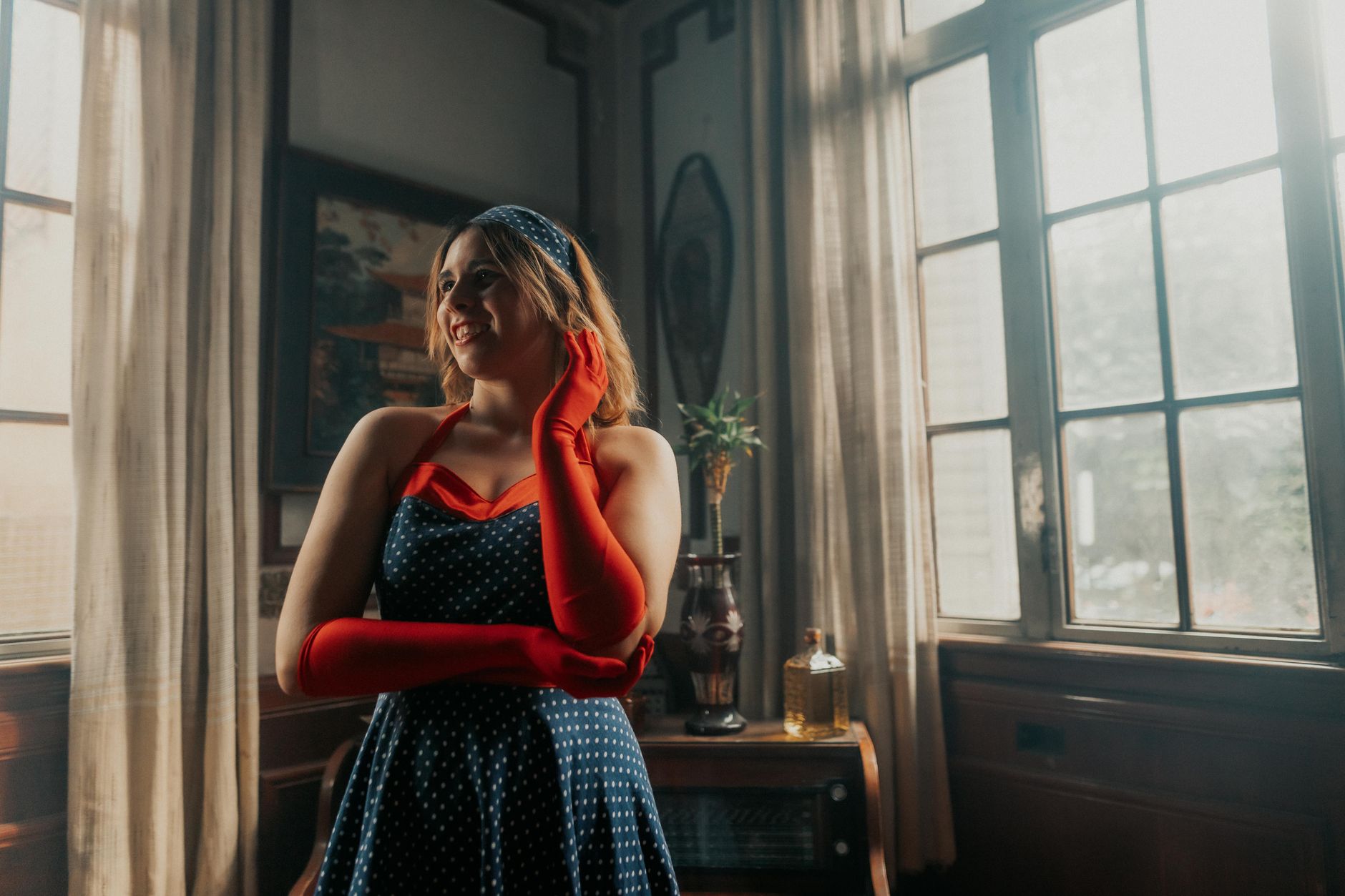
Vogue reported on Eilish’s physical transformation for the role earlier this month. In images from the set, she appears in a short-sleeved scarlet knit top, a full A-line skirt in a check print, a neat side part, and a bold red lip. The silhouette is emphatically 1950s – the decade in which Plath set the novel and during which she wrote much of it. Costume design is credited to Luis Sequeira, whose previous work includes The Shape of Water. The mid-century wardrobe does real narrative work here: Esther Greenwood’s suffocation in the novel is inseparable from the postwar domestic ideal she is expected to inhabit, and putting that ideal on Eilish – an artist whose public persona has consistently pushed against gendered expectations – gives the casting a layer of friction the film can use.
Sequeira’s costuming choices aren’t just period-accurate. They’re pointed.
The transformation is complete enough that Eilish is described as unrecognizable in the set photos. That’s either a good sign for the performance or, depending on your view of the casting, a reminder that disappearing into a role and being right for a role are not always the same thing. Polley, whose directorial work on Women Talking demonstrated a precise understanding of how women’s interiority translates to screen, has earned enough trust to make that argument worth suspending for now.
Toronto Plays New York, and the Locations Are Doing Heavy Lifting
Polley is Canadian, and the production has taken the well-worn path of using Ontario to stand in for the American Northeast. Parts of Hamilton are among the locations, including McMaster University and the Tamahaac Club in Ancaster, both of which will appear in the film without being identified as themselves. The Tamahaac Club has a history that lines up uncomfortably well with the novel’s themes – it functioned as a sanatorium for tuberculosis patients during its peak years, a fact that lands differently when you’re making a film about psychiatric institutionalization.

The most striking location choice, reported this morning by the Hamilton Spectator, is Mount Mary Immaculate – a Catholic girls’ school and former orphanage that will serve as the film’s version of Walton Hospital, where Esther undergoes her first, disastrous rounds of electroconvulsive therapy. The site was maintained until recently by a Ukrainian Catholic Congregation. It once held an orphanage, a daycare, and a high school for girls under one roof. The Diocese of Hamilton purchased the property in 2019, and nuns still live there. The building also has prior film experience: a scene from the 2017 horror film It was shot on the premises, which is either an irrelevant coincidence or exactly the kind of detail that makes a location scout feel vindicated.
The choice to shoot ECT scenes in a space that was, within living memory, a girls’ school is not subtle. It doesn’t need to be. Plath wasn’t subtle about it either.
The Cast Taking Shape Around Eilish
Carey Mulligan is attached to play Mrs. Greenwood, Esther’s mother – a role that requires projecting the specific emotional grammar of a parent who cannot reach her daughter and does not entirely understand why. Mulligan’s casting will produce an involuntary reckoning for any Millennial reader who grew up watching her in roles that felt, at the time, like peer-level identification. Ella Beatty, who appears in Netflix’s forthcoming Lizzie Borden biopic and whose parentage requires no elaboration, is reported by Deadline to be in final talks for an unspecified friend role in the film. The character of Betsy – Esther’s cheerful, uncomplicated foil at the magazine internship – is the obvious candidate, though the production has not confirmed this. Connor Storrie, known from Heated Rivalry, is also rumored to be joining the cast, though his role similarly remains unannounced.
The supporting cast’s shape suggests a film attentive to the social world Esther moves through before her breakdown – the women who embody the paths she cannot bring herself to follow, and the men who appear at the margins of a story that is fundamentally not about them. Whether Eilish can anchor all of that remains, for now, an open question. The set photos show a woman in period costume. The novel shows a woman coming apart at the seams of one. Those are different things, and Polley knows it – which is probably why the production is shooting key scenes at a building where nuns still sleep down the hall.