




A Day Steeped in Literary History and Contemporary Obsession
August 21 marks the birth of Lady Mary Wortley Montagu in 1762 – traveler, letter-writer, and one of the most clear-eyed observers of 18th-century European society. That particular brand of unflinching attention to what people would rather ignore runs quietly through much of what the literary world circulated this week: essays on death, on grief, on the psychological machinery behind fandom, and on the strange persistence of ghosts – real and fictional – in the spaces where readers go to feel less alone.
The range is wide. Debut novels from Momo Yamaguchi and Damon Galgut’s first novel, Mother/Land, sit alongside a ten-year memorial essay, an argument for television as a serious writer’s medium, and a deep archival dive into Mark Twain’s improbable role in the rise of subscription publishing. What follows is a map of the week’s most substantial literary conversation.

Writing Into the Wound: Grief, Plath, and Max Ritvo
Two pieces this week approach grief from opposite ends of the emotional spectrum, and both are worth reading back to back. The first, published at Lit Hub Craft, makes a direct case for leaning into the figures that frighten us rather than away from them – using the ghost of Sylvia Plath as a guide. “Although we may want to flee from what makes us afraid,” the essay argues, “it’s so often that these ghosts are the only ones who can help us move through the spaces of discomfort and pain.” The piece frames Plath not as a cautionary symbol but as a companion through difficulty, a presence that demands rather than refuses engagement.
The second comes from E. K. Schrader at Lit Hub Biography, reflecting on a decade without the poet Max Ritvo, who died in 2016. “Laughing at death and dying would have been preposterous to me before knowing Max,” Schrader writes. It’s a sentence that does a lot of work – locating exactly where Ritvo changed something in how Schrader understands mortality, and by extension where humor becomes not a deflection but an inheritance. Ten years is long enough to know what grief actually does to a person, and Schrader’s essay doesn’t pretend the timeline flattens anything.
Fiction Making Noise: Debuts, Extracts, and the Week’s Best-Reviewed Books
Momo Yamaguchi’s debut novel, Hello, Limerence, gets an extract published at Lit Hub Fiction, and the opening move is hard to forget. “I medicate myself with an Asahi and a packet of sour gummy worms to avoid dwelling on this morbid thought for too long,” the narrator says – a sentence that earns its absurdity precisely because it doesn’t wink at the reader. Limerence, the obsessive attachment to another person that falls short of genuine reciprocity, is exactly the kind of emotional state that demands a slightly ridiculous coping mechanism, and Yamaguchi finds the register immediately.
Faraaz Mahomed speaks with Damon Galgut at Lit Hub In Conversation about Mother/Land, Galgut’s debut novel, with their discussion circling what Galgut describes as the marriage of the psychological with the personal and the political. It’s a pairing that defined much of his earlier work – The Promise, which won the Booker Prize in 2021, moved between grief and post-apartheid South Africa with the same structural restlessness – and Mother/Land apparently pushes further into the territory where private psychology and public history become indistinguishable from one another.
Book Marks assembled its weekly best-reviewed list, and three titles stand out with particular momentum: Anjet Daanje’s The Song of Stork and Dromedary, Joby Warrick’s The Jackal, and Dorthe Nors’ Range. Daanje is a Dutch writer whose work has been steadily gaining translation readership; Warrick is a Pulitzer Prize-winning journalist whose nonfiction carries the structural discipline of long-form narrative; Nors is a Danish author with a particular talent for prose that feels sparse on the surface and pressurized beneath it. Three different traditions, all reviewed well in the same week.
At The New Yorker, Lauren Michele Jackson writes about Jason Arday – Cambridge’s youngest-ever professor, who died earlier this year – with a bluntness that the piece earns from its first line. “Arday is dead and still being propped up as an example of various crises, by commentators unconcerned with his memory.” Jackson’s argument is that the machinery of public discourse flattens people into symbols while they are alive and accelerates that process after they die, leaving almost no room for actual memory to take hold.

Television, Twain, and the Business of Getting Readers to Pay in Advance
A Lit Hub Craft essay takes on a question that serious fiction writers have quietly debated for decades: whether television is a distraction from real literary work or an extension of it. The piece argues for the latter – that the long-form episodic structure of prestige television has created a generation of writers and readers who are more comfortable with sustained, morally complex narratives than any previous mass audience. That’s an argument with real implications for how literary fiction gets written, sold, and discussed.
The history piece, also from Lit Hub, tracks Mark Twain’s relationship to subscription publishing – a 19th-century model in which books were sold door-to-door before they were printed, with readers paying upfront for a volume they hadn’t yet read. Twain was both a product of this system and someone who understood its limits. The essay connects the rise and eventual collapse of subscription publishing to the birth of mass media, making the case that the shift from direct-to-reader sales to the mass-market bookstore was less a liberation than a restructuring of who controlled access to audiences. Given how loudly that question echoes in contemporary publishing – where Substack and direct-sales models are being framed as radical departures – the Twain history lands with some irony.
Astrology, Lore, and the Phantom’s Inexplicable Hold
Mitch Therieau’s piece in The New York Times Magazine examines why “lore” – the dense, self-referential backstory that fandoms build around cultural objects – has become the dominant mode of internet engagement with fiction, film, music, and almost everything else. His argument is that lore satisfies something specific: the desire not just to consume a story but to inhabit and extend it, to become an active participant in a world that was originally handed to you complete. It’s a word that used to mean something narrower, and watching it expand tells you something about what audiences currently want from the things they love.
At Broadcast, Grace Byron, Dorothea Lasky, Philip Ball, and others contribute to a collective essay on astrology – approaching it not as belief or fraud but as a persistent language that people reach for when more empirical vocabularies fail to describe what they’re experiencing. Separately, Nozomi Naoi explores the visual history of Japan’s department stores at The MIT Press Reader, tracing how those spaces were designed to feel dreamlike rather than transactional – architecture in service of a very specific emotional state. And Sarah Cavar, writing at Full Stop, examines what Cavar calls “the minor literatures of transMad life,” a term for creative work produced at the intersection of trans experience and psychiatric survival.
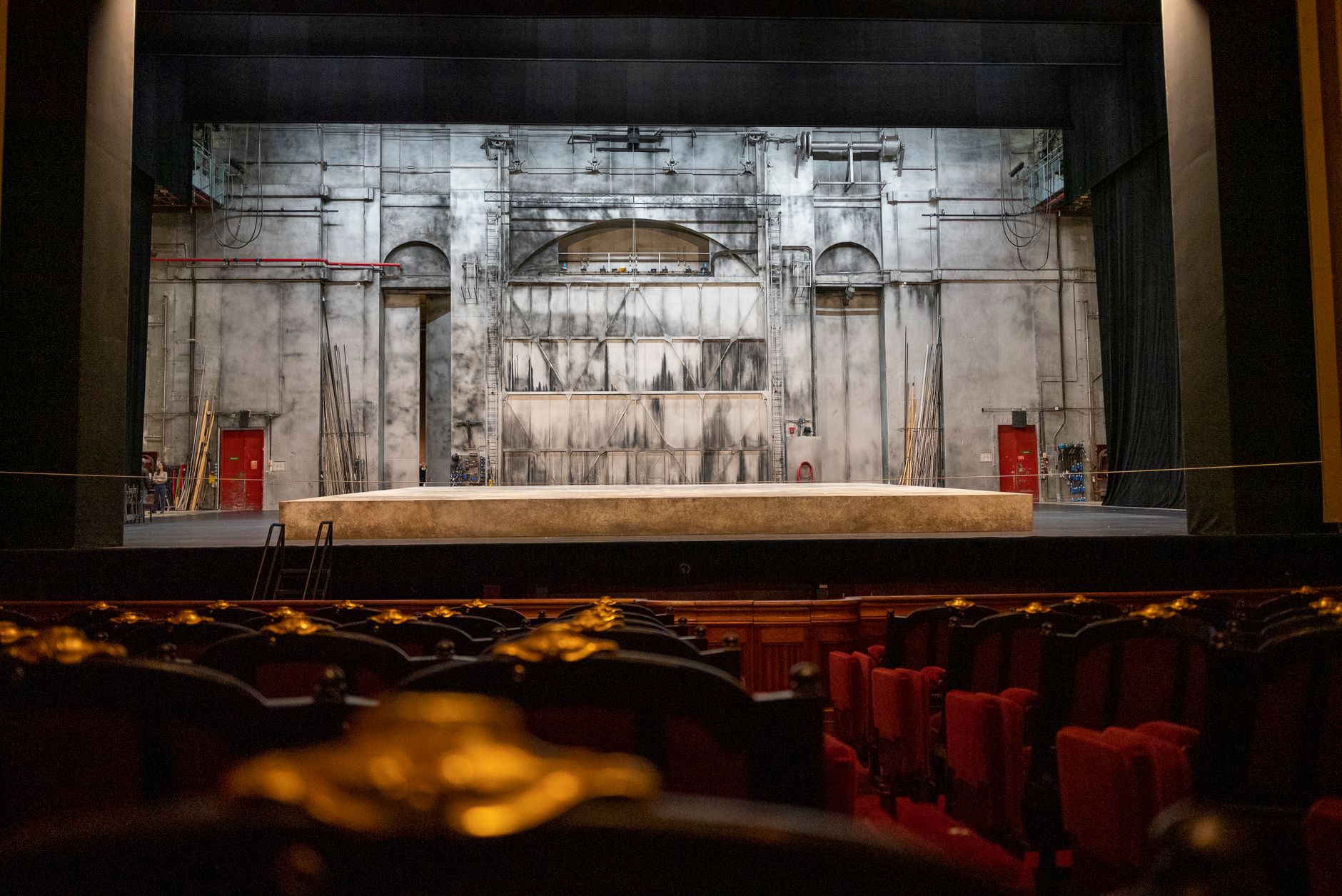
Then there is JSTOR Daily’s observation that people love to argue about The Phantom of the Opera. Not as a cultural curiosity but as a consistent, renewable fact – the musical has generated genuine critical disagreement about its gender politics, its treatment of disability, its morality, and its music for over three decades, across multiple productions, cast recordings, and a film adaptation that divided the same audience all over again. What exactly is it about the Phantom – a violent, obsessive man living in a basement – that keeps drawing people back into the argument rather than simply away from the show?