




A City, a Queue, and a Man Making Animal Noises
This summer, New York’s trendiest dessert spots have attracted the kind of lines that swallow whole city blocks – and at least one local has decided the appropriate response is to stand nearby and “baa” at the people waiting in them.

The Frozen Yogurt Queue as Urban Phenomenon
It’s a specific kind of summer misery, familiar to anyone who has tried to walk a straight line down a Brooklyn sidewalk in July. The frozen yogurt shop – or the soft-serve window, or the artisanal shaved ice counter – generates a particular species of line. It moves slowly. It is staffed, at its front, by people who cannot decide between mango and lychee. It stretches past the neighboring dry cleaner, past the bodega, sometimes around the corner entirely, and it is composed almost exclusively of two groups: tourists consulting Google Maps and transplants who moved here eighteen months ago and now consider themselves authorities on the city’s hidden gems.
The New Yorker’s July 2026 feature documented this phenomenon with a specific, almost clinical attention. Every trendy dessert joint, the magazine noted, has a mile-long line this summer. The clientele skews heavily toward transplants and tourists. The lines are not just long – they are performatively long, the kind that signal membership in whatever cultural moment the shop currently represents.
There is something ritualistic about it. The line itself is the point, not purely the frozen yogurt. Standing in it means you saw the post, found the location, made the pilgrimage. The dessert, when it arrives, justifies forty minutes of standing on concrete in ninety-degree heat through the social logic of having done a thing correctly. This is not new behavior – New York has always produced lines for things – but the density of these queues this particular summer has apparently crossed some threshold of tolerance for at least one resident.
That resident’s chosen form of protest is not a complaint on a neighborhood Facebook group. It is not a sternly worded letter. It is the sound a sheep makes.
Baa-ing Back: Protest, Performance, or Pure Annoyance?
The act is simple. A man stands near the line. He looks at the people in it. He says “baa.” Possibly more than once. The New Yorker ran this as a story.
What makes it worth writing about – and, honestly, worth reading about – is the precision of the metaphor he has chosen to embody. Sheep follow. Sheep queue. Sheep arrive at a destination not because they independently assessed its merits but because the animal in front of them was already moving in that direction. Calling a fro-yo line a flock of sheep is not an original critique, but actually standing there and making the noise at real humans in real time is a different register entirely. It moves the observation from cynicism into something closer to street theater, or perhaps just public antagonism dressed in theatrical clothing.
The transplant-versus-local tension the piece is orbiting has its own long, exhausting history in New York. Every generation of long-term residents has watched a new wave arrive and immediately begin treating the city as a set of coordinates to check off: the bagel place, the slice spot, the whatever-is-viral-this-month dessert window. The complaint is usually articulated as a concern about authenticity, about whether the city is becoming a theme park of itself, about rent and displacement and the hollowing out of neighborhoods. The man baa-ing at frozen yogurt tourists is working in a much lower register than any of that, but he is clearly upstream of the same frustration.
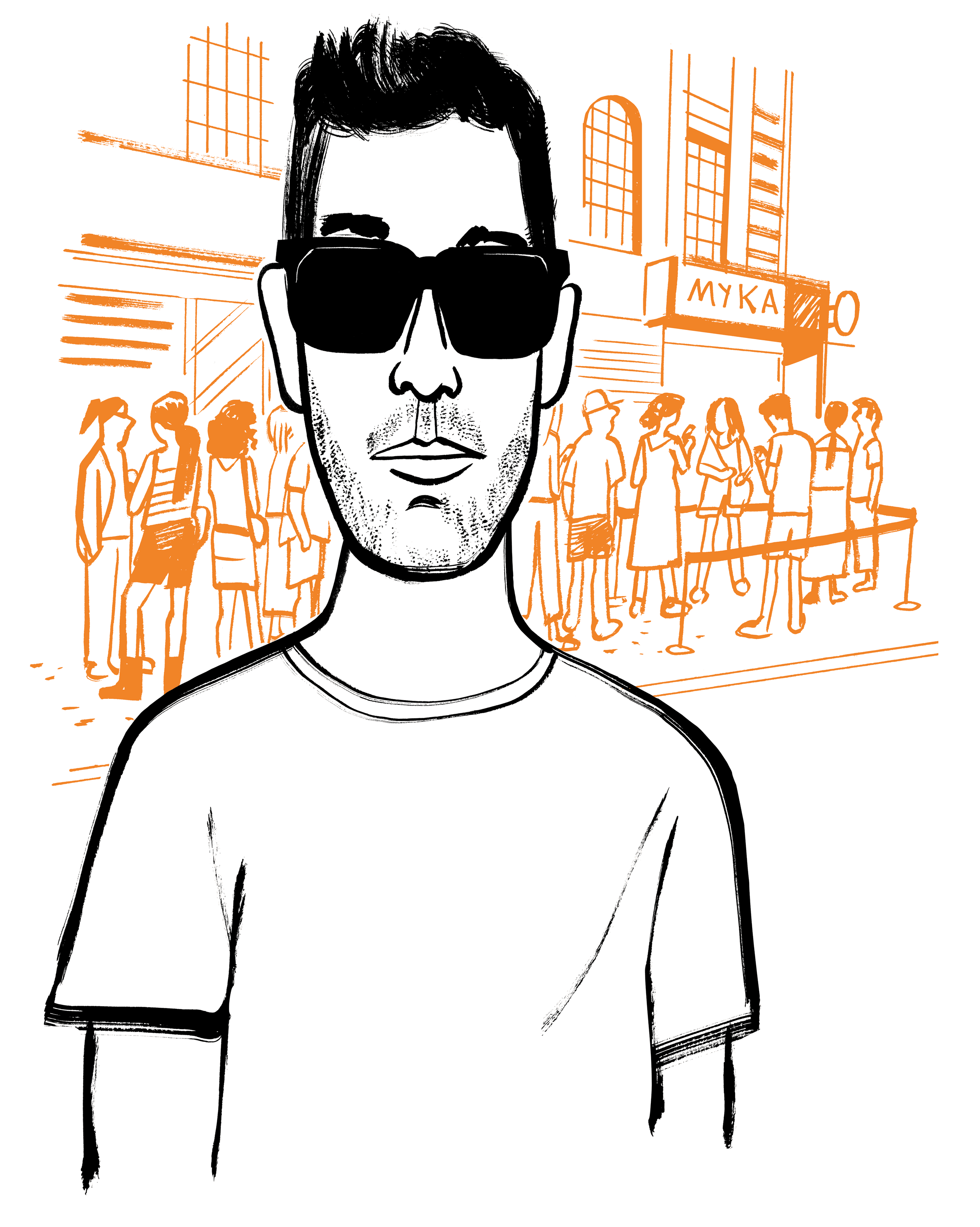
There is also the question of whether the line-standers hear him, and if they do, whether they care. The social contract of the dessert line is fairly airtight. You have committed. You are twenty people deep. A man making sheep noises somewhere to your left is not going to make you abandon your position and your mango-lychee decision. If anything, it becomes part of the story you tell later – “and there was this guy just baa-ing at everyone, it was so New York” – which means the protest has been absorbed into the very experience it was meant to critique. He is now an amenity.
That absorption is maybe the most New York part of the whole thing. The city has an extraordinary capacity to metabolize its own critics. Someone complains loudly enough, theatrically enough, and the complaint becomes atmosphere. The tourists photograph it. The transplants include it in their neighborhood guides. The sheep baa-er becomes, without intending to, part of what makes the line interesting.
What a Fro-Yo Line Actually Measures
A mile-long line outside a dessert shop is not really about dessert. It is a rough gauge of how many people have moved to or through a city in a given season, how effectively a single TikTok or Instagram post can redirect foot traffic across an entire borough, and how willing people are to spend significant portions of their finite summer afternoons standing still in anticipation of something cold and sweet. The man making sheep noises has, in his own abrasive way, turned himself into a data point in the same measurement.
The New Yorker found the story in July 2026, which means the lines had already been there long enough to generate a local eccentric willing to baa at them – and long enough that one eccentric’s method of protest had become notable enough to report. The fro-yo sheep are still in line. He is presumably still baa-ing. Whether either side has reconsidered their position is, so far, undocumented.