




When Manufacturing Hardware Becomes the Product
Czinger showed up to Monterey Car Week 2025 with something worth paying attention to: topology-optimized brake assemblies on its 21C Spyder that look less like machined metal and more like bone structure pulled from a biology textbook.
A Parts Supplier That Builds Its Own Cars to Prove a Point
The company behind the 21C Spyder didn’t start as a car manufacturer. Founder Kevin Czinger was running Divergent 3D long before anyone was talking about a road-legal hypercar, and the core technology – direct-metal laser sintering – was already being developed more than a decade ago. The logic behind spinning up a car brand was direct: if you want automotive and aerospace companies to trust your fabrication process for their own components, building something dramatic and fast is a more convincing argument than any sales deck.
That argument has landed. Divergent now counts clients in both the automotive sector and aerospace, meaning the 21C functions less as a standalone product and more as a live demonstration of what the manufacturing platform can do at its upper limits. The car is the portfolio piece. The technology is the actual business.
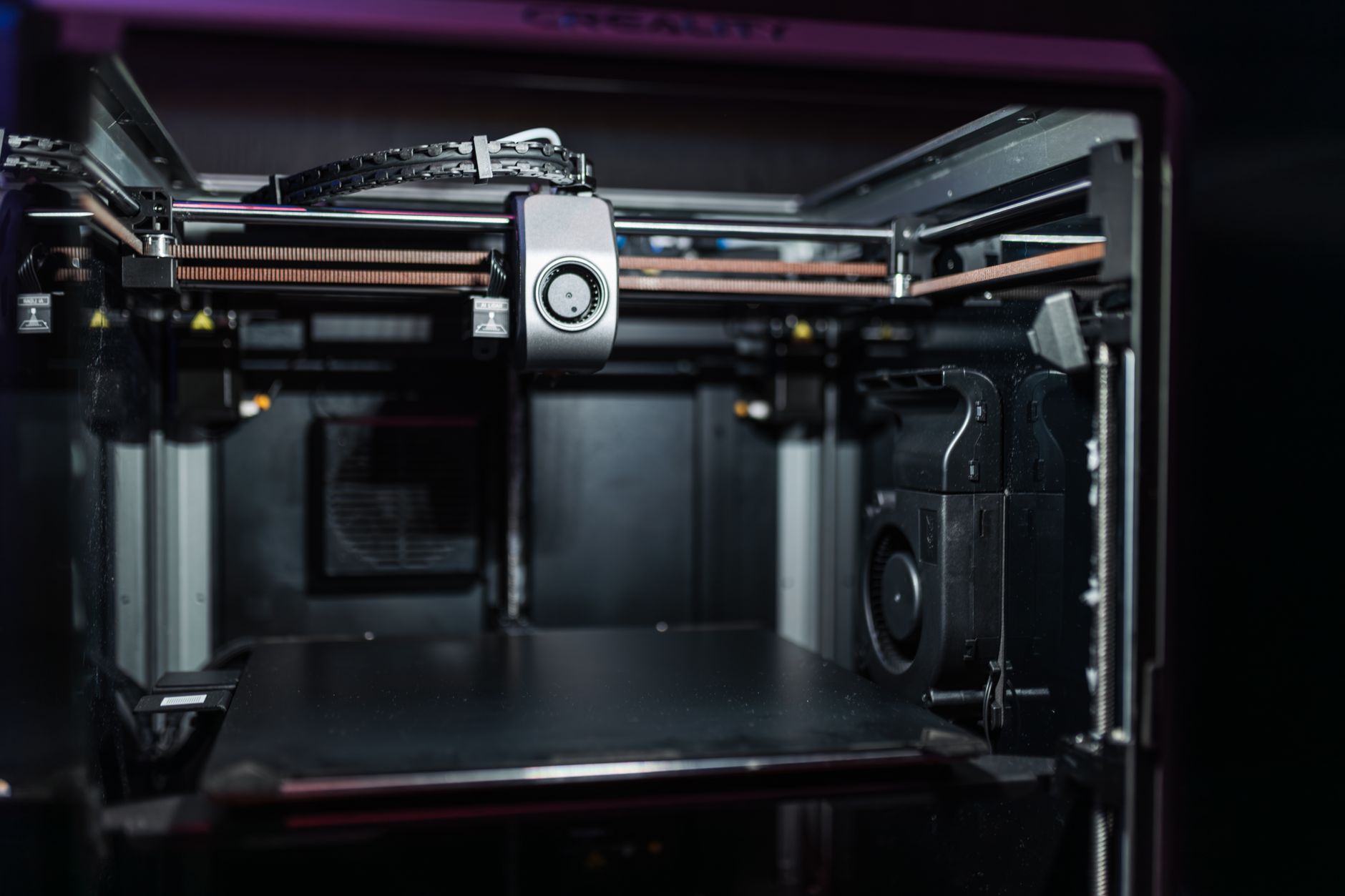
Direct-metal laser sintering works by fusing metal powder layer by layer using a laser, building components from the ground up rather than cutting them away from a solid block. Topology optimization is layered on top – software determines the most structurally efficient geometry for a given load, often producing forms that look nothing like what a conventional designer would draft by hand. The results tend to resemble coral, or vertebrae, or the internal structure of a bird’s wing: lots of open space, material placed exactly where stress demands it.
Strip the body panels off the 21C and the underlying structure reads as organic rather than industrial. That’s not an aesthetic choice – it’s what happens when you let physics, rather than machining constraints, dictate shape.
What the Brake Assemblies Actually Represent
The brake components on the 21C Spyder are the clearest recent example of this process applied to a safety-critical system. Traditional brake calipers are typically CNC-machined from aluminum billet – a subtractive process that removes material until the desired shape remains. The geometry is constrained by what a cutting tool can physically reach, which rules out internal channels, lattice structures, or the kind of compound curves that topology optimization tends to generate. What comes out of a CNC machine is functional, but the design language is defined largely by manufacturing limits.
Additive manufacturing removes most of those limits. A laser-sintered caliper can have material exactly where the load paths require it and nowhere else, which reduces weight without reducing structural integrity. For brake assemblies specifically – components dealing with extreme thermal loads and mechanical stress during repeated high-speed stops – that balance between mass and strength is more than an engineering preference. It directly affects stopping distance, heat dissipation, and unsprung weight, which in turn affects how the suspension responds.
The 21C is already a record-setter on track, a hybrid with tandem seating configured around performance rather than practicality. Adding topology-optimized brakes to a car already operating at that level isn’t incremental; it’s Czinger applying the same design philosophy to one of the most thermally and mechanically demanding parts on the vehicle.
Monterey Car Week, for all its accumulated spectacle – and this year’s Singer and Louis Vuitton collaboration is a reasonable example of the spectacle going sideways – does occasionally surface hardware that matters outside of its auction context. The 21C Spyder’s brake assemblies are a manufacturing story as much as a car story, and that distinction is what makes them relevant to anyone tracking where fabrication technology is heading.
The wider question for the automotive supply chain is whether this approach can scale down from hypercars to higher-volume applications. Divergent’s existing client roster in automotive and aerospace suggests the technology is already moving in that direction, but the 21C remains the most visible proof of what the process can produce when cost is less of a constraint than capability.
Where Divergent’s Technology Goes From Here
Czinger’s position – running a car company as a demonstration platform for a manufacturing business – is unusual enough that it’s worth sitting with. Most tier-one suppliers don’t build their own vehicles. Most hypercar manufacturers don’t contract their fabrication processes out to aerospace clients. Divergent does both, and the 21C Spyder is the artifact that makes the whole arrangement legible to anyone who sees it on a circuit or at a concours.
What gets revealed when the body comes off the 21C isn’t just a chassis – it’s a direct argument that the gap between biological efficiency and manufactured structure is narrower than it used to be. Whether a brake caliper that looks grown rather than cut represents a ceiling or a starting point for the broader industry is a question the supply chain hasn’t fully answered yet.