





Four Men, One Village, Every Class Wound India Tried to Hide
Satyajit Ray made Days and Nights in the Forest as something closer to an indictment than an entertainment. Four middle-class men drive out of the city on what amounts to a thoughtless holiday, descend on a rural village, and proceed to behave with the particular carelessness of people who have never once been told no. What unfolds is not exactly a road movie, not exactly a character study – it is a social anatomy, a film that uses the loose structure of a spree to expose exactly how stratified Indian society was, and how little that stratification troubled the people sitting at the top of it.
The film has spent years in relative obscurity, the kind of title Ray devotees know and general audiences don’t, a gap that has always said more about distribution habits than about the film’s quality. That is now changing.
Ray constructs the village not as backdrop but as a living system with its own hierarchies, its own grievances, its own memory – and he sets his four protagonists loose inside it with almost no awareness that any of this exists around them.
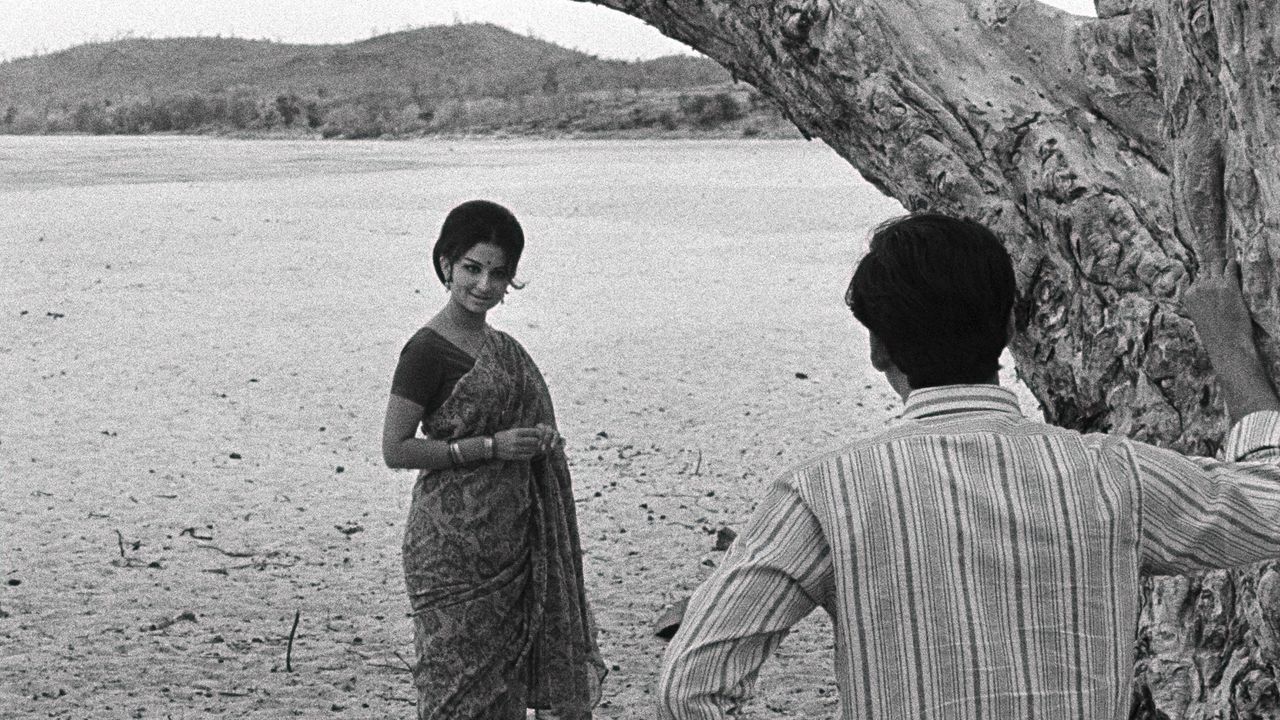
The Architecture of a Spree
What makes the film unusual is how Ray refuses to let the holiday remain merely comic or charming. The four men arrive with city energy, city assumptions, and city blindspots. They flirt, they drink, they impose. The rural setting absorbs them the way a body absorbs a foreign object – with visible resistance, even when that resistance stays polite on the surface. Ray is interested in the texture of that resistance, in what it costs the villagers to be gracious to guests who have not earned grace.
The social divisions Ray maps are not abstract. They show up in who speaks first, in who is expected to laugh at a joke, in which characters are allowed to have an interior life on screen and which exist only in relation to the men at the center. Ray gives the women and the rural figures enough screen presence to make their marginalization legible – you see what is being withheld from them, which is a different and harder thing to do than simply keeping them offscreen entirely.
The melodrama label fits, but only partially. Ray is working in a register that allows feeling to accumulate without forcing resolution. The emotional temperature rises across the film without the safety valve of a clean ending. Characters want things they cannot have, are hurt by people who do not notice the hurt, and carry on – which is, as Ray understood, exactly how inequity sustains itself. Nobody has to be a villain. The structure does the work.
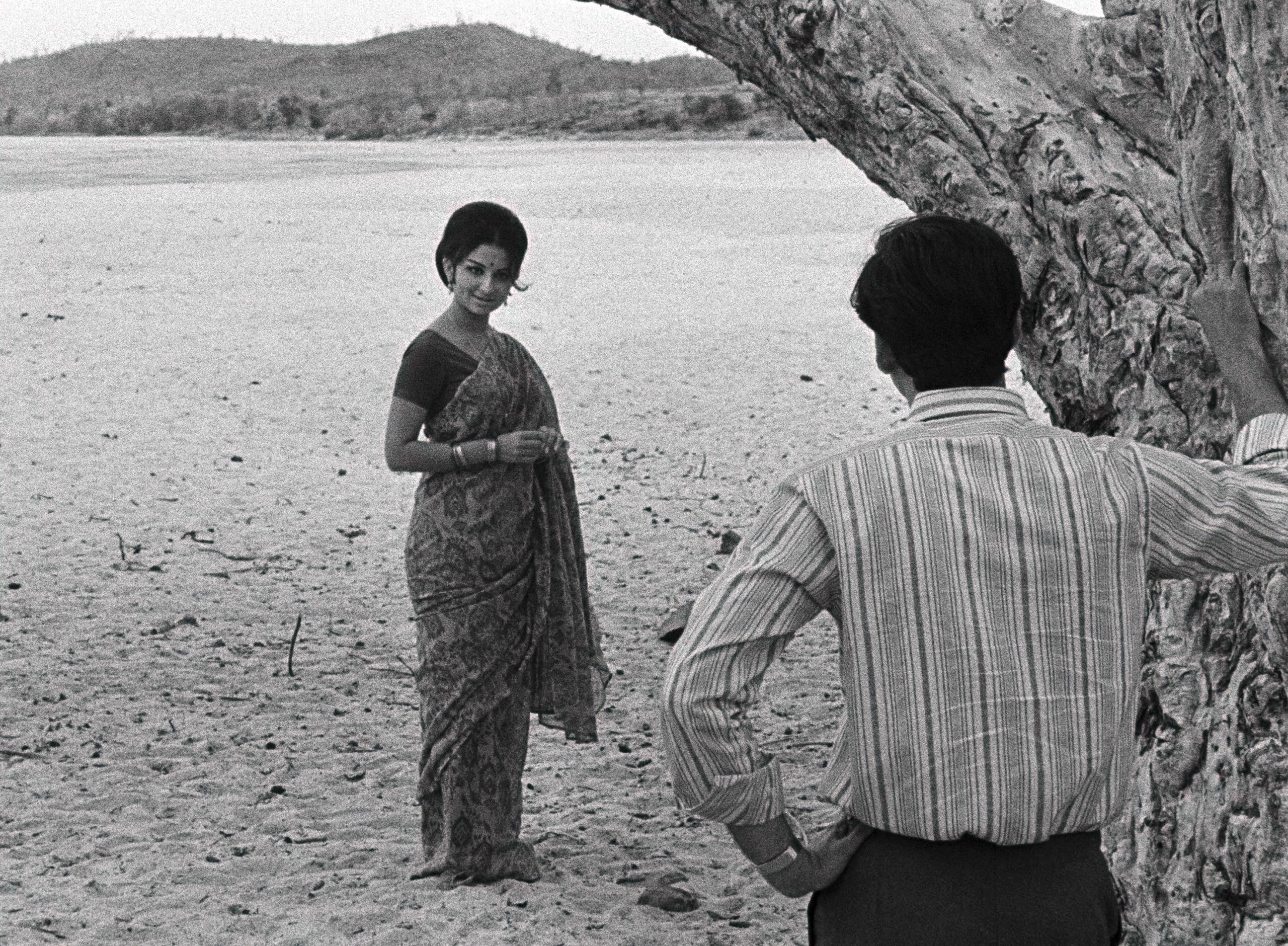
Panorama as Method
Ray’s choice to frame this as a panorama rather than a tight narrative is deliberate and demanding. A panorama requires patience from the audience – you have to let multiple social registers exist simultaneously without demanding that one resolve into another. The men’s story and the village’s story run alongside each other, and the film’s argument lives in the gap between them. The men never fully understand where they are. The village understands exactly who has arrived.
That structural choice is also what kept the film from wider reach for so long. It does not deliver the emotional satisfactions that make a film easy to program, easy to market, easy to explain in a sentence. What it delivers instead is a slow, accumulating discomfort – the feeling of watching people behave badly without knowing they are behaving badly, which is its own particular kind of horror.
Ray was working within a tradition of Indian cinema that took social observation seriously as a formal practice, not just as subject matter. The film’s passion – and it is a passionate film, despite its cool surface – comes from his evident anger at a system that reproduces itself through exactly this kind of obliviousness. Four men go on holiday. Nobody is changed. The village absorbs the visit and continues. The inequity continues. That is the film’s final image, in effect, even if Ray never states it so bluntly.

The film’s emergence from the shadows it has occupied raises an uncomfortable question: how many other works from Ray’s period – films that declined to flatter their middle-class audiences, that treated social division as structural rather than sentimental – are still waiting for the same recovery, sitting in archives or in regional circulation, unseen by the audiences who most need to be unsettled by them?