





A Promise to the Seventy-Five Percent
When Bari Weiss took the editor-in-chief role at CBS News, she arrived with a stated mission: to speak for the seventy-five percent of Americans she placed somewhere on the center left and the center right. It was a clean, numerical promise – the kind that sounds democratic in theory and gets complicated in practice.

The Arithmetic of the American Middle
The appeal of that seventy-five percent framing is obvious. It positions CBS News – and by extension, 60 Minutes – not as a network tilting toward any ideological camp but as the natural home of most Americans, the people who supposedly live between the shouting. Weiss, who built her post-Times reputation on Substack and in podcasting as a critic of institutional media bias, was presenting her editorship as a corrective to that bias. The pitch was structural: stop serving the fringe, start serving the majority.
What makes that number slippery is how much it depends on where you draw the lines. “Center right” and “center left” are not fixed coordinates. They shift with election cycles, policy battles, and whoever is defining them at a given moment. A network that calls itself centrist still has to decide, story by story, which facts lead, which voices get airtime, and which questions go unasked. Those decisions accumulate into a worldview whether the editor intends one or not.
Weiss’s editorial background is not a blank slate. She resigned from The New York Times in 2020 with a public letter accusing the paper of ideological conformity and hostility toward heterodox opinion. She then built an audience at The Free Press that was explicitly positioned against what she called institutional left capture of media. That history does not disqualify her from a broadcast role, but it does make the seventy-five percent framing worth examining against the actual output of the program under her leadership.
The New Yorker’s reporting found that the reality of Weiss’s tenure at CBS News diverges from that stated goal. The gap between the platform’s self-description and its editorial choices is where the real story sits – not in her politics as such, but in the distance between the promise of broad representation and what the newsroom has actually produced.
What “60 Minutes” Has Become Under Her Watch
60 Minutes carries weight that most television news programs no longer can. It has been airing since 1968, which means it arrives with institutional credibility few outlets can manufacture from scratch. For a new editor-in-chief, that legacy is both an asset and a constraint. Weiss inherited a program that audiences already trusted – and that trust was earned through a specific kind of journalism: long-form, confrontational, producer-driven investigative work that did not treat access to power as something to be protected.
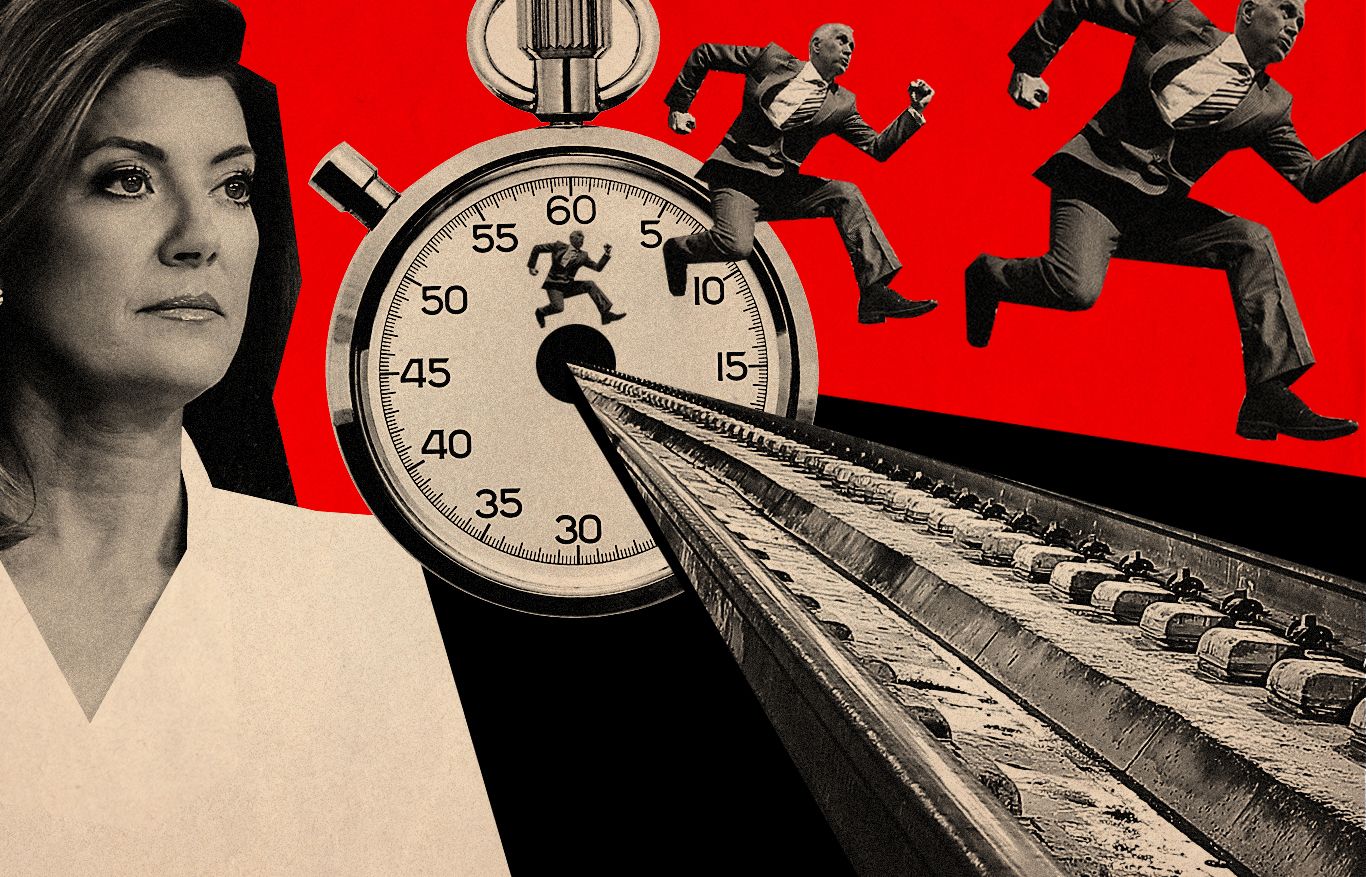
The question of whether 60 Minutes under Weiss is sustaining that tradition or quietly redirecting it is not a simple one. Television news at the network level operates under commercial pressures, advertiser relationships, and ratings dependencies that print and digital outlets can sometimes sidestep. An editor-in-chief at CBS News is not only a journalist – she is a business decision. CBS parent company Paramount Global has its own financial considerations, and those considerations do not disappear because the editor has a principled editorial philosophy.
What Weiss brought to the role was a specific theory of media failure: that established outlets had narrowed their range of acceptable opinion to the point of alienating large portions of the country. Applied to 60 Minutes, that theory would suggest more stories from voices and communities typically ignored by coastal newsrooms, more willingness to challenge left-leaning institutional consensus, and a broader definition of what counts as a serious subject. Whether the program has delivered that, or whether it has instead reflected Weiss’s own particular version of the center, is the tension at the heart of the New Yorker piece.
There is also the staffing dimension. Editors shape newsrooms as much through hiring and story approval as through any explicit directive. The producers and correspondents Weiss has brought in or elevated, the pitches that get greenlit and those that quietly die in development – these are the decisions that define what a program actually is, regardless of the editor’s public statements about serving the majority. Editorial culture is made in those small, accumulated choices, not in mission statements.
Weiss’s critics argue that speaking for the center right, even the moderate center right, is still a political orientation – one that, at a legacy news program with 60 Minutes‘ reach, carries real consequences for how Americans understand policy, power, and public life. Her supporters counter that any correction to years of perceived leftward drift will look like bias to those accustomed to that drift going unchallenged. Neither position is entirely wrong, which is exactly what makes her tenure at CBS News a genuinely difficult editorial case to evaluate cleanly.
The Credibility Economy
CBS News and 60 Minutes operate in a media environment where audience trust is fragmented across so many platforms that a network news program’s authority is no longer automatic. Weiss’s bet – that there is a large, underserved audience hungry for journalism that does not read as ideologically captured – may be correct as a market thesis. The seventy-five percent exists as a demographic reality. Whether 60 Minutes is actually reaching them, or reaching a more specific slice of that group that happens to share Weiss’s own editorial instincts, is a distinction the numbers alone cannot settle.
What the New Yorker’s investigation makes clear is that the gap between Weiss’s stated editorial mission and the program’s actual output is measurable – not a matter of interpretation but of specific editorial decisions that can be examined against her stated commitment to the broad center. The question of who exactly occupies that center, and who gets to define it from the editor-in-chief chair at one of American television’s most historically significant news programs, is one CBS News has not yet answered in any satisfying way.

Weiss made the seventy-five percent a promise. So far, the program she runs seems to serve a narrower constituency than that number implies – and the distance between the two is still widening.