




What the Staff Is Actually Watching, Hearing, and Reading Right Now
October has a way of making the time-bound object feel precious again – the play that closes November 1, the film festival that vanishes after a week, the holiday song that fits exactly this moment and no other. The Lit Hub staff has been spending this particular stretch of autumn in warm theatres, at Lincoln Center, and deep inside prize lists that are, against all expectations, delivering genuine excitement. Not every recommendation lands from a stack of books. Sometimes the narrative diet looks more like a Friday night seat in an off-Broadway house or a documentary that drops you into a Harlem salon.
What connects all of it, though, is a specific kind of attentiveness – the feeling that right now, across forms and formats, there is actually good work to find if you know where to look.
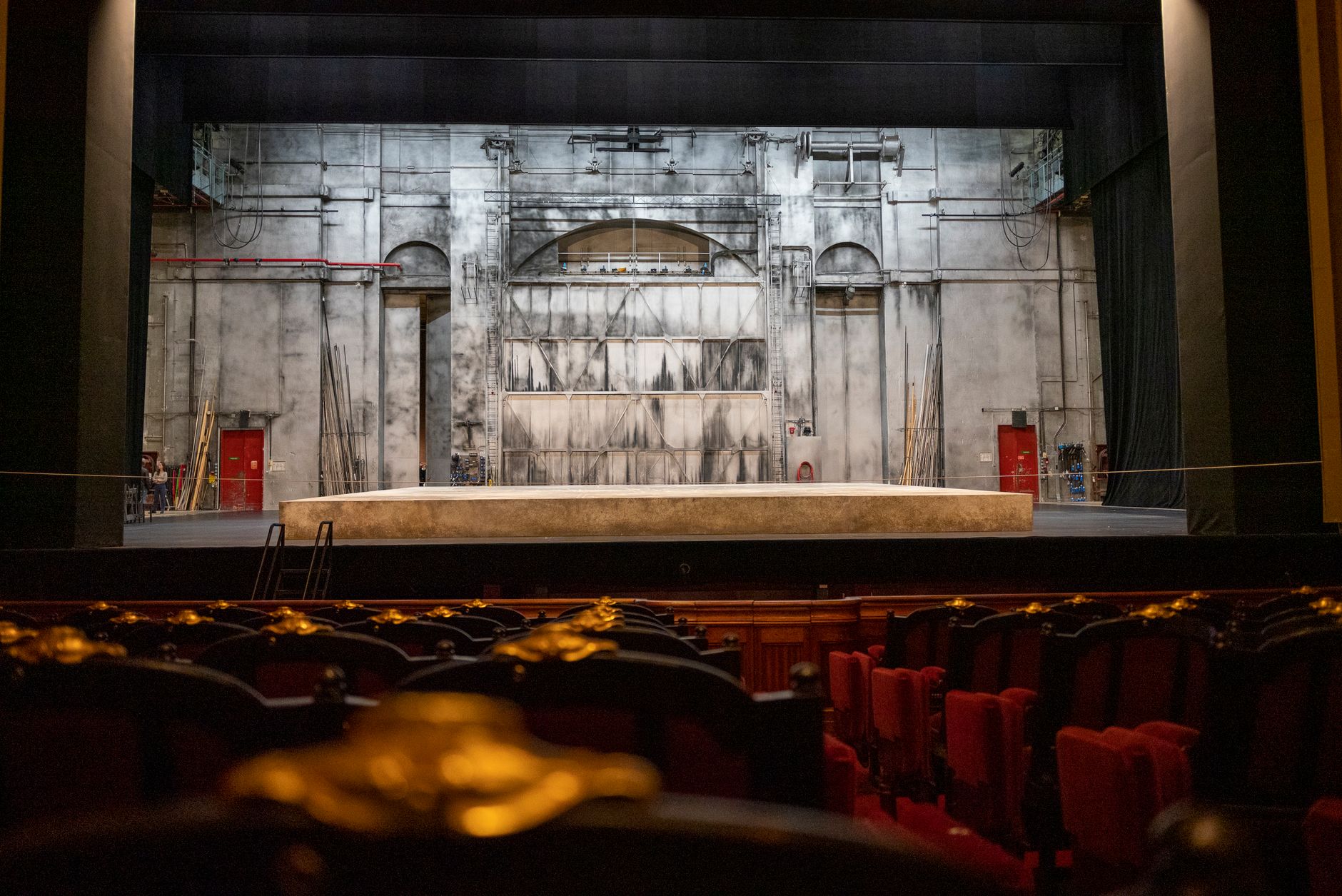
James Folta caught ANON: A Tempest at Our Kitchen Table at MCC Theatre, a new play from Anne Washburn running off-Broadway until November 1. Washburn – whose reputation rests on brilliant, formally strange work – built this one around two Texas households stationed on opposite sides of a culture war. The setup sounds like it could tip into editorial cartoon territory, and Folta admitted he walked in skeptical of material so visibly torn from recent headlines. What he found instead was something more durable. “It was excellent, and a very interesting dramatization of the moment,” he said. Director Anne Kauffman handled the staging, and the performances from Crystal Finn and Izabel Mar drew particular notice. Washburn’s dialogue and what Folta called the play’s “uncanny spectacle” are the things no logline captures – and, predictably, they are the things that matter most.
O’Neill at Three Hours, and a Klezmatics Banger
Dan Sheehan is headed to the Dublin Theatre Festival this weekend with his father to see Eugene O’Neill’s A Moon for the Misbegotten, directed by Garry Hynes. The production runs over three hours, which has Sheehan – described plainly as under-slept – quietly worried about embarrassing himself mid-act. O’Neill’s play follows an immigrant Irish family navigating rural Connecticut, and Hynes’s direction is being called unmissable by people who have seen it. Whether that’s enough to keep an exhausted editor upright through a long third act is an open question nobody can answer in advance.
Molly Odintz is having a considerably less fraught cultural moment. With Simchat Torah approaching, she has been returning to “Simkhes-Toyre” by the Klezmatics, and confirms that the song holds up entirely from how she remembered it as a teenager. That’s the kind of small, specific cultural rediscovery that doesn’t need much elaboration.

Brittany Allen has been attending screenings at the New York Film Festival through a member friend’s access, moving through Lincoln Center’s annual stretch of film programming where the eavesdropping on other attendees – strong opinions on Richard Brody, the Criterion Closet, Korean New Wave – is apparently its own entertainment. The films she’s flagging share something: each of them, in different ways, focuses on human closeness rather than spectacle. Once Upon a Time in Harlem is a documentary that places viewers inside a gathering of luminaries. Mike Leigh’s Tender Loving Care works in small registers – families, institutions, quiet gestures of attention. Lee Chang-Dong’s Possible Love wraps a social critique around two lead performances that Allen describes as electrically human. All three are expected in wider release later this year.
Prize Lists That Are Actually Delivering
Drew Broussard, the podcasts editor, arrives at the end of the week’s recommendations with something that might surprise anyone who has sat through the standard media complaints about literary prize culture: genuine enthusiasm. Both the Cercador Prize list and the Booker Prize shortlist are giving him, in his words, “SO much joy.” He singles out Mike Harrison’s The End of Everything and Rebecca Perry’s May We Feed the King as favorites receiving long-overdue recognition. “I just feel like it’s a fun time to be reading, ya know?” he said – which, given how infrequently that sentence gets said without irony, is worth noting.
Maris Kreizman, Lit Hub’s columnist, is similarly energized by this year’s prize lists, which makes the enthusiasm feel less like a fluke and more like something the shortlists actually earned.
The Booker shortlist this year has been drawing both the kind of attention prize culture usually generates and the kind of reader devotion that prize culture usually fails to produce – a gap that normally stays wide. That Broussard and Kreizman are finding the same lists exciting independently suggests the selections did something right, though what exactly separates a shortlist that excites readers from one that simply excites press releases is never fully explained by the committees who assemble them.
Harrison’s The End of Everything and Perry’s May We Feed the King are both on lists that, until the winners are announced, exist in a strange suspended state – praised, anticipated, and still unresolved. Broussard’s enthusiasm is unambiguous. The prize committees’ final calls are not yet made.