





A Technology Built for Websites Is Moving to the Border
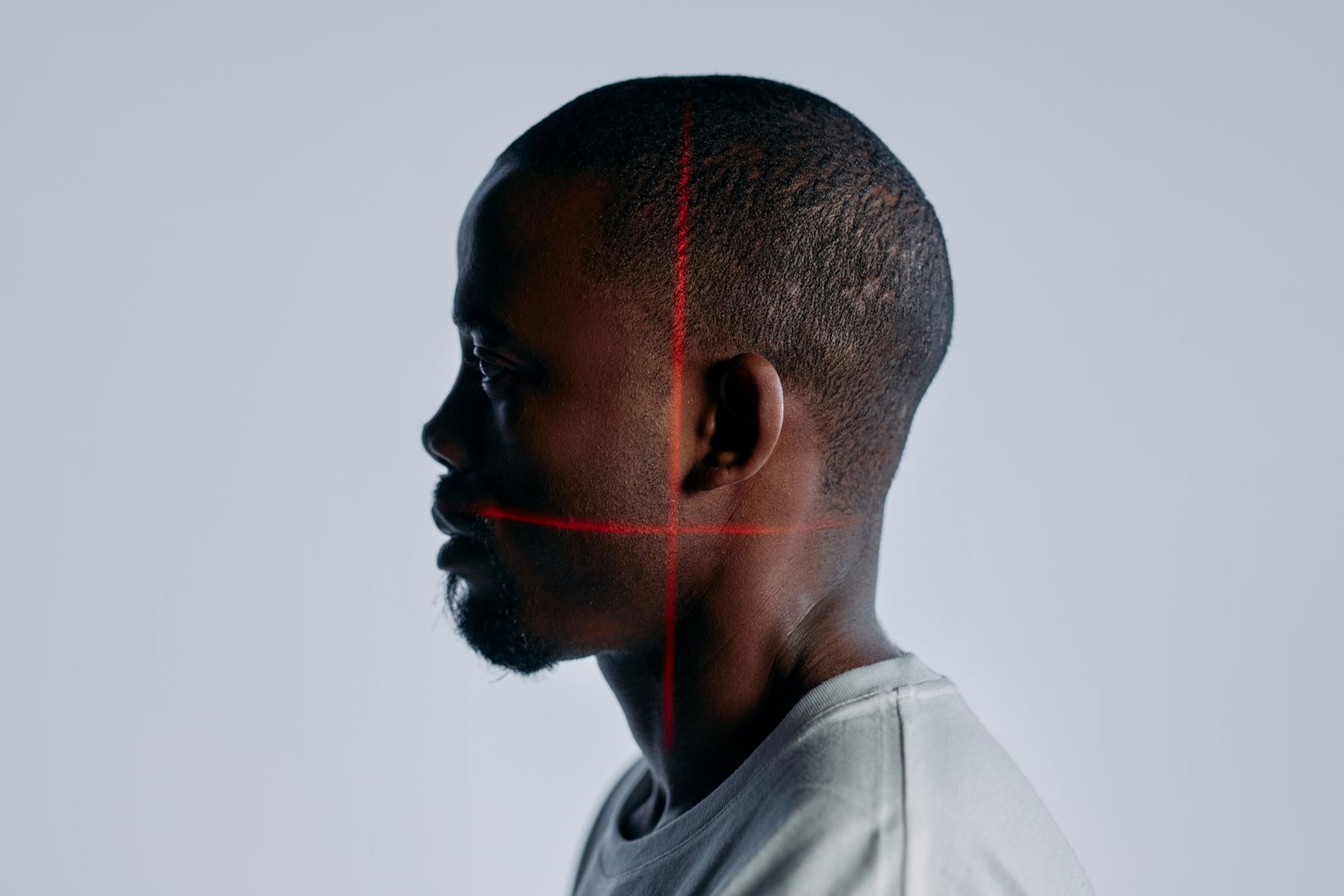
Facial age estimation – the AI process of scanning someone’s face and predicting how old they are – has spent the past few years embedded in age-gate systems across the internet. Australia has pushed social media bans requiring it. Roughly half of US states have mandated it for pornography sites. For most people, a failed scan means being locked out of a webpage. Starting next year in the United Kingdom, a failed scan could mean something categorically different: a child being classified as an adult and losing legal protections afforded to minors at the border.
The British government is planning to deploy facial age estimation (FAE) technology to assess the ages of asylum seekers who arrive without identity documents – believed to be the first use of this kind of AI system in an immigration context anywhere. An investigation by WIRED and Lighthouse Reports, in collaboration with The Independent, obtained an internal UK government report detailing how the technology was tested. What that report shows is not reassuring.

What the Internal Tests Actually Found
The government’s own testing documented that FAE systems regularly misclassify children as adults. That alone would be a significant finding. The report also found what appear to be serious bias problems baked into the technology – problems that directly affect the largest demographic group subject to age assessments in the UK in 2025, according to Home Office data.
The Home Office has not publicly disclosed which specific FAE system it plans to use, nor have the detailed accuracy rates from testing been released. But the internal report’s existence – and its contents – signals that decision-makers moved toward deployment while holding documentation of the technology’s failure modes. That is not an accidental oversight or a gap in research. The government tested the tools, identified the problems, and is proceeding regardless.
Why the Stakes Are Different Here Than on a Website
Age verification online carries real consequences, but the feedback loop is short. You’re blocked from a site, you find another way in, or you contact support. At a national border, the feedback loop for a misclassified person can stretch into months or years. Asylum seekers arriving in the UK without documents proving their age face an already difficult process – and if an AI system pegs them as adults when they are not, they can be stripped of legal protections that exist specifically for children and placed in adult-only detention centers.
The legal framework around child migrants is distinct and more protective for a reason. Children in the UK immigration system have access to different safeguarding procedures, different legal representation pathways, and different housing arrangements. An adult classification forecloses those options. There is no casual fix if the AI gets it wrong.
Bias in facial analysis systems is a documented, long-standing technical problem – not a fringe concern or a hypothetical. Systems trained disproportionately on certain demographic groups perform less accurately on others. When the UK government’s own internal tests show bias affecting the group most frequently subject to age assessments, the system is not producing occasional edge-case errors. It is producing systematic ones in exactly the population where the technology is being applied most often.
The investigation raises the central question plainly: should a technology with known, documented accuracy problems – including demographic bias – be used to make determinations that affect someone’s legal status and physical placement? That is not an abstract policy debate. It is an engineering and ethics question with a concrete answer embedded in the test data the government already has.
The Broader Pattern This Fits Into
Age verification technology is expanding faster than its accuracy is improving. The political pressure to “do something” about minors accessing age-restricted content or crossing borders without documents has created a market – and governments are buying into it without waiting for the technical problems to be resolved. The UK’s FAE rollout is, in that sense, consistent with how AI tools have been procured and deployed across public services: optimistically, and ahead of the evidence. Similar patterns have played out in robotics, where public-facing deployments run ahead of what labs privately acknowledge as the technology’s real limitations.
The fact that this appears to be the first deployment of FAE in an immigration context globally doesn’t make it bold – it makes it an experiment conducted on some of the most legally vulnerable people in the country.
What Comes Next, and What Doesn’t
The UK government has not announced a date to begin deployment beyond “next year.” It has not publicly released the internal testing report obtained by WIRED and Lighthouse Reports. It has not specified what error rate it considers acceptable for a system that, when wrong, places a child in an adult detention facility.
Advocates and legal organizations working with asylum seekers will almost certainly challenge the use of FAE in court once deployment begins. The documented bias findings in government-held testing would form a substantial part of any such challenge. Whether that challenge succeeds before the technology is used – or after it has already been applied to thousands of individuals – is an open question with a timeline only the Home Office controls.
Somewhere in the gap between a government report flagging bias and a government proceeding with deployment anyway is a decision someone made, and signed off on, and filed away. The internal document exists. The bias data is in it. The question is whether anyone, at any stage, had the authority to say that was enough to stop.