



The Novelist Who Showed Up to the Eastern Front
Vasily Grossman was not the obvious choice to document the deadliest conflict in recorded history. He was a novelist – physically unfit, working for a Soviet state propaganda apparatus that had no particular interest in the truth – assigned to cover a war that would kill tens of millions of people. The gap between what the machinery wanted and what Grossman eventually produced is where his importance lives.
He went anyway. And what he sent back from the front lines of World War II did not read like the dispatches coming out of any other press operation on either side of the conflict. He was watching the same carnage, the same obliteration of cities and men, but he was writing something closer to literature than to bulletins.
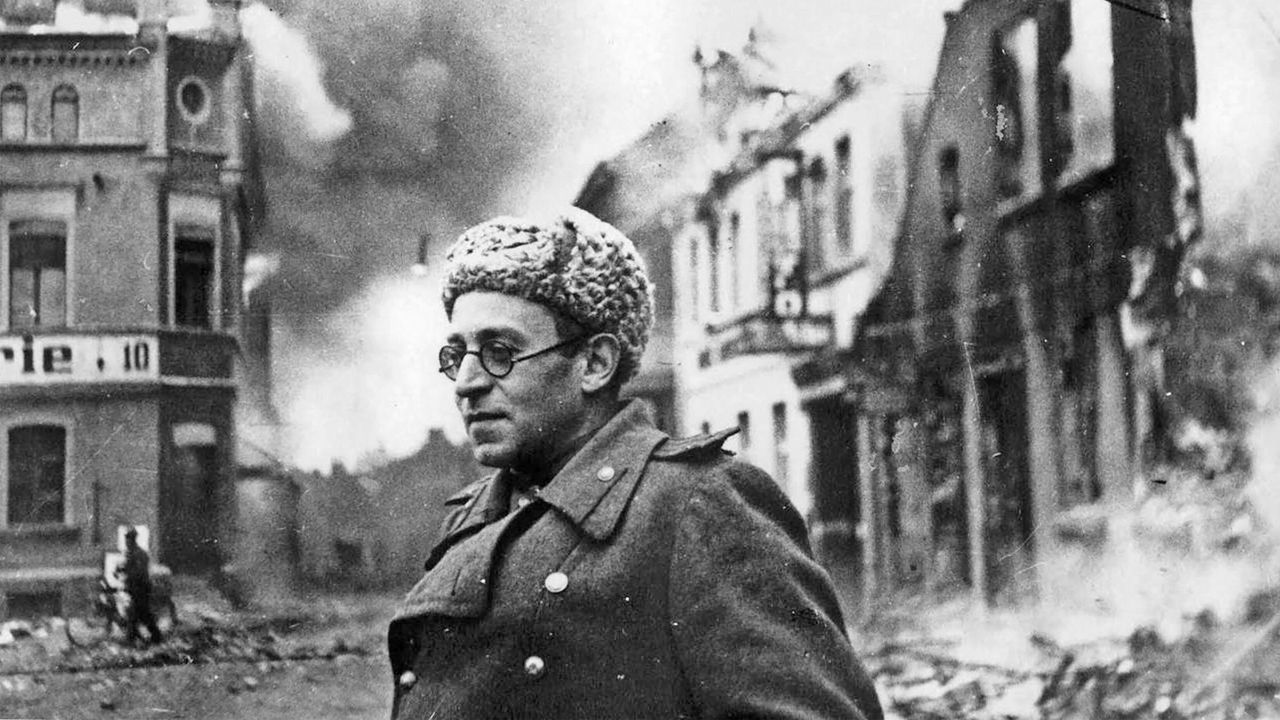
What War Reporting Was Before Grossman Changed It
The dominant mode of wartime journalism, especially within Soviet media during the 1940s, was essentially a genre of controlled announcement. Victories were amplified. Losses were managed. The soldier existed as a figure in a larger ideological argument, not as a person with a face, a history, a specific fear about a specific thing. The human detail that might complicate a clean narrative was the first thing cut.
Grossman worked inside that system without fully submitting to it. He was filing for the Red Army newspaper Krasnaya Zvezda – Red Star – which was not a platform designed for moral complexity. The publication existed to sustain morale, to frame the war in terms that served the state’s purposes. That Grossman managed to push through anything that deviated from that formula is, on its own, a minor institutional miracle.
What separated his work was a novelist’s instinct for particularity. He was interested in the specific soldier, the specific street, the specific moment of collapse or courage. That granular attention was not just a stylistic preference – it was a method, a way of insisting that the individual human being did not dissolve into statistics or slogans just because a war was large enough to produce both in staggering quantities. The Eastern Front produced casualties in numbers that still resist comprehension. Grossman kept writing about one man at a time.
An Out-of-Shape Man at the Center of History
The physical description matters here, not as trivia but as context. Grossman was not built for the front lines. He was a middle-aged, out-of-shape novelist who had made his name writing fiction, not dodging artillery. His presence at Stalingrad and later at the liberation of the Treblinka extermination camp was not the story of a natural war correspondent finding his element. It was the story of a writer choosing to stay in the worst places available because leaving felt like a failure of witness.
That choice eventually cost him in ways that went beyond the physical. His notebooks and manuscripts were seized by Soviet authorities. The full version of his masterwork, Life and Fate – a novel built directly from his wartime experience and observation – was suppressed for decades. The KGB confiscated copies in 1960. The book did not reach Western readers until 1980, when a microfilmed copy was smuggled out. Grossman died in 1964, sixteen years before the work that defined him could circulate freely.
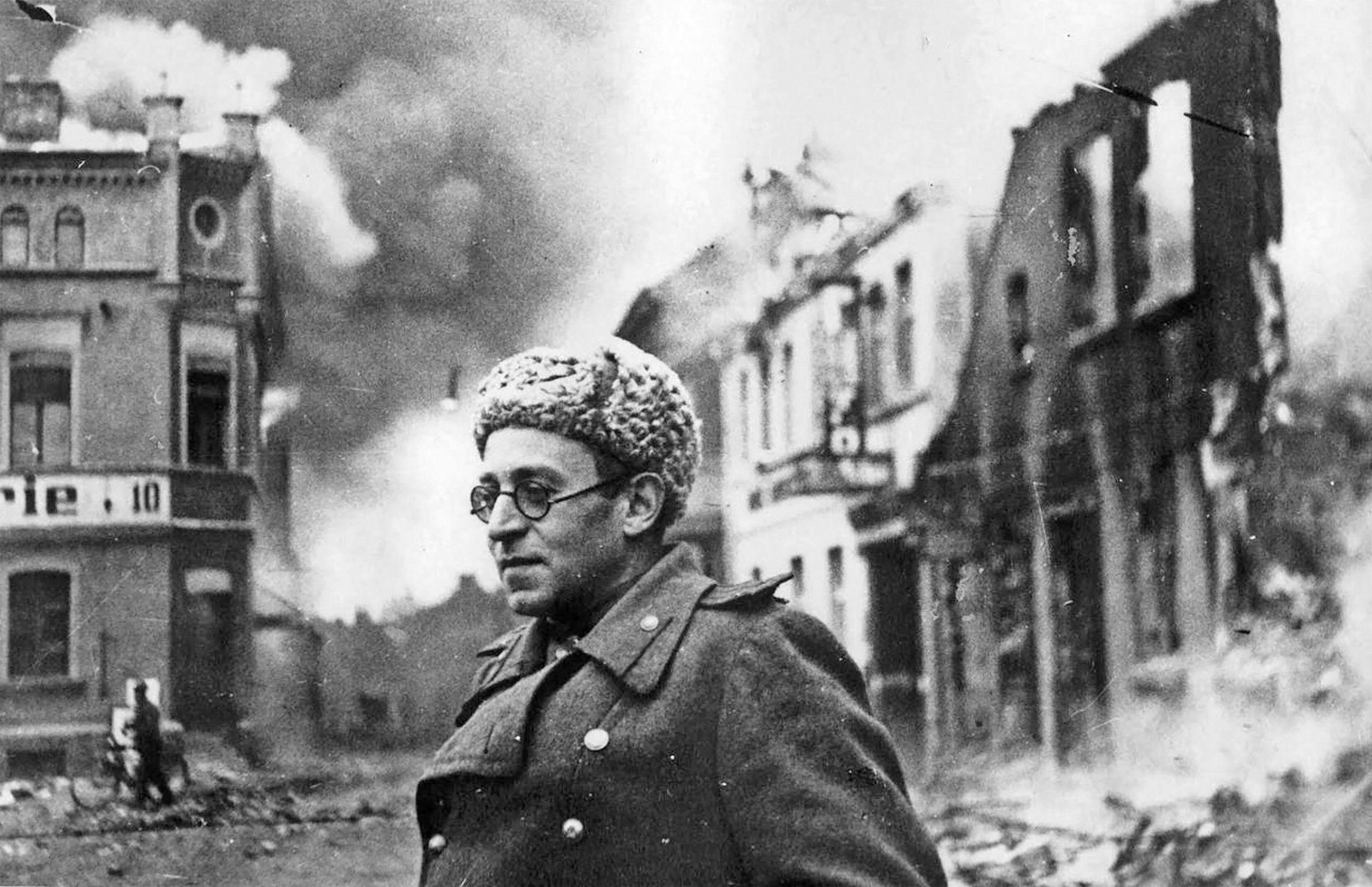
The Propaganda Machine and What It Couldn’t Contain
There is something clarifying about the fact that Grossman’s most important writing came from within an institution that was structurally opposed to what he was doing. He was not working independently, filing dispatches to a free press. He was employed by a military newspaper run by a totalitarian state prosecuting a catastrophic war. The constraints were not abstract – they were editorial, political, and potentially lethal.
And yet the work survived those constraints, at least partially, and in surviving them demonstrated something about what war reporting could absorb and still function as journalism. The propaganda framework gave him access – accreditation, proximity, the ability to move through zones that a freelancer could never have reached. He used that access to record things the apparatus would have preferred he didn’t. The tension between the two was never resolved in his lifetime.
His account of Treblinka, written in 1944 and titled “The Hell of Treblinka,” was among the first detailed literary descriptions of a Nazi extermination camp published anywhere. He gathered testimony from survivors, walked the site, and produced a document that was neither a legal brief nor a piece of propaganda but something harder to categorize – journalism that was trying, through the accumulation of precise detail, to make a reader understand a scale of horror that the available vocabulary hadn’t yet caught up to. That piece was submitted as evidence at the Nuremberg trials.
The distance between “submitted as evidence at Nuremberg” and “filed for a Soviet military newspaper” is the measure of what Grossman actually accomplished. He was operating inside a machine that had no interest in producing lasting documents of moral reckoning. He produced them anyway, often without the ability to publish them in full, often knowing the full versions would be taken from him. What reached the public in his lifetime was a fraction of what he wrote.
For readers drawn to writers who worked against the grain of their own circumstances, Grossman sits in unusual company. Colson Whitehead offers a different but related example of a novelist refusing to let historical atrocity get processed into something comfortable – though working with considerably more institutional freedom than Grossman ever had.
What Remains
The case for Grossman as a figure who remade what war reporting could be rests on a simple observation: he treated journalism as a form that could bear the same demands as literature. Not that it should dress itself up in literary language or sacrifice precision for atmosphere, but that it could insist on the full weight of individual human experience in the same way a serious novel insists on it.
That approach put him in direct conflict with the apparatus he worked for, which needed the individual to recede into the collective narrative. It also put him in conflict with the conventions of his own genre, which had developed efficient ways of conveying scale – casualty figures, strategic summaries, maps – that were good at covering war from above and not particularly good at covering it from inside a single human body.
The confiscation of Life and Fate by the KGB in 1960 was, in a certain sense, a confirmation of what Grossman had been doing all along. The Soviet cultural official who ordered the seizure reportedly told Grossman that the book could not be published for two hundred years. The novel eventually came out in twenty. Grossman was not alive to see it. He died in Moscow in 1964, from stomach cancer, four years after the state took his manuscript and sixteen years before it reached the readers it was written for.
The question his career keeps forcing is not whether great art can survive under totalitarian pressure – the answer to that is clearly yes – but how much of it didn’t.