




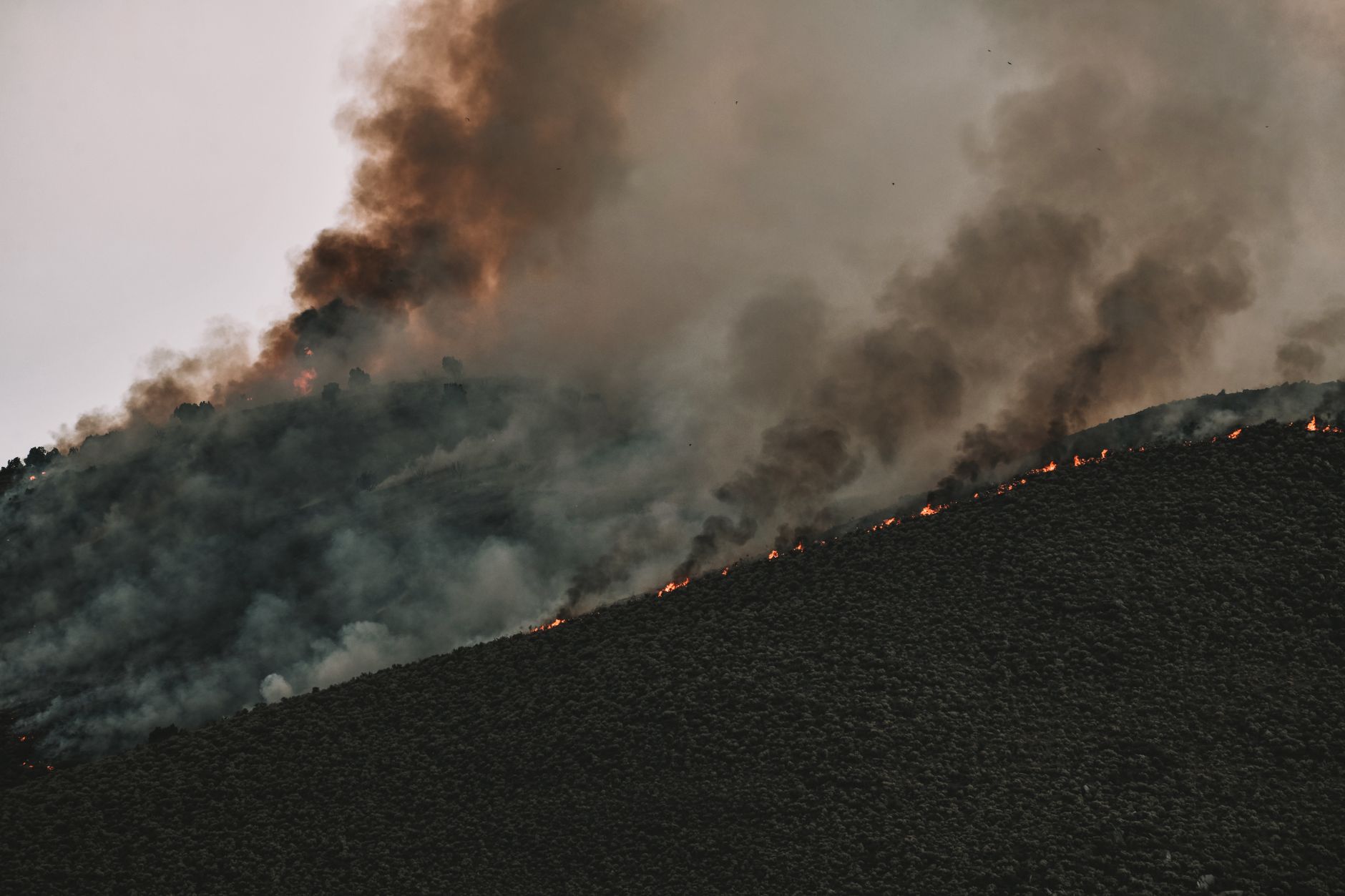
On Friday, a fast-moving wildfire swept through the hills west of Madrid and forced the evacuation of the Madrid Deep Space Communications Complex, knocking one of NASA’s three global tracking stations offline during an active operational period.
What Got Cut Off and Why It Matters
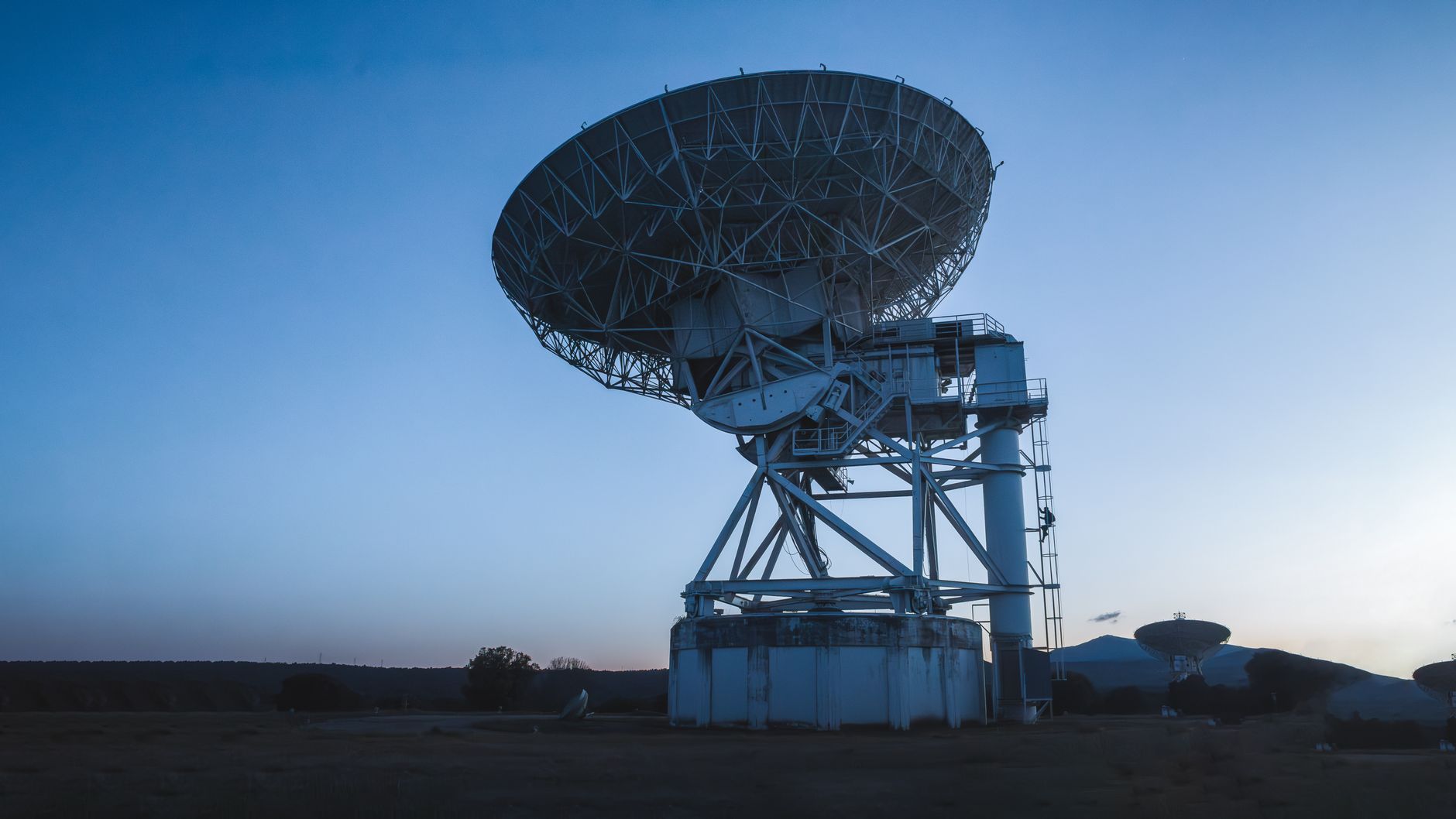
The Madrid complex sits roughly 40 miles – 65 kilometers – west of central Madrid, anchored by a 230-foot-diameter (70-meter) radio dish that ranks among the largest steerable antennas on Earth. Surrounding it are several smaller 112-foot (34-meter) antennas, all pointed skyward at any given moment toward spacecraft hundreds of millions of miles away. Photos and video from Friday showed smoke columns rising directly over the antenna array, with flames visible at ground level across the surrounding terrain.
NASA confirmed the evacuation through a spokesperson, citing “ongoing wildfires in the region.” Operations at the station were suspended. That suspension matters more than it might appear: the Madrid facility is not a backup or a secondary node. It is one of three equally weighted stations in NASA’s Deep Space Network, the global infrastructure that keeps Earth in contact with spacecraft across the Solar System. The other two are located in Goldstone, California, and Canberra, Australia.
The network’s three-station architecture is deliberately spread around the planet so that as Earth rotates, at least one facility always has a line of sight to any given mission. Pull one node offline and coverage windows narrow – or disappear entirely for certain trajectories. The Deep Space Network currently supports more than 40 active missions, ranging from lunar operations under the Artemis program to the James Webb Space Telescope and, at the farthest edge of reach, NASA’s twin Voyager spacecraft.
Voyager 1 and Voyager 2 are now so far from Earth that their signals, traveling at the speed of light, take more than 22 and 18 hours respectively to arrive. Communication windows with those spacecraft are limited, carefully scheduled, and not easily rescheduled around an infrastructure failure. A fire interrupting a contact pass with either Voyager is not recoverable – the pass is simply lost.
The Hardware Standing in the Fire’s Path
The 70-meter dish at Madrid – designated DSS-63 within NASA’s network – is one of only three dishes of that size in the Deep Space Network globally. Building a replacement would take years and cost hundreds of millions of dollars. It is the station’s most irreplaceable physical asset, and it was sitting in the path of an active wildfire on Friday evening.
Spain has been dealing with a series of wildfires throughout the current season, with dry conditions and heat accelerating spread rates across multiple regions. The fire that reached the Madrid complex was described as fast-moving, which limits the response time available before flames reach sensitive infrastructure. Antenna systems of this scale cannot be powered down and moved – they are fixed installations built on reinforced foundations, permanently oriented toward the sky.
The smaller 34-meter dishes at the site are used for higher-frequency communications and handle missions that the 70-meter dish is not optimized for. Together, the array functions as an integrated tracking system rather than a collection of independent antennas. Losing the entire site, even temporarily, forces mission controllers to compress contact schedules across the Goldstone and Canberra stations – facilities that are already running near capacity given the number of active deep-space missions.
There is no public confirmation yet of whether any mission contact windows were missed during Friday’s suspension, or whether the California and Australian stations were able to absorb the coverage gap in full. NASA has not released a damage assessment for the physical hardware. What is confirmed is that the evacuation happened, operations stopped, and the wildfire was close enough to produce visible smoke and flames in footage shot from the antenna field itself.
The Deep Space Network’s infrastructure challenges are not new – the network has been operating since the 1960s and some of its systems carry decades of accumulated hardware age. Upgrades have been ongoing, but the physical locations of the stations are fixed by orbital geometry: they need to be roughly 120 degrees apart in longitude to provide continuous Earth-rotation coverage, which places Madrid in a position that happens to sit within a region now experiencing intensifying wildfire seasons.

An Infrastructure Designed for Space, Vulnerable on the Ground
There is something stark about hardware engineered to communicate across billions of miles being temporarily defeated by a ground-level fire. The 70-meter dish can lock onto Voyager 1, a spacecraft more than 15 billion miles from Earth, and pull a signal of roughly 160 bits per second out of background noise. It cannot, on its own, stop a wildfire moving through dry Spanish scrubland.
As of Friday, the status of the Madrid complex remained unresolved – no timeline for return to operations had been announced, and the surrounding fire conditions were still described as active. The James Webb Space Telescope, Artemis missions, and the Voyager probes were all still out there, requiring contact on whatever schedule the remaining two stations could manage.