



A Single Image, A Whole War
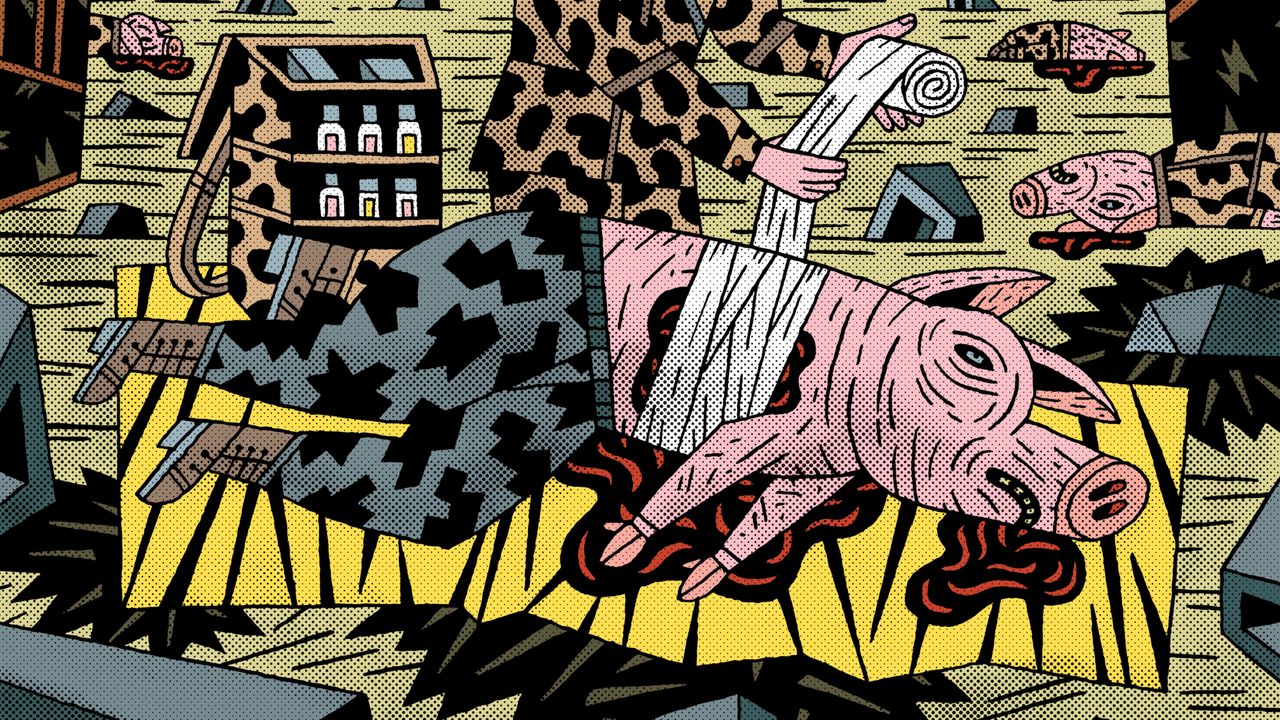
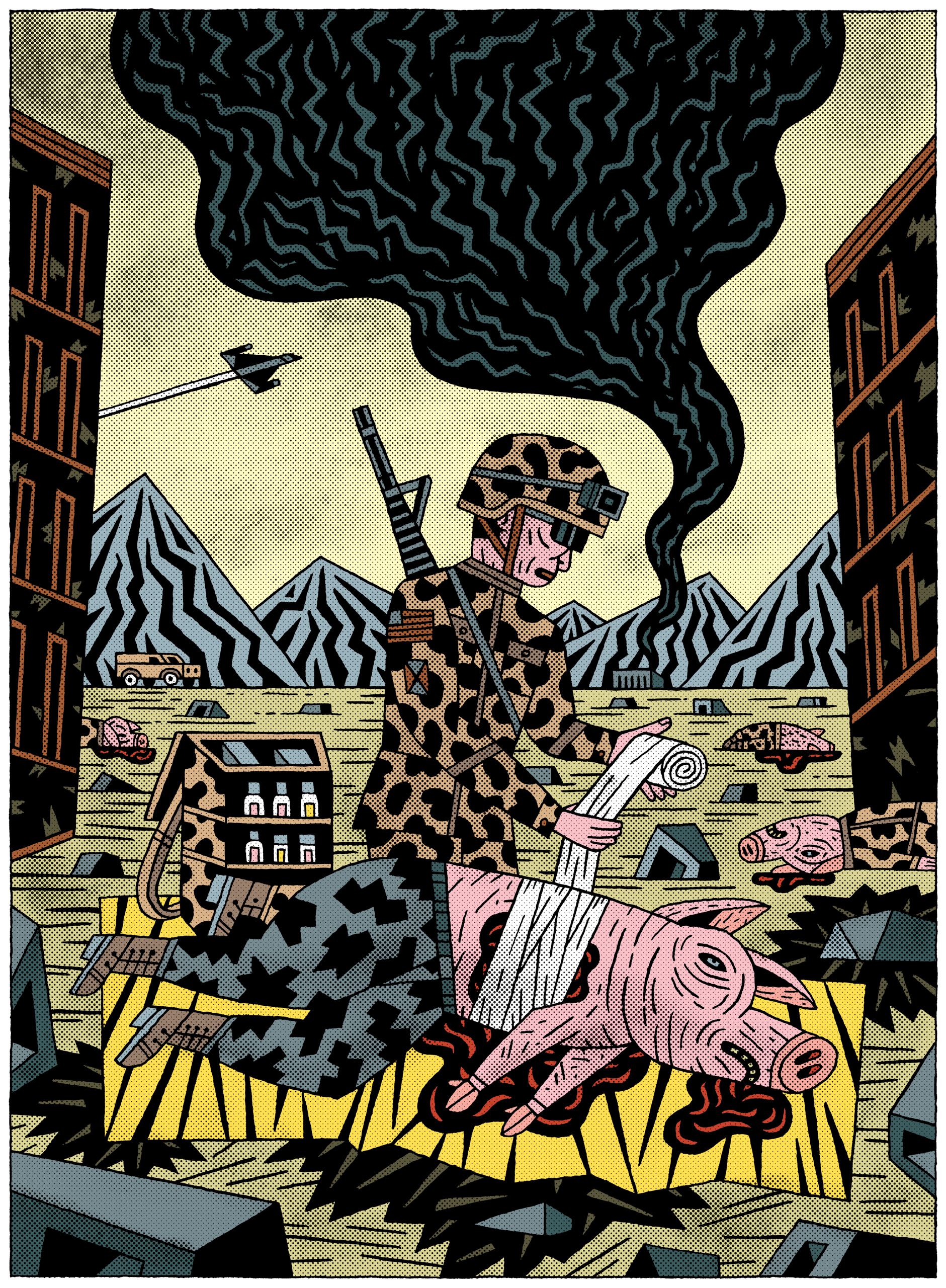
Will Mackin’s short story “Pig Lab,” published in the July 6, 2026 issue of The New Yorker, opens in an inverted world – one where a man named Ted Waters loses his leg to a bomb built into a guardrail on a blue winter night outside Marjah. That detail, the guardrail, does a quiet kind of violence. It takes something meant to protect drivers from the road’s edge and turns it into the instrument of catastrophic harm.
Mackin has spent years writing fiction that draws directly from military experience, and “Pig Lab” continues that project with the same compressed, unsparing attention that defined his debut collection. The story doesn’t explain Marjah. It doesn’t need to. Anyone who followed the 2010 Marine offensive in Helmand Province, Afghanistan, will recognize the geography. Everyone else gets the cold weight of the name anyway.
The Grammar of Combat Fiction
What separates Mackin from the broader wave of post-9/11 war writing is a refusal to soften the physical facts of injury. Ted Waters doesn’t nearly lose his leg. He loses it. The bomb is disguised as a guardrail – not hidden near one, not placed beneath one, but wearing one as a costume. That grammatical precision is doing moral work. The infrastructure meant to make roads navigable becomes the thing that takes a man apart.
The phrase “upside-down world” in Mackin’s opening sets a structural expectation the story then has to live up to. It’s a claim that the logic governing this place – Marjah in winter, a road at night – runs opposite to what a reader might assume about cause and effect, safety and danger, the ordinary purposes of objects. A guardrail guides you away from harm. In this world, it carries the harm inside it.
Marjah as Setting and Symbol
Marjah matters as a specific location, not a stand-in for “Afghanistan” in the abstract. The town became the site of a large-scale NATO and Afghan National Army offensive in February 2010, marketed by military planners as a test case for counterinsurgency doctrine. The idea was to clear the area of Taliban fighters and immediately install a functioning local government – what one U.S. commander described at the time as bringing in a “government in a box.” The box, famously, didn’t work as advertised.
Placing Ted Waters outside Marjah on a blue winter night positions his injury inside that documented failure. The season matters too. Winter operations in Helmand carry particular physical difficulty – cold ground, reduced visibility, long nights. A blue winter night is not a neutral backdrop. It’s a specific atmospheric condition that Mackin names with the confidence of someone who has been in one.
The bomb disguised as a guardrail also fits within documented IED tactics used extensively in Helmand Province during that period. Insurgents adapted commercial and construction materials – culverts, pressure plates hidden under road surfaces, and yes, roadside infrastructure – to create devices that were difficult to distinguish from their surroundings until the moment they weren’t. Mackin is not inventing a fictional weapon. He’s naming a real category of threat with enough specificity to make Ted Waters’ injury feel anchored in documented reality rather than narrative convenience.
That anchoring is the story’s first demand on its reader. You are not being asked to imagine a generic casualty. You are being asked to stand outside Marjah with Ted Waters while his leg ceases to be part of him.
What “Pig Lab” Asks of Its Title
The title sits apart from the opening image in a way that creates immediate tension. “Pig Lab” doesn’t announce a war story. It sounds clinical, institutional – possibly medical, possibly agricultural, carrying the faint bureaucratic odor of a government facility or a research program. That gap between title and opening scene is doing deliberate work.
Military medicine uses pig tissue extensively in trauma training. Pig anatomy closely resembles human anatomy in ways that make pigs useful subjects for practicing the kinds of interventions – tourniquet application, wound packing, surgical repair of blast injuries – that battlefield medics need to perform quickly and under pressure. A pig lab, in that context, is where people learn to treat the kinds of injuries Ted Waters sustains. It’s where the body gets practiced on before the real body arrives.
That relationship – between the training simulation and the actual event, between the pig and the soldier, between the lab and the road outside Marjah – is the kind of structural tension that Mackin has always been drawn to. His first book, Brings Out the Dead, published in 2017, worked similar territory: the space between what military experience is supposed to mean and what it actually feels like from inside. “Pig Lab” appears to extend that investigation with a title that names an institution and an opening that names its consequence.
The Blue Winter Night as Prose Choice
Three words in Mackin’s opening deserve specific attention: “blue winter night.” Not dark. Not cold. Blue. The color carries a particular emotional register – not the red of emergency, not the black of total darkness, but the ambient blue of a winter sky when there is still some light left in it, or when the snow catches whatever light exists and throws it back. It’s the color of a world that is not completely gone, which makes what happens in it worse.
Ted Waters loses his leg in a world that still has some light. That choice is precise enough to feel intentional and restrained enough to avoid sentimentality. Mackin has always written toward the concrete detail that carries more feeling than any explicit emotional statement could. The blue night is doing exactly that – it refuses to make the scene generically dark and terrible and instead gives it a specific terrible quality that is harder to look away from.
What remains to be seen, as “Pig Lab” unfolds across the rest of the story, is what Mackin does with Ted Waters after the road outside Marjah. Does the pig lab come before the bomb or after it? Is Waters present in the lab, or is the lab a way of understanding what happened to him – a system for processing a kind of loss that resists direct description? The story begins with an ending, a leg gone, a man remade by a guardrail. Where it goes from that blue night is the question it puts directly to the reader without offering any early assurance of an answer.