




A Week of Reading That Refused to Stay Comfortable
The week of August 24, 2026 landed with a strange weight for anyone who cares about books – not because literature was under threat in the abstract, but because specific, documented things were happening to it. Physical books were being cut apart in Amazon warehouses. A Black academic was dead. Dolly Parton was still giving away books to children. The literary conversation refused to hold still long enough to be summarized neatly, which is probably the point.
John Edward Williams was born on August 24, 1922 – a quiet anniversary for a writer whose reputation has only grown stranger and more durable since his death. The week’s reading list spread outward from that anchor into territory that was uncomfortable, funny, furious, and occasionally all three at once.

The Amazon Story Nobody Wants to Think About Too Long
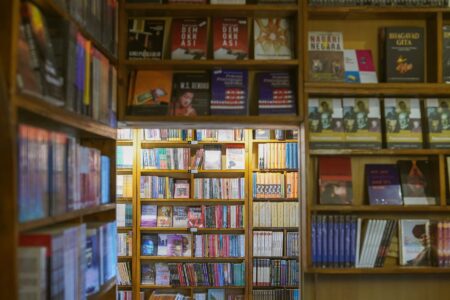
Emanuel Maiberg’s piece for 404 Media did something most tech reporting on AI training data avoids: it put a human being in the room. An employee at the warehouse where Amazon scans and destroys books for AI training described the operation plainly – “They have literally any kind of book you could think of.” The books come in, get scanned, and get destroyed. The spines get cut. The originals don’t survive the process.
If you want the full account of how that warehouse operates, the details are worth reading closely. What Maiberg’s reporting captures is the mundane, industrial quality of it – not a villain’s monologue but a warehouse job, a conveyor belt, a stack of books that won’t exist tomorrow. The scale is what makes it hard to hold in mind. These are not digital files being copied. They are physical objects being fed into a process that ends with their destruction, so that a language model can learn from what they contained.
Jason Arday, Cambridge, and the Literature of Institutional Violence
Two pieces this week addressed the killing of Jason Arday with the kind of directness that institutional language works hard to avoid. Steven Thrasher, writing for Lit Hub Politics, put it without softening: “Jason was not just hounded out of academia, he was hounded out of existence.” Gazelle Mba, writing for The Nation, recalled “the poisonous exceptionalism that followed Black students and staff at Cambridge” and examined how the systemic undermining of Black suffering contributed to Arday’s demise.
Together the two pieces form something closer to a dossier than a pair of tributes. Thrasher’s framing is prosecutorial – academia didn’t just fail Arday, it actively destroyed him. Mba’s piece works from the inside, from personal memory of what Cambridge’s particular brand of exceptionalism does to people who don’t fit its preferred image of itself. The institution’s self-conception as a meritocracy is exactly what makes it dangerous, because that self-conception becomes a reason to dismiss the evidence of harm.
The week’s campus fiction coverage arrived alongside these pieces with an uncomfortable timing. Malavika Kannan, Missouri Williams, and other authors with recent campus novels spoke to Cultured about the appeal of setting stories in academia – the contained world, the heightened stakes, the way institutions compress human drama. Reading those interviews next to Thrasher and Mba, the fictional version of the university looks considerably darker than the genre usually allows.
What deepfakes are doing to educators appeared in Wired as a separate thread, but it connects to the same anxiety: institutions built on credentialed authority are finding that the floor beneath that authority is less solid than it appeared. Teachers are being targeted with synthetic images of themselves. The classroom, like the academy, turns out to be a place where power and vulnerability run closer together than the furniture suggests.

Dolly Parton and the Argument About What Literature Is For
Two pieces about Dolly Parton ran this week from very different angles. Lit Hub Biography covered her status as an American icon and book giver – the Imagination Library, her decades of funding children’s literacy, the sheer volume of books she has put into the hands of kids who might not otherwise have them. Xochitl Gonzalez wrote for The Cut about something more personal: what Parton’s unabashed femininity taught her about storytelling. “What mattered, I learned from Ms. Parton, was that I led with the soul. What mattered, she modeled, were the stories I could tell. Everything else was mere packaging.”
That line does a lot of work. It’s an argument against a certain kind of literary seriousness – the kind that treats accessibility as a concession, that reads popular appeal as evidence of compromise. Parton has spent fifty years being underestimated by people who mistake her glitter for shallowness, and Gonzalez’s piece is partly about recognizing that mistake and partly about what it costs women writers who don’t perform the right kind of gravity.
The Fiction and the Criticism That Surrounded It
Yiyun Li examined history and war through Qian Zhongshu’s novel Fortress Besieged in the New York Review of Books, a piece that treated the novel as a way of thinking about what fiction can do with historical violence that documentary forms cannot. Olaf Stapledon’s 1930 speculative novel Last and First Men: A Story of the Near and Far Future got a reconsideration at The MIT Press Reader, tracing the rise, fall, and rebirth of humanity across geological time – a book that was strange in 1930 and has only gotten stranger.
Elizabeth Metzger’s piece for the Los Angeles Review of Books looked at Franz Wright’s final poetry collection, described as “written from the realms of mental illness, addiction, religious conversion, and a weighty poetic lineage.” David Sessions wrote for The Point about the decline of his lavender marriage, deploying a sentence that could only have been written by someone who has come out the other side: “Armed with French theory, my adult self transformed this denial of sexual orientation into a progressive rejection of all categories and binaries.” Carolyn Kellogg covered the ambitious literature coming out of California presses Unnamed Press and Transit Books in the Los Angeles Times, making a case for regional publishing infrastructure as something worth paying attention to.
Marc Sobel’s piece for The Comics Journal on Dash Shaw’s newest graphic novel Like Swimmers identified what’s genuinely interesting about the book: “while Like Swimmers borrows the machinery of detective fiction, one of its primary concerns is the divide between fine art and popular art.” Alex Dueben, also in The Comics Journal, explored how the poetics of Lettrism – the mid-century French avant-garde movement built around the visual and sonic properties of letters – shows up in comics. Elise Broach’s piece for The New Yorker considered the strange rise of high-level STEM books for babies, which is either evidence of parental anxiety or a genuinely new genre, depending on how charitable you’re feeling.

Tommy Orange’s profile of Thomas King in Vulture moved through admiration and then complication: Orange describes learning that a writer he looks up to isn’t actually Indigenous. The piece doesn’t resolve that discovery cleanly. It sits with it – with what it means to have been shaped by someone’s work, and then to find that the identity grounding that work was not what you understood it to be. That’s the question the week left open, and it has no tidy answer.