




The Man Behind the Method
Pulitzer Prize-winning biographer Kai Bird has spent his career excavating the lives of men who shaped American power from the inside – Oppenheimer, McGeorge Bundy, Jimmy Carter. His new book, American Scoundrel, turns that same forensic attention toward Roy Cohn, the lawyer and political operator whose career began in the early 1950s as Joseph McCarthy’s chief counsel and never quite ended, even after his disbarment and death from AIDS-related illness in 1986. Bird’s argument is not subtle: Cohn didn’t just survive American political culture, he helped manufacture the version of it we’re living inside now.
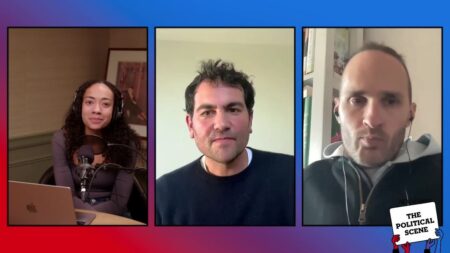
The New Yorker’s radio program recently featured Bird in conversation about the book, and the exchange made clear that American Scoundrel isn’t a simple villain biography. It’s a structural argument – that Cohn’s tactics, his contempt for institutional norms, his instinct for the aggressive lie, and his ability to cultivate powerful men didn’t die with him. They found a permanent home.

McCarthy’s Engine Room
Cohn joined McCarthy’s Senate subcommittee investigations in 1953, when he was just 26 years old. What he brought wasn’t ideology so much as methodology. The McCarthy purges – the public accusations, the destroyed careers, the lists of supposed Communist sympathizers inside the U.S. government and military – required someone willing to operate without the usual friction of evidence or due process. Cohn was that person. He ran the subcommittee’s investigations with an aggression that unsettled even some of McCarthy’s own allies, and he understood that the spectacle of accusation carried its own weight, regardless of whether the underlying claims ever held up.
Bird documents how Cohn’s approach during this period wasn’t improvised – it was a coherent philosophy. Deny everything, attack the attacker, never apologize, keep moving. The Army-McCarthy hearings in 1954, during which attorney Joseph Welch famously asked McCarthy whether he had “at long last” any sense of decency, marked the public collapse of McCarthyism. But Cohn walked away from it without a meaningful reckoning. He went to New York, built a law practice, and spent the next three decades pulling the strings of a certain kind of American ambition.
What made Cohn so effective, and so dangerous, was the gap between his public performances and his private life. He was a closeted gay man who had helped facilitate the government’s persecution of gay federal employees – a purge that ran parallel to the Communist witch hunt and destroyed careers just as efficiently. He was also the subject of a sex-trafficking allegation, which Bird addresses in the book, adding another layer to the portrait of a man who treated rules as obstacles designed for other people. The hypocrisy wasn’t incidental to his power. It was structural to it.
The Trump Connection
Cohn met Donald Trump in the mid-1970s, at a party at Le Club in Manhattan. Trump was in his late twenties, already entangled in a federal housing discrimination lawsuit against his family’s real estate business. Cohn became his lawyer, his mentor, and – by most accounts – the single most formative influence on how Trump would operate for the next five decades. Bird makes this case in American Scoundrel with the same methodical sourcing he brings to all his biographical work. The tactics Trump deployed across his business career, his first presidential campaign in 2016, and his presidency weren’t invented from scratch. They were inherited, refined, and expanded from a man who had been practicing them since the Truman administration.
The inheritance is specific, not atmospheric. Attack relentlessly. Sue everybody. Treat any acknowledgment of wrongdoing as the one thing you can never afford. Cultivate journalists who will carry your version of events. These weren’t general lessons about toughness that Trump absorbed from the culture. They were operational instructions, passed directly from Cohn through years of close professional contact. When Trump fired James Comey in 2017, or when he responded to legal exposure during his presidency by escalating rather than retreating, the fingerprints matched a pattern that Cohn had been running since 1953.

What Biography Can and Can’t Do
Bird’s previous books have demonstrated an unusual ability to hold sympathy and condemnation in the same frame. His biography of J. Robert Oppenheimer, American Prometheus – co-written with Martin J. Sherwin – won the Pulitzer Prize for Biography in 2006 and depicted a man of genuine brilliance who was also complicit in enormous destruction. The Cohn book operates on similar terrain, but with less of the tragedy. Oppenheimer was a man crushed by institutions. Cohn built his life around never letting institutions get a grip on him.
That difference shapes what American Scoundrel can accomplish. A biography requires enough interiority to make a subject comprehensible, and Cohn – who lied reflexively, who maintained fictions about his sexuality until he was dying, who seems to have experienced very little guilt about any of it – is not a man who left a rich interior record. Bird is working, in part, against the limits of the form. The book’s power comes from accumulation: the documented tactics, the named victims, the career arc that runs from McCarthy’s hearing rooms to Trump Tower.
The sex-trafficking allegation that Bird includes in the book is one of the more startling elements – not because it’s disconnected from the rest of Cohn’s biography, but because it fits the logic of a man who spent his life assuming that the rules governing other people’s behavior simply didn’t apply to him. Bird doesn’t sensationalize it. He places it in the context of Cohn’s broader relationship with power, access, and impunity, and lets the reader draw the line forward to more recent history on their own.
The timing of the book’s publication matters. Cohn died in 1986, but American Scoundrel arrives at a moment when the political style he developed is not a historical artifact – it’s the operating system. Bird’s framing of Cohn as a “founding father” of Trump’s America is deliberate and provocative, and it raises a question the book doesn’t quite answer: if the tactics work, if they’ve worked continuously for 70 years, what exactly would it take to make them stop working?

Cohn was disbarred by the New York Appellate Division in June 1986, just weeks before his death, for unprofessional conduct – including misappropriating client funds and lying on a bar application. He died in August of that year. The man he mentored is currently serving as the 47th President of the United States.