




From the South China Sea to Liberty Island
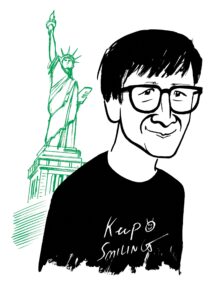
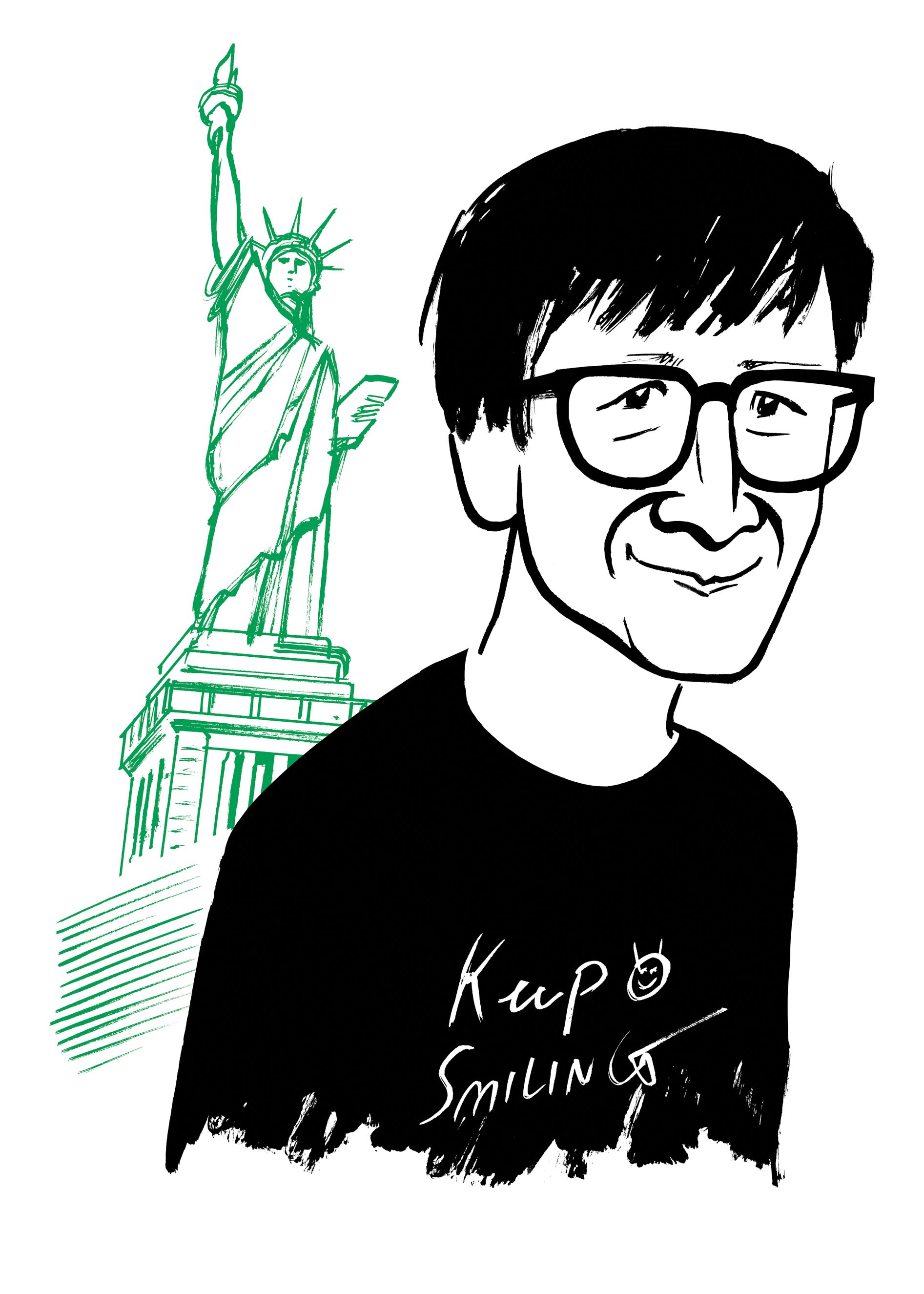
Ke Huy Quan was standing on Liberty Island when he talked about what it means to start over – not once, but several times inside a single life. The conversation centered on Never Say Die, his new memoir, a book that does not read like a victory lap so much as an honest accounting of every gap between the person he was and the person he had to become. For someone who has spent decades in the entertainment industry and recently stood at its highest point, Quan seems most comfortable talking about the years when none of that was guaranteed.
The setting was deliberate in ways that a publicist might have arranged but that Quan himself seems to genuinely feel.
Liberty Island, with its charged symbolism and its view of a harbor that once processed millions of immigrants, is not a subtle backdrop for a man whose earliest years were defined by displacement. Quan was born in Vietnam and fled as a refugee – a journey Never Say Die chronicles in the kind of specific, unglamorous detail that separates memoir from mythology. The statue looming nearby was not just scenery. It was a reference point for the book’s central argument: that survival and reinvention are not the same thing, and that confusing the two can cost you decades.
Child Star, Long Silence, One Night in Hollywood
Most people who know the name Ke Huy Quan associate it with one of two moments separated by roughly forty years. The first came in 1984, when a young boy appeared beside Harrison Ford in Indiana Jones and the Temple of Doom, playing Short Round with a kind of scrappy, unguarded energy that lodged itself in the memories of an entire generation of filmgoers. That role, and the visibility it brought, seemed to position Quan as someone Hollywood would hold onto. It did not work out that way. The industry’s appetite for the child actor it had briefly adored faded, and Quan spent years working behind the camera – as a stunt coordinator, an assistant director – doing the work that keeps productions running while largely disappearing from the parts of the business that generate fame.
The second moment came in 2023, when Quan won the Academy Award for Best Supporting Actor for his performance in Everything Everywhere All at Once, the Daniels-directed film that used science fiction’s loosest possible framework to tell a story about a Chinese-American family, immigrant labor, and the emotional wreckage of unlived lives. Quan’s character, Waymond Wang, was warm and strange and quietly devastating. The win felt, to many watching, like a correction – not just for Quan personally but for a longer history of Hollywood’s relationship with Asian actors, a relationship built more on exclusion than opportunity.
Never Say Die sits between those two moments and insists on taking the middle seriously. The decades that passed between Indiana Jones and Everything Everywhere All at Once are not presented as a waiting room. They are the book. Quan’s account of that period – the auditions that didn’t come, the pivot to crew work, the question of whether to keep trying at all – is where the memoir earns its title. Saying no to the idea of a finished story, when every external signal suggests the story is over, turns out to require its own particular discipline.
What a Memoir Asks of Its Writer
Writing about your own life when that life includes both genuine hardship and extraordinary public recognition is a specific kind of problem. Lean too hard into the refugee narrative and you risk reducing a complicated history to a single note of suffering. Lean too hard into the Oscar and you produce the kind of book that exists mainly to confirm what readers already feel about you. Quan, based on what he shared during the Liberty Island conversation, appears to have understood this tension going in. Never Say Die is structured to resist both traps, moving through his Vietnamese origins, his family’s flight, his Hollywood childhood, his long professional absence, and his return without letting any single chapter consume the others.
The title itself carries the refusal. It is not Against All Odds or Second Act or any of the formulations that signal a tidy arc from darkness to light. “Never say die” is a phrase that belongs to action movies and schoolyard stubbornness – it sounds almost naive, which may be exactly the point. Naivete, or something that functions like it, is sometimes the only available strategy when the realistic assessment of your situation would suggest stopping.
What Quan describes, across the book and in conversation, is not a story that resolved cleanly. The Oscar is real, the recognition is real, and the relief that accompanied both is also real. But he is not arguing that the arc of his life proves something universal about persistence or American possibility. He is describing what happened to him specifically – beginning with a boat on the South China Sea and ending, for now, on a stage in Hollywood – and leaving the broader conclusions largely to the reader. That restraint is rarer in celebrity memoir than it should be, and it is probably what makes Never Say Die worth reading rather than simply worth acknowledging.

The Island, the Statue, the Question Left Open
Standing on Liberty Island while discussing a memoir about displacement and reinvention, Ke Huy Quan does not appear to be performing gratitude so much as examining it – turning it over to see what it actually is, where it comes from, and whether it fully describes what a person feels when the country they arrived in as a refugee later hands them its most recognized entertainment prize. Never Say Die does not answer that question. It holds the question up to the light and keeps smiling, which, if you think about it, is a different thing entirely from having resolved it.