





The Kneejerk and What Follows It
Put “James Baldwin” and “AI” in the same sentence and a certain kind of reader will flinch. That reflex is understandable – earned, even – but in the case of For Those Who Come After, an interactive installation currently running as part of “KIN: A Festival of Memory and Imagination” in New York, the flinch sends you in the wrong direction. The work is not an extraction. It is an invitation back to the writing itself.
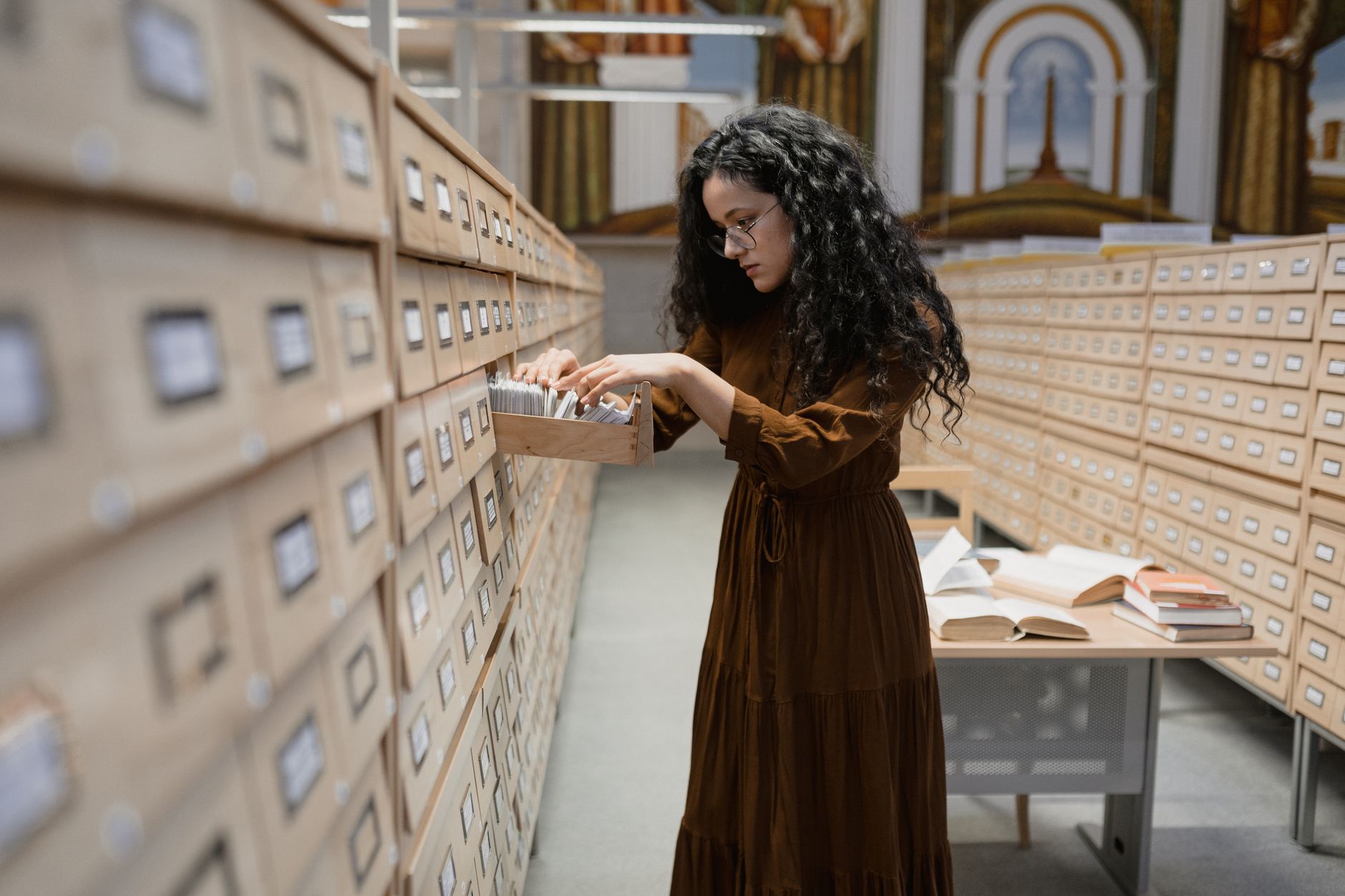
The installation is built around a physical desk, a typewriter, and three stacks of cards labeled Wisdom, Courage, and Love. A visitor sits down, asks a question, and the typewriter – running what appears to be a bespoke AI model – identifies three cards from the stacks that speak to that question, then types out what its creators describe as “a poetic reflection, generated from the spirit of Baldwin’s archive.” The archive in question draws from Baldwin’s books, essays, and letters. The rest of the room holds a radio, a television, and a record player, all reproducing Baldwin’s own words.

Who Built It and Why That Matters
The software and installation design come from Kinfolk Tech, a nonprofit whose stated mission is to use immersive technology, public art, and community-led design to help displaced and excluded communities document their own histories and shape their own legacies. Their previous work includes augmented reality monuments honoring Black, Brown, Indigenous, and queer figures, fellowships focused on community memory, and archival storytelling projects. This is not a corporate content play dressed in cultural clothing.
Kinfolk’s founder, Idris Brewster, described the Baldwin installation to Fast Company as a “poetic intervention” – something designed to slow visitors down long enough to sit with the relationship between human thought and machine output. That framing matters. The typewriter is not positioned as a replacement for reading Baldwin. It is structured to funnel people toward the primary texts, toward the cards, toward the voice playing in the corner of the room.
There is a real difference between a nonprofit building a community memory archive around James Baldwin’s letters and a technology company scraping those same letters to train a model that generates generic prose on demand. The difference is intention, accountability, and what happens to the work afterward. Kinfolk’s project does not productize Baldwin. It uses a narrow application of language model technology to slow a visitor’s body down inside a room full of his actual words.
The Noise That Poisons Everything Quieter
The problem is not the typewriter. The problem is that the typewriter now has to be explained against a backdrop of some of the worst public messaging any technology has ever received from its own architects. The week For Those Who Come After was being covered by Fast Company, Vox was describing the same news cycle as “the week the AI freakout went mainstream” – a period defined by tech executives publicly suggesting they believe they are engineering human extinction while continuing to go to work and collect salaries for doing so.
That specific variety of grandiosity has a shape to it. There is a genre of performance here – men in positions of extraordinary wealth and institutional power announcing that they are too dangerous to be trusted, apparently expecting the announcement to land as tragedy rather than as absurdity. They invented a crisis, accelerated it, and are now gesturing at the public to figure out what to do with the wreckage. It is, as one writer noted in The Atlantic, not entirely unlike the brand of method-acting theater in Hollywood that Angelica Jade Bastién described as “wrapped up in a brand of identity politics that tries to make the art form resemble more traditional forms of male labor” – an insecure performance of consequence dressed as professional seriousness.
Baldwin spent a career writing about exactly this intersection: American wealth, American power, and the particular blindness that attends both. The irony of his archive being adjacent to this cultural moment is not subtle. He was precise about the way institutions protect themselves through spectacle, and about the cost that spectacle extracts from people without the resources to ignore it. Other corners of the tech and publishing world are already working through those costs in less careful ways.
The collateral damage lands on projects like Kinfolk’s. When public understanding of AI is built almost entirely by the loudest, most maximalist voices – the ones bragging about job elimination, energy consumption, and civilizational risk – every quieter application of the same underlying technology gets read through that lens first. A typewriter that directs a grieving person to a James Baldwin essay on love is not the same object as a content farm replacing staff writers. But right now, they share a word, and that word has been thoroughly saturated by the people with the most money and the least interest in making fine distinctions.

What the Room Is Actually Asking
Strip away the technology for a moment and describe what For Those Who Come After is doing physically: a person sits at a desk, asks a question out loud, and is handed a card that points them to a passage from James Baldwin. Then they sit and read it. The machine is a moderator between a human and a body of writing. That is not a new idea – it is, in stripped-down form, what a good librarian does, what a well-designed anthology does, what a teacher does when they find the right passage for the right student at the right moment.
The poetic reflection that the typewriter generates – the language produced rather than sourced – is the more complicated piece. Generated text is generated text, and there are real questions about what it means to produce new language “in the spirit of” a writer who was himself so precise about the difference between language that illuminates and language that obscures. Baldwin’s prose did not come from a model trained on patterns. It came from a specific life under specific pressures, and that origin is not replicable.
But Kinfolk is not claiming otherwise. The installation does not pretend the typewriter is Baldwin. It frames the generated reflection as a prompt – a thing that might slow you down, make you pick up a card, lean toward the radio in the corner. Whether that framing holds up under sustained engagement with the work is a question the exhibition itself is designed to sit inside, not answer cleanly.
The desk is in New York. The cards are stacked. The question the typewriter cannot type its way out of is whether the person who sits down leaves the room wanting to read The Fire Next Time – or whether they leave feeling like they already have.