





The Spectral and the Literary, Arriving Together
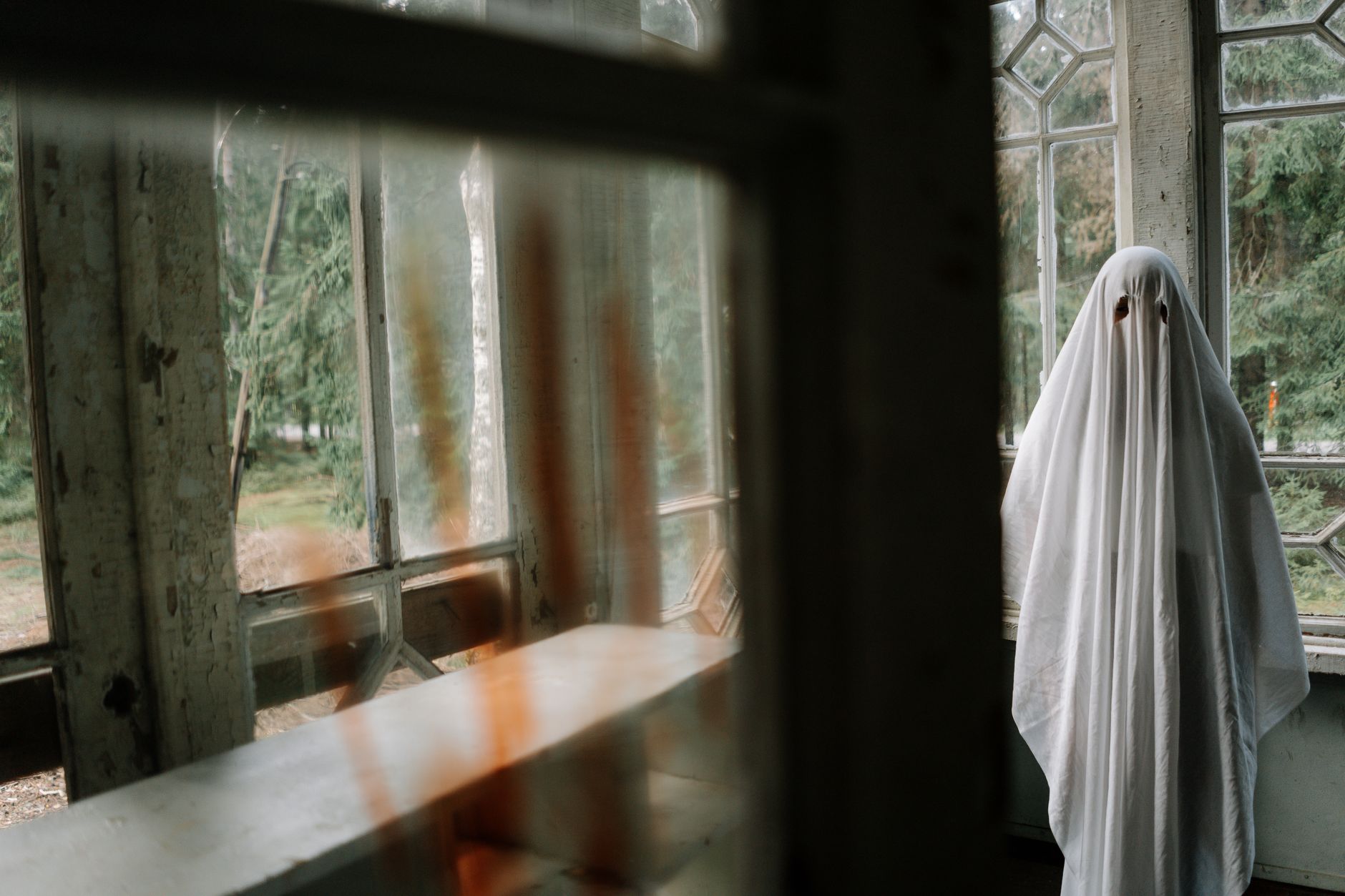
On September 28, 1966, André Breton died – the architect of Surrealism, the man who spent a career insisting that what lurks beneath consciousness deserves more attention than what sits plainly on the surface. Sixty years later, that argument has become less a manifesto and more a description of where literary culture actually is. The ghosts are louder now. The fiction reaching readers and the films filling screens keep circling back to them, and writer Tara Badstubner takes that pattern seriously enough to ask why recent hauntings feel less like genre convention and more like genuine distress signal.
Badstubner’s framing – “the spectral are getting louder, more insistent, more prevalent, and our literature, our cinema, reflect this” – lands as diagnosis rather than aesthetic observation. That distinction matters. When a culture’s storytelling becomes saturated with the unquiet dead, something is being processed that ordinary realism hasn’t managed to hold.
Fiction, Class, and the Conversation at The Center for Fiction
Angela Flournoy, whose work has long pressed on the relationship between place, inheritance, and economic precarity, sat down with Brit Bennett and Raven Leilani at The Center for Fiction to talk through her novel The Wilderness. The three writers covered class, the internet, and what it means to build fiction around material conditions that American literary culture has historically softened or elided. Bennett and Leilani are precisely the right interlocutors for that conversation – both have written about Black American experience and financial precarity with a directness that doesn’t reach for uplift as a default.
Elsewhere in fiction worth reading now, Hiroko Oyamada’s collection Garden, translated by Lucy North, surfaces with a story called “Crabs” that opens in the specific strangeness Oyamada has made her register. “My all-girls’ high school was sometimes visited by crabs,” the narrator says. “The first time I saw one show up was during my first year, on a rainy day in early summer.” The image refuses explanation, which is the point. Oyamada doesn’t reach for metaphor so much as she lets the uncanny sit in the same frame as the mundane until the reader’s sense of which is which begins to slip.
Lincoln Michel is reading Don Quixote in 2026 and writing about what that experience actually feels like rather than what it’s supposed to feel like. His dispatch lands on something that book culture often buries under reverence: “Reading Don Quixote is reminding me that at least a point of literature is to goof around.” Cervantes’ novel is nearly 420 years old and still functions as permission – permission to be digressive, absurdist, and genuinely funny without apologizing for it. That’s not a minor observation to make in a literary moment that can take itself very seriously.
History’s Witches and an Antarctic Legacy
Marion Gibson has traced the real story behind 17th-century England’s witchcraft panic, a subject that connects directly to Breton’s surrealist inheritance and to Badstubner’s ghosts – fear of the irrational expressed through the persecution of women who embodied social disorder. The witchcraft panic wasn’t primarily about witches. It was about what communities do when anxiety has no sanctioned target.
Alexandra Shackleton considers her grandfather Ernest Shackleton’s Antarctic expedition and its legacy – a different kind of haunting, the kind that comes from being permanently attached to someone else’s historic achievement. What it means to carry that name, to be asked to speak for an expedition you weren’t on, to have your own relationship to history filtered through a celebrated ancestor, is the territory she’s navigating.
Vollmann, RFK, Poe, and a Profile That Knew the Game
William T. Vollmann has published A Table for Fortune, a novel about American foreign policy that took decades to write and, given Vollmann’s output and methods, probably contains more primary research than most academic monographs on the same subject. He’s spoken about excavating that history – the verb is his, and it’s accurate. Vollmann doesn’t reconstruct the past so much as dig through it, layer by layer, until he hits something that doesn’t decompose.
RFK’s ethics filing has produced one concrete, mildly absurd data point: Skyhorse Publishing has paid him a significant amount of money. NPR, meanwhile, reads Edgar Allan Poe as “an excavator of repressed emotion” – which lands differently the same week Breton’s death anniversary circulates, given that Poe was doing in the 1840s what Surrealism would theorize nearly a century later. The connections aren’t forced. They’re just sitting there.
Tommy Craggs’s profile of Paulina Borsook for Wired opens with Borsook refusing to let Craggs inside her home – not from hostility but from professional self-defense. “Borsook didn’t want me to come inside, lest I pull the old magazine hack’s scam of investing the decor with symbolic significance,” Craggs writes. “She wrote enough stories of this kind in her heyday to know how the game gets played.” It’s a disarming opener precisely because Borsook’s suspicion is correct. Profile writers do exactly that. The decor always ends up meaning something in the final draft, whether the subject consented to that reading or not.
The Los Angeles Review of Books asks why humans tell themselves stories about dinosaurs – a question that sounds like pop science but is actually continuous with everything else in circulation this week. Dinosaurs are the ultimate extinct thing, gone so completely that only bones remain, and yet the stories keep coming. Ghosts of a different geological register. Breton would have had something to say about that.
Borsook knew the game. She still didn’t let him in.