


The Actor Nobody Gives Enough Credit To
Matt Damon has spent three decades building one of the most quietly impressive careers in Hollywood – and The Odyssey is his latest proof that the 55-year-old still has room to surprise.
The Roles That Built a Career Without a Blueprint
There is a particular kind of actor Hollywood tends to overlook precisely because he makes everything look easy. Damon belongs to that category – the performer whose range gets mistaken for reliability, whose consistency gets filed under “dependable” rather than “exceptional.” He has never chased the grotesque transformation or the method-acting mythology that tends to generate awards-season noise. Instead, he just keeps showing up and being very, very good.
At 55, Damon is now older than the actors he once watched define what a leading man could be. He came up in an era when stardom had a specific shape – chiseled, loud, larger-than-life – and he found a way to matter without fitting any of it. His is a career built on ordinary-looking men in extraordinary pressure, and the audience’s ability to believe both things at once.
The everyman label gets thrown at him constantly, and it is both accurate and slightly unfair. Yes, he carries a quality of recognizable humanity into almost every role. But the everyman framing tends to flatten what he actually does technically – the way he modulates vulnerability without tipping into weakness, the way his silences in a scene tend to carry more weight than another actor’s dialogue.
The Odyssey arrives as a reminder of what that specific skill set looks like when the material is worthy of it. But the film also invites a look back – at the roles that made Damon the actor he is now, and at why those performances still hold up better than nostalgia alone can explain.
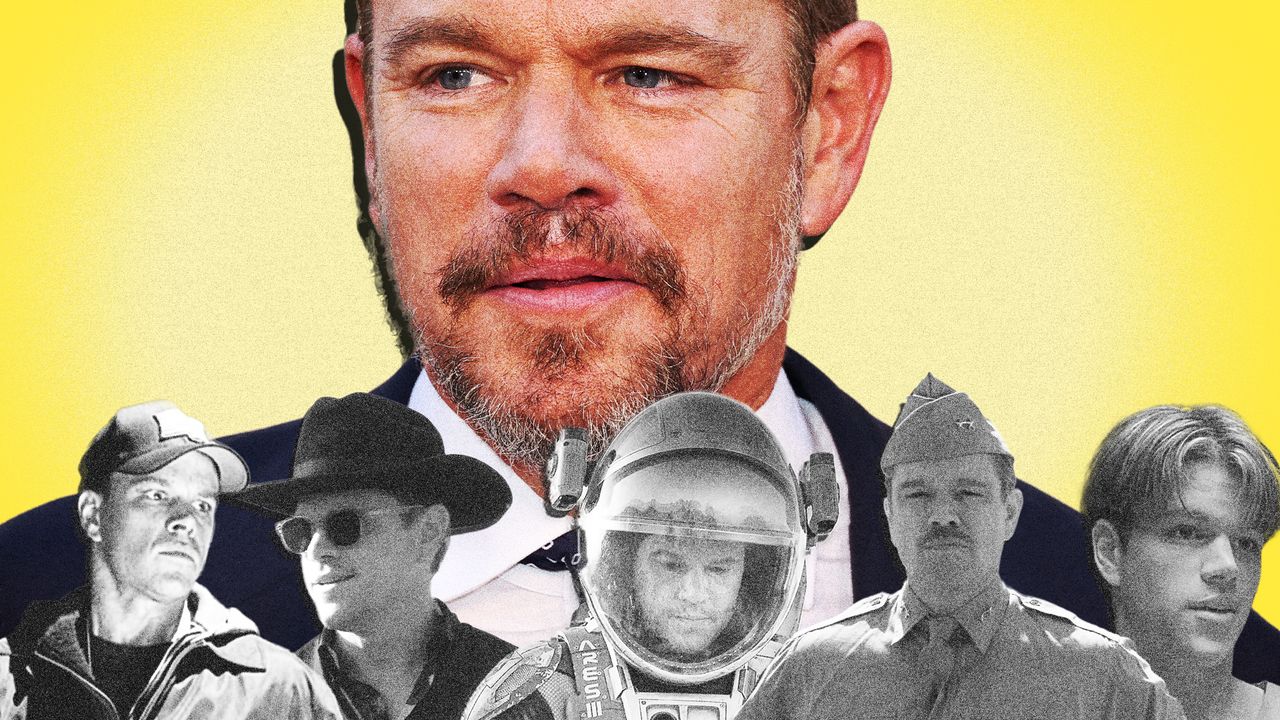
Five Films That Defined What Damon Does Best
Good Will Hunting is where it started, and it remains the role against which everything else gets measured – fairly or not. Damon co-wrote the screenplay alongside Ben Affleck, a fact that still tends to overshadow the performance itself. Will Hunting is a young man from South Boston with a genius-level mind and a near-total inability to let anyone close enough to see it. The character could have easily become a fantasy – the brilliant misfit redeemed by love and therapy. Damon kept him abrasive and wounded and recognizably real, which is what makes the film’s final moments land as hard as they do.
The Departed gave him something different: a man running out of time to decide who he actually is. Playing Colin Sullivan – a Massachusetts State Police sergeant who has been feeding information to Jack Nicholson’s crime boss since adolescence – Damon made a genuinely dangerous choice. Sullivan is not sympathetic. He is not misunderstood. He is someone who has made a series of calculated decisions for selfish reasons and continues making them. Damon played that without apology, without the usual telegraphing of inner conflict that lets audiences off the hook. The performance sits uncomfortably because it is supposed to.
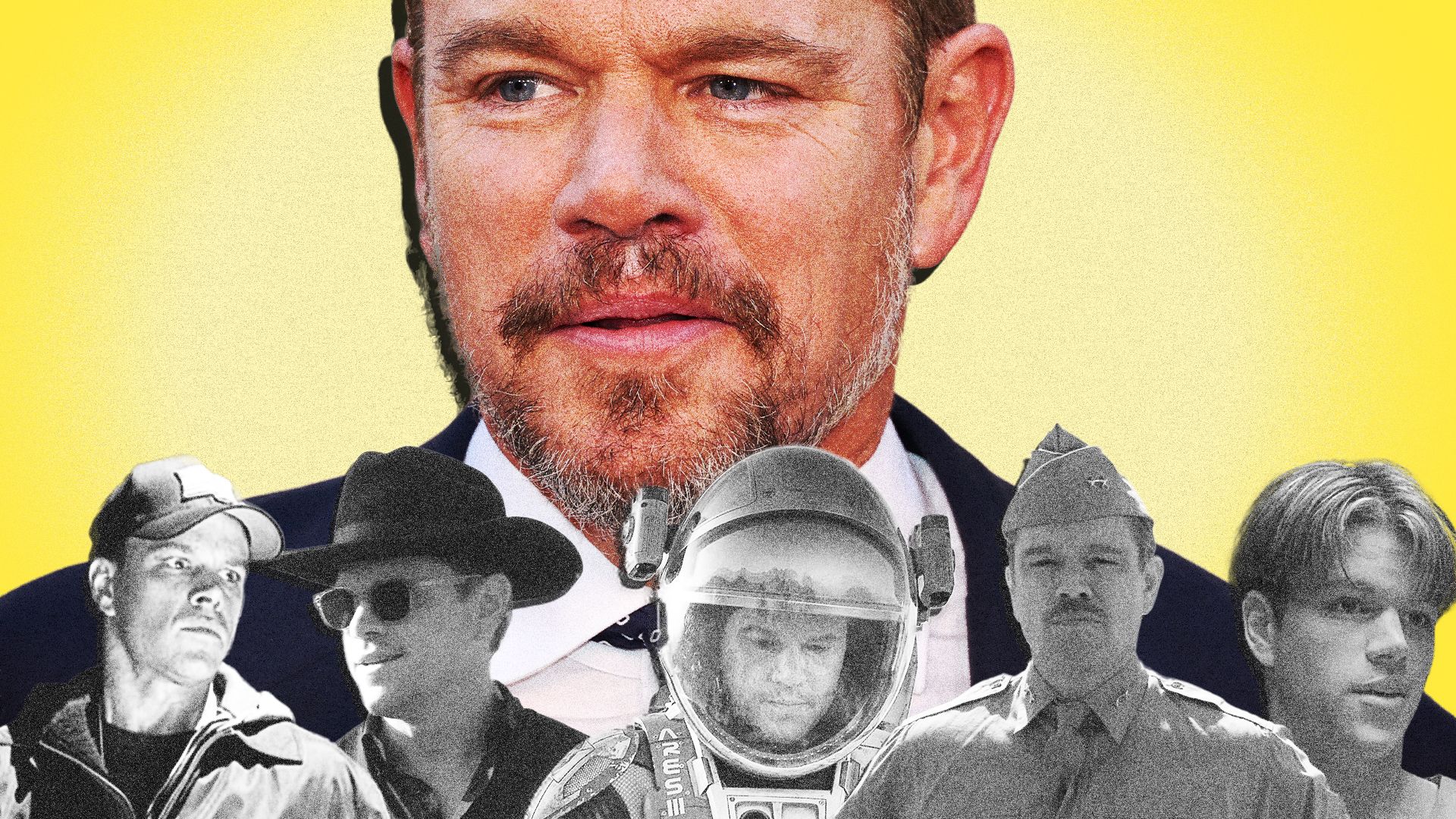
The Talented Mr. Ripley remains one of the stranger entries in his filmography, and possibly the most technically demanding. Tom Ripley is a fraud and an opportunist who moves through 1950s European society by mirroring whoever he needs to become. Damon played the character’s fundamental emptiness without ever making him unreadable – a very specific challenge, because a truly blank character gives the audience nothing to follow. He found the hunger underneath the blankness, the desperate wanting that drives every deception. It is the kind of performance that only becomes clearer the more you know about how difficult it actually was to construct.
The Martian is the film that probably best illustrates his particular gift for making competence watchable. Mark Watney – botanist, astronaut, accidental castaway on Mars – is almost relentlessly capable, and capable characters are notoriously hard to make interesting. Damon threaded it by playing Watney’s humor as a genuine coping mechanism rather than a character quirk. The jokes are how Watney survives psychologically, which means they never feel like comic relief. They feel like someone trying very hard not to fall apart.
Saving Private Ryan gets less attention in Damon retrospectives than it probably deserves, partly because the film belongs so definitively to its ensemble and to Steven Spielberg’s direction. Damon appears late, as the Private Ryan of the title – a young soldier who has survived something his rescuers have not yet fully processed. The role is small in screen time and enormous in weight. He has to make Ryan worth the cost the film has already established, and he does it largely through a quality of unguarded relief that feels almost too private to watch.
What connects these five films is not genre or tone or even the caliber of the directors involved, though the list runs from Spielberg to David Fincher to Anthony Minghella. What connects them is Damon’s repeated willingness to prioritize the internal logic of a character over the external markers of a “good” performance. He is rarely the most theatrical presence in a room. He is almost always the most believable one.
What The Odyssey Changes – or Doesn’t
A role like Odysseus, one of the most mythologized figures in Western literature, would seem to push against everything Damon is known for. The everyman reading of his career does not immediately suggest the cunning king of Ithaca, the man who outwitted a Cyclops and resisted the Sirens. But there is an argument that Odysseus – stripped of the epic scaffolding – is actually one of the oldest everyman stories in existence. A man trying to get home. A man making bad decisions under extreme pressure and living with the consequences.
Whether The Odyssey uses Damon’s specific strengths or asks him to work against them is a question the film itself will answer. What is not a question, at this point, is whether he belongs in the conversation about Hollywood’s finest working actors. He has been in that conversation for thirty years. The industry just tends to remember it only when he shows up somewhere new.

He turns 56 in October. The film opens before that. And somewhere in the gap between the myth of Odysseus and the actor playing him, there is probably a more interesting story than either one tells on its own.