





A Career That Refuses to Conclude
Ridley Scott made Alien in 1979, Blade Runner in 1982, and Gladiator in 2000. Those three films alone would constitute a legacy most directors would retire on. Scott did not retire. He has spent the decades since accumulating credits at a pace that embarrasses filmmakers half his age, and he is approaching 90 years old with what appears to be zero intention of slowing down.
There is something almost confrontational about that output – a director producing work at the rate Scott does, at the age Scott has reached, makes the rest of the industry look like it is taking an extended lunch. Whether every film lands is a separate question entirely. The filmography is long, uneven, and genuinely worth arguing about.
The Benchmark Films
Alien did not simply launch a franchise. It redefined what science fiction horror could look like – slow, textural, and suffocating in a way that owed as much to architecture and costume as it did to script. H.R. Giger’s designs and Scott’s framing created a visual language that directors have been borrowing from ever since. The film made Sigourney Weaver a star and made space feel genuinely hostile rather than adventurous.
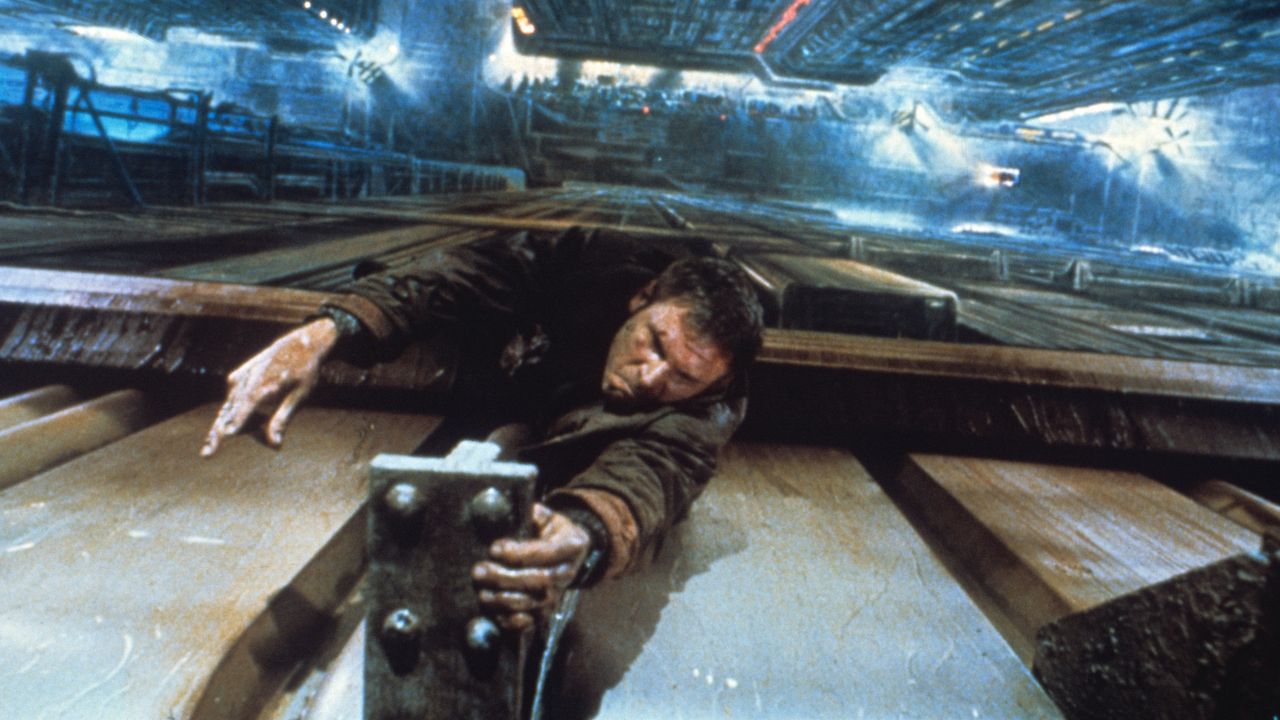
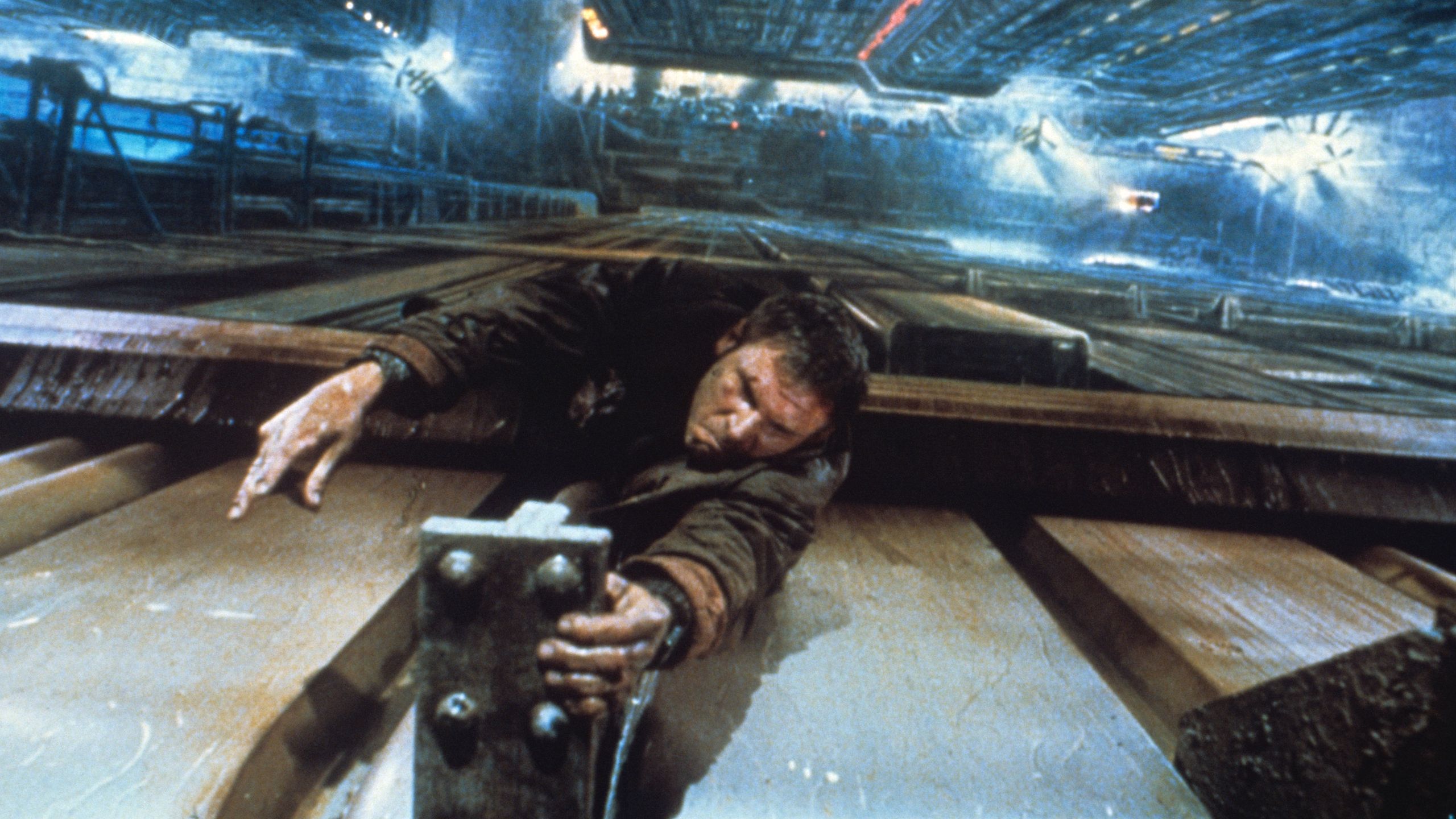
Blade Runner arrived three years later and failed commercially on release. It has since become the kind of film that gets referenced in architecture schools and fashion editorials with equal enthusiasm. The neon-soaked, rain-slicked Los Angeles of 2019 that Scott built – a city of overcrowding, corporate dominance, and moral ambiguity – now reads less like science fiction and more like an extrapolation with uncomfortably good aim. Gladiator functions differently: it is spectacle designed to be felt in the chest, and it won Best Picture at the 2000 Academy Awards because it delivered exactly what it promised at a scale that demanded a cinema screen.
The Sprawling Middle of a Long Career
Thelma and Louise (1991) belongs in the first tier of Scott’s work and occasionally gets undervalued in discussions dominated by his science fiction and historical epics. The road film gave Geena Davis and Susan Sarandon roles that were written with the kind of specificity Hollywood rarely applied to women at the time. It was nominated for six Academy Awards and won one, for Callie Khouri’s original screenplay. The film’s ending remains the subject of genuine debate decades later, which is the mark of something that got under the culture’s skin rather than simply passing through it.
Black Hawk Down (2001) followed Gladiator and demonstrated Scott’s capacity to shift registers entirely without losing technical command. The film’s reconstruction of the 1993 Battle of Mogadishu is relentless and deliberately disorienting – a war film that withholds the clarity usually offered to audiences. It won two Academy Awards, for editing and sound mixing, categories that are easy to dismiss until you watch the film and understand how completely those elements define the experience.
Then there is the section of the filmography that requires more patience from Scott’s defenders. Kingdom of Heaven (2005) was released in a studio-cut version that Scott himself has publicly criticized; the director’s cut, running over three hours, is a substantially different film and a considerably better one. The theatrical version is the one most people saw, which means most people’s opinion of that film is based on a version its director considers compromised. That distinction matters when ranking the work.
Prometheus (2012) returned Scott to the Alien universe and split opinion sharply – ambitious in conception, uneven in execution, and still capable of producing images of real power. The Martian (2015) is probably his most purely enjoyable film of the past two decades: a survival story with a light touch and a performance from Matt Damon that the film uses efficiently. It earned seven Academy Award nominations. House of Gucci (2021) and Napoleon (2023) are recent entries that continued the pattern of Scott swinging large and landing somewhere between admirable and excessive.
What the Output Actually Represents
Scott’s filmography is not coherent in the way that auteur theory sometimes demands. He does not return obsessively to a single theme or formal style. What he returns to is scale – the sense that a frame should contain as much visual information as it can hold, that production design is not background decoration but the environment through which meaning moves. That consistency of craft is visible in his best work and still present, if less effective, in his weaker films.
The span from Alien to Napoleon is 44 years of continuous production. That is not a career structured around a handful of defining moments; it is closer to an ongoing practice, with all the variation and occasional failure that implies.
The Ranking Debate and What It Reveals
Ranking Scott’s films is an exercise that exposes more about the ranker than the ranked. Prioritizing craft puts Blade Runner and Alien at the top. Prioritizing emotional impact might elevate Thelma and Louise. Prioritizing sheer entertainment value makes a reasonable case for Gladiator or The Martian. None of those hierarchies is wrong, and the fact that a filmmaker’s body of work generates that kind of disagreement is its own form of achievement.
The more interesting question is not which film sits at position one but why Scott, at nearly 90, is still the subject of this conversation in the present tense. Other directors of his generation have stepped back or handed off – Scott has not. He will likely have another film completed before any definitive ranking of his work could be called final.

That restlessness is either the most admirable thing about him or the most confounding, depending on whether you think Napoleon deserved its 158-minute runtime. Either way, the list stays open.