



Hollywood’s Most Calculated Bet
Ryan Gosling is about to become the load-bearing wall of two separate cinematic universes. With a Star Wars film already locked in for May next year and a newly announced Marvel role now confirmed, the actor has been handed something no single performer has attempted in quite this way – simultaneous franchise responsibility across the two biggest properties in blockbuster filmmaking.
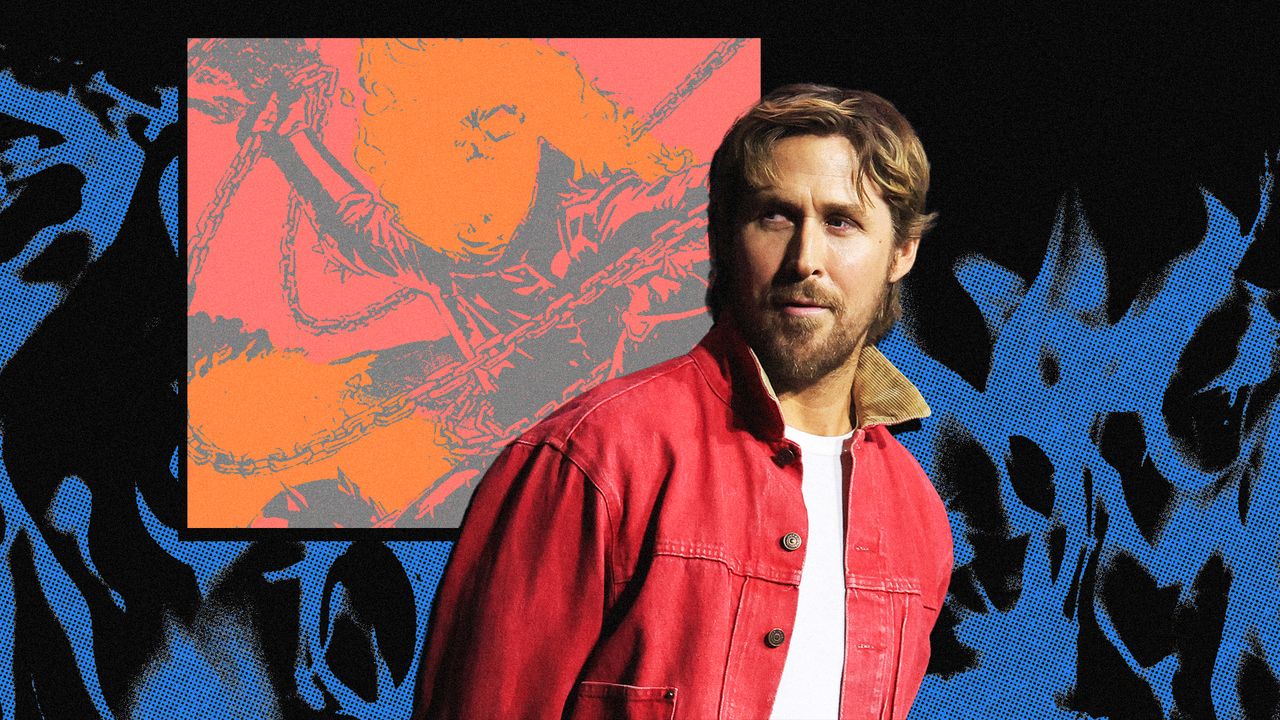
The Marvel project puts him inside the MCU as Ghost Rider, a character with enough mythology and visual identity to anchor a standalone arc. Whether the studio uses that to rebuild audience momentum is the more pressing question than the casting itself.
What Ghost Rider Brings to a Struggling Universe
The MCU has been visibly uneven since its post-Endgame run. Projects have varied wildly in quality and reception, and the connective tissue that once made the universe feel like a living thing has frayed. Ghost Rider – a flame-skulled antihero running on vengeance and supernatural contract – is a different register entirely from the quip-heavy, committee-softened output that defined Phase Four. The character demands darkness, consequence, and a lead actor willing to commit to something genuinely strange.
Gosling has done strange before. His work in Drive, The Nice Guys, and even Barbie as Ken – played with a specific kind of deadpan sincerity – shows a performer who does not get swallowed by spectacle. He makes choices that feel considered rather than default. That track record is exactly why his name attached to a property carries weight beyond the marketing cycle.
Ghost Rider also arrives with pre-existing brand recognition that doesn’t require the MCU to build from scratch. Nicolas Cage played the character in two films, 2007 and 2012, both of which underperformed critically but maintained a cult following stubborn enough to still generate conversation. Gosling stepping into that space isn’t starting from zero – it’s a relaunch with built-in cultural memory and an audience curious about what a serious treatment might look like.
The Star Wars Variable
The Star Wars film arriving in May next year adds a layer of complexity to Gosling’s position that goes beyond a busy schedule. Star Wars has its own recovery arc to manage – the franchise stalled badly after the sequel trilogy divided its audience, and every new project carries the weight of needing to prove the property still functions. Gosling’s involvement signals that Lucasfilm is reaching for credibility rather than coasting on nostalgia.
Two major franchise roles in overlapping windows is not standard industry practice. The risk is obvious: overexposure can flatten a persona that thrives on a degree of scarcity. Gosling has maintained that scarcity carefully – selective projects, long gaps between releases, a public image that doesn’t saturate. Taking on both assignments tests whether that persona survives franchise volume.
Style, Persona, and the Franchise Actor Problem
There is a specific tension in watching an actor known for taste and restraint commit fully to IP machinery. Gosling has built something closer to a filmmaker’s actor reputation than a movie star one – the kind of name that appears on a project and shifts how it gets discussed before anyone has seen a frame. That positioning is an asset right up until the franchises start demanding sequels on a studio timeline rather than an artistic one.
Ghost Rider, specifically, has a visual language that is inherently stylized – the leather jacket, the chrome, the fire. It maps surprisingly well onto the aesthetic Gosling has cultivated in his public image: clean lines, physical commitment, a quality of cool that doesn’t tip into self-consciousness. That alignment might be why the casting feels less like a surprise than it initially reads.
Marvel needs the MCU’s next phase to feel like an event again rather than a content obligation. A Gosling-led Ghost Rider project, if positioned correctly, could do what solo films are supposed to do – introduce a corner of the universe that operates by different rules and generates genuine anticipation. The character’s story structure, built around a deal with the devil and its consequences, gives writers something to actually work with.
What comes after the announcement is the part that matters. Casting generates headlines. The script, the director, and the production choices determine whether this becomes a turning point or another entry on a long list of almost-worked projects. Gosling can carry a film. The question sitting underneath all of this is whether the infrastructure around him is capable of building one worth carrying.
The Star Wars slot in May next year arrives first. If that film lands the way Lucasfilm needs it to, Gosling walks into the Ghost Rider announcement with entirely different leverage – and the MCU project inherits momentum it didn’t generate on its own.