




A Single Sentence That Carries Its Own Weather
Ingeborg Bachmann’s flash fiction piece “The Hobbler,” published in The New Yorker, runs to a single sentence – and that sentence insists on doing the work of an entire season.

What the Sentence Actually Says
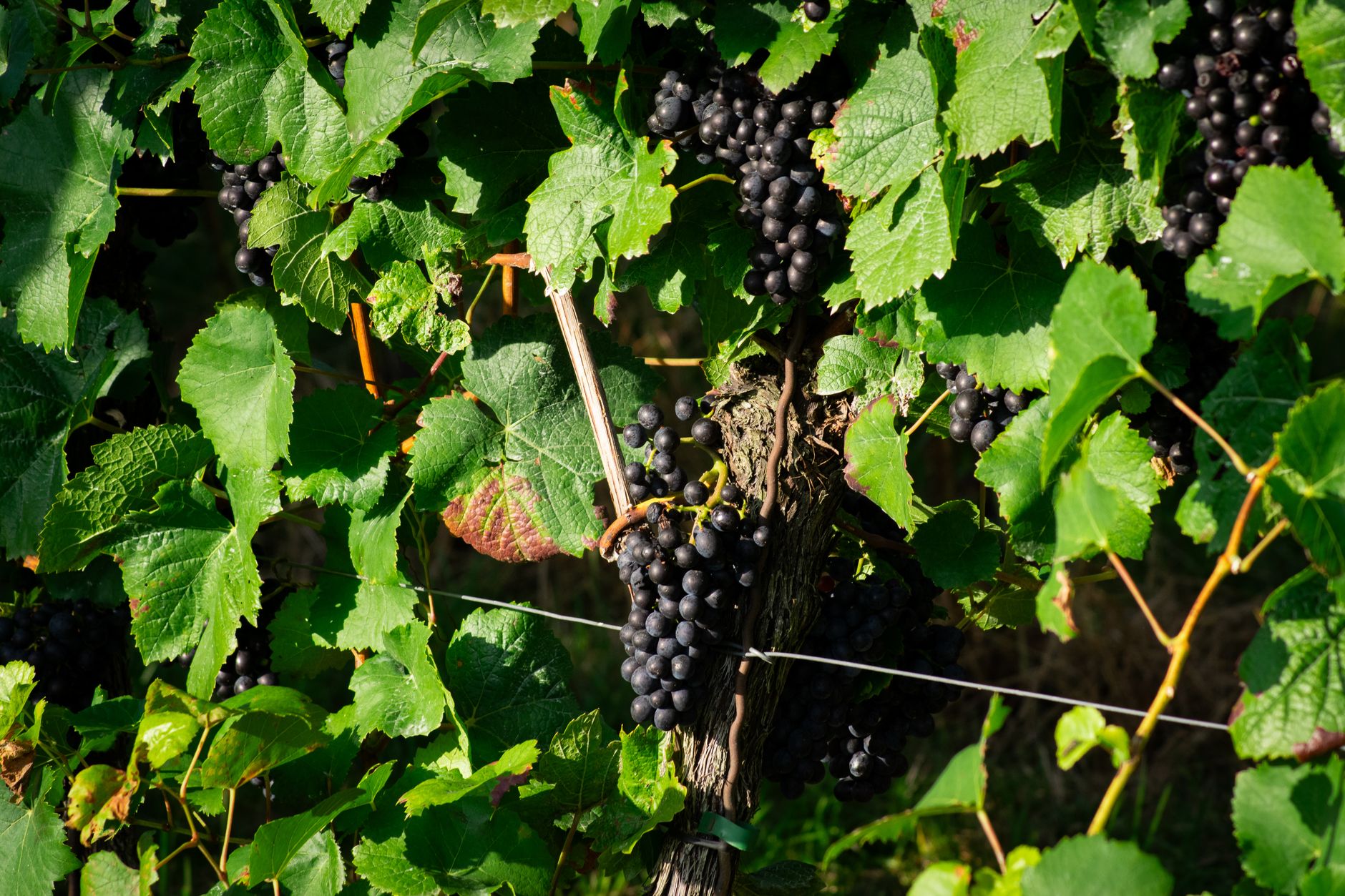
The full text reads: “Maybe there’s still hope for a new morning, for clouds that cluster like ripe grapes which, when squeezed, will release from the heavens the sweet streams of enchanted days.” That’s it. No character. No scene. No plot in any conventional sense. Just a conditional hope pressed into an image so dense it nearly collapses under its own weight.
The word “maybe” does more structural labor here than most opening chapters manage across hundreds of pages. It doesn’t hedge – it loads. Everything that follows becomes conditional, suspended, dependent on whether the speaker’s tentative faith in the morning holds. The clouds don’t just gather; they cluster like ripe grapes, which introduces a second register entirely – tactile, agricultural, sweet-smelling – into what had started as a meteorological observation.
Then comes the turn. The clouds, now grapes, get squeezed. The action is almost violent in its domesticity, the kind of thing done over a kitchen sink or into a wine press, not invoked when describing the sky. And what pours out isn’t rain – it’s “sweet streams of enchanted days.” Bachmann refuses the literal payoff. The metaphor doesn’t resolve into weather. It resolves into time itself, specifically time that has been recovered or transformed, days that have been somehow made magical by the pressure applied to them.
Bachmann was an Austrian poet and prose writer, born in 1926, who died in Rome in 1973 following injuries from a fire in her apartment. She remains among the most significant German-language literary figures of the postwar era, and her work consistently moved between lyric compression and philosophical weight. “The Hobbler” – whatever its position in her larger body of work – reads like a distillation of exactly that tendency: the lyric impulse pushed to its absolute minimum without losing the philosophical structure underneath.
Flash Fiction as a Form That Demands Accounting
Flash fiction, as a category, is often misread as fiction that simply happens to be short. The better framing is that flash fiction is fiction in which every word is accountable – where nothing survives that doesn’t earn its place three times over. By that standard, Bachmann’s piece functions less like a story and more like a proof. She is demonstrating something about hope’s grammar: that it requires the conditional mood, that it requires an image to hold it, and that the image has to do something physically – squeeze, press, yield – before the emotional payoff becomes available.
The title, “The Hobbler,” sits in unresolved tension with everything inside the sentence. Nothing hobbles in the text. There is no limping figure, no halting movement, no obstacle. Unless – and this is the interpretive pressure the title applies – the speaker is the hobbler, moving haltingly toward that hoped-for morning, unable to arrive with confidence, needing to convert clouds into grapes into streams before the day becomes livable. The hope itself hobbles. It gets there, but not cleanly.
That reading makes the piece feel less like a lyric fragment and more like a psychological portrait compressed into metaphor. The speaker knows morning is theoretically available. The speaker knows what a good day would taste like – sweet, enchanted, flowing freely. The difficulty is that getting from the present moment to that morning requires a transformation the speaker can only describe in terms of agricultural labor: the squeezing of fruit, the yielding of liquid. Joy doesn’t arrive. It has to be pressed out of something that merely resembles it.
Bachmann published poetry collections including Die gestundete Zeit (Borrowed Time) in 1953 and Anrufung des Großen Bären (Invocation of the Great Bear) in 1956, before moving increasingly toward prose. Her novel Malina, published in 1971, is considered a landmark of Austrian modernism – a book about female subjectivity, erasure, and the violence language can carry. “The Hobbler,” appearing now in The New Yorker, arrives for many English-language readers as an introduction to that sensibility at its most condensed.
What The New Yorker‘s decision to publish flash fiction of this density signals – whether as editorial appetite for lyric compression, or as interest in Bachmann’s posthumous English-language presence – is its own kind of cultural weather reading. The piece doesn’t ask for much of your time. It asks for close attention to what “maybe” is doing at the front of a sentence, and what happens when hope has to borrow its vocabulary from a harvest.

The Question the Title Leaves Open
If the hobbler is the hope itself – limping toward a morning it can smell but not yet reach – then the piece’s unresolved energy makes complete sense. Enchanted days are available, grammatically speaking. The clouds are there. The grapes are there. Someone just has to do the squeezing. What Bachmann leaves open is whether the speaker will.
There’s a reason the sentence begins with “maybe” and ends with “enchanted.” The distance between those two words – the wobbling uncertainty of the opening and the full lyric confidence of the close – is exactly the distance the speaker is trying to cross. Whether she gets there is the story Bachmann chose not to tell, leaving the sentence to hover in the moment just before the pressing begins, the clouds still full, the morning still theoretical, the days still locked inside something that hasn’t yet been touched.