




A Different Kind of Premiere
Travis Scott did not wait for a red carpet. Instead, the Houston rapper – now also a credited actor – took over the IMAX headquarters for a private friends-and-family screening of Christopher Nolan’s Odyssey, the kind of event that sits somewhere between a wrap celebration and a personal flex. The venue was not incidental. IMAX is where Nolan’s films live at their largest, and Scott apparently had no interest in watching himself on anything smaller.
The evening doubled as a debut: a new music video, directed by Nolan himself, screened alongside the film.
That detail is worth sitting with for a moment. Nolan – who guards his filmmaking process with the same intensity he brings to narrative structure – turned his attention to a music video for one of his cast members. That is not a routine favor. It signals something closer to a genuine creative partnership, one that extended well past the production of the film itself and into a separate, self-contained visual work.

Scott’s Expanding Creative Footprint
Scott’s transition from rapper to actor is not a reinvention so much as a continuation of the world-building he has been doing since Astroworld. His concerts were already cinematic – elaborate stage designs, immersive theming, an insistence on spectacle as the primary unit of experience. Stepping in front of a camera for a Nolan production is, in that context, less of a departure and more of a logical extension. He was already directing the audience’s gaze. Now someone else’s lens is doing the same.
What changes with a Nolan film on his resume is the register. Nolan operates at the extreme end of prestige cinema – the kind of filmmaker whose casting decisions get parsed the way record label signings once did. For Scott, landing a role in Odyssey is a credentialing moment, the sort that shifts how a public figure is categorized by the industry and by the press. He is no longer a musician who dabbles; he is an actor who also makes music, and there is real professional distance between those two framings.
The friends-and-family screening format added a layer of intentionality to the whole affair. This was not a studio event with publicists managing the room. Scott hosted it. The IMAX headquarters became, for one evening, an extension of the aesthetic universe he has spent years constructing – the same impulse that once turned a festival field into Astroworld, applied now to a corporate screening room in service of a Hollywood epic.
Nolan Behind the Camera, Twice
The music video is the stranger and more interesting story. Nolan has spent his career building films of enormous scale and philosophical ambition – Inception, Interstellar, Oppenheimer – and has shown little interest in the shorter-form projects that other directors use to stay visible between features. A music video represents a genuine departure from his usual mode of working, even if the visual grammar is almost certainly recognizable to anyone who has watched his features closely.
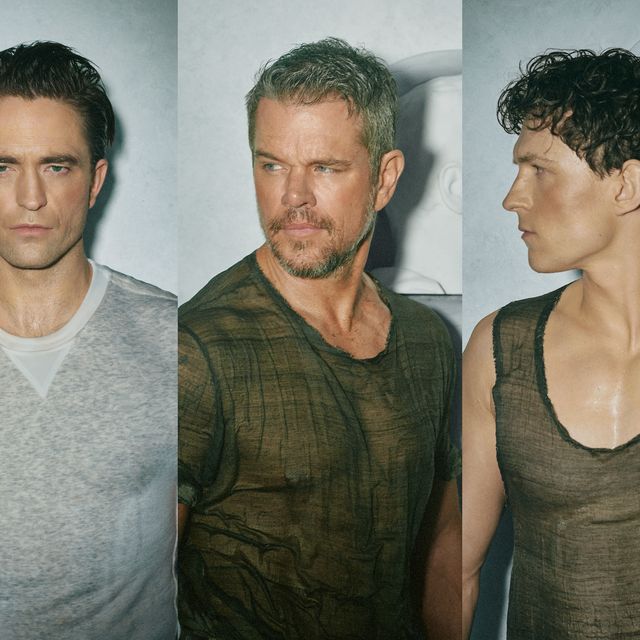
There is also a promotional logic here that does not diminish the creative one. Odyssey arrives with Scott already attached to its marketing ecosystem – his name brings a different audience than Nolan’s existing base, and a music video directed by Nolan keeps that audience inside the film’s orbit even after they have left the theater. The two men are, in this sense, useful to each other in ways that go beyond actor and director. Tom Holland has been working the press circuit for the same film, and the range of that promotion – from style coverage to a Scott-hosted IMAX event – suggests a campaign built on multiple simultaneous fronts rather than a single coordinated push.
What Nolan actually did with the music video – its visual approach, its relationship to the film’s themes, whether it functions as a standalone piece or as an extended trailer in disguise – is the open question that the screening alone cannot answer.
The Room That Made a Point
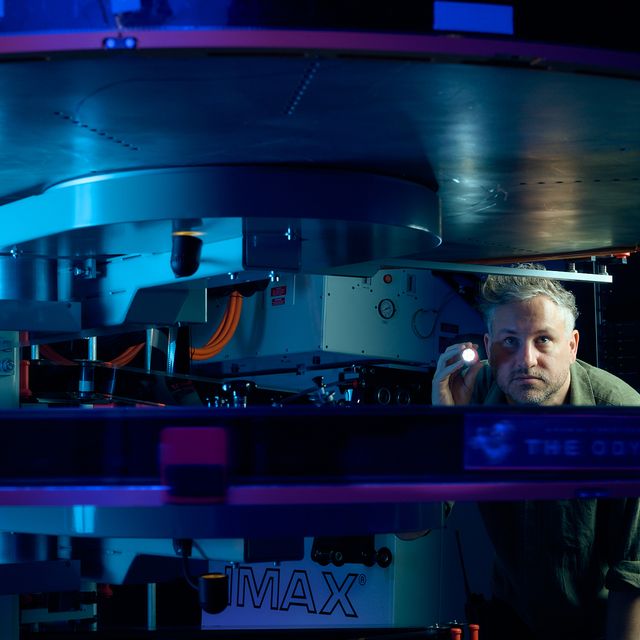
IMAX headquarters as a venue carries its own meaning. It is not a rented event space dressed up for the occasion. It is the physical home of the technology that Nolan has used to argue, film after film, that cinema belongs on the largest possible screen. Holding the screening there is a deliberate choice – one that frames Scott’s role in Odyssey not as a curiosity or a marketing stunt but as something that deserves the full weight of the format Nolan has spent two decades championing.
Whether the room agreed is the question no press release can answer. But someone decided that Travis Scott’s night deserved IMAX walls, and Christopher Nolan decided to direct the music that went with it.