




Shame Has Been Doing the Work That Regulation Hasn’t
Before any law, policy, or terms-of-service clause managed to meaningfully slow the spread of AI-generated text, public embarrassment was already doing the job. The threat of being called out – by a reader, an editor, a professor, or a Twitter pile-on – has functioned as one of the most effective brakes on uncredited AI use, not because people suddenly developed a principled objection to the technology, but because getting caught carries a specific social cost. It stings. And that sting, it turns out, motivates behavior in ways that abstract ethical arguments rarely do.
Now Anthropic is building infrastructure around that same dynamic. The company is making it easier to identify whether a given piece of text was produced by Claude, its AI model – which means the informal social enforcement that’s been happening ad hoc for the past few years may soon have a more formal mechanism behind it.
What Detection Actually Changes
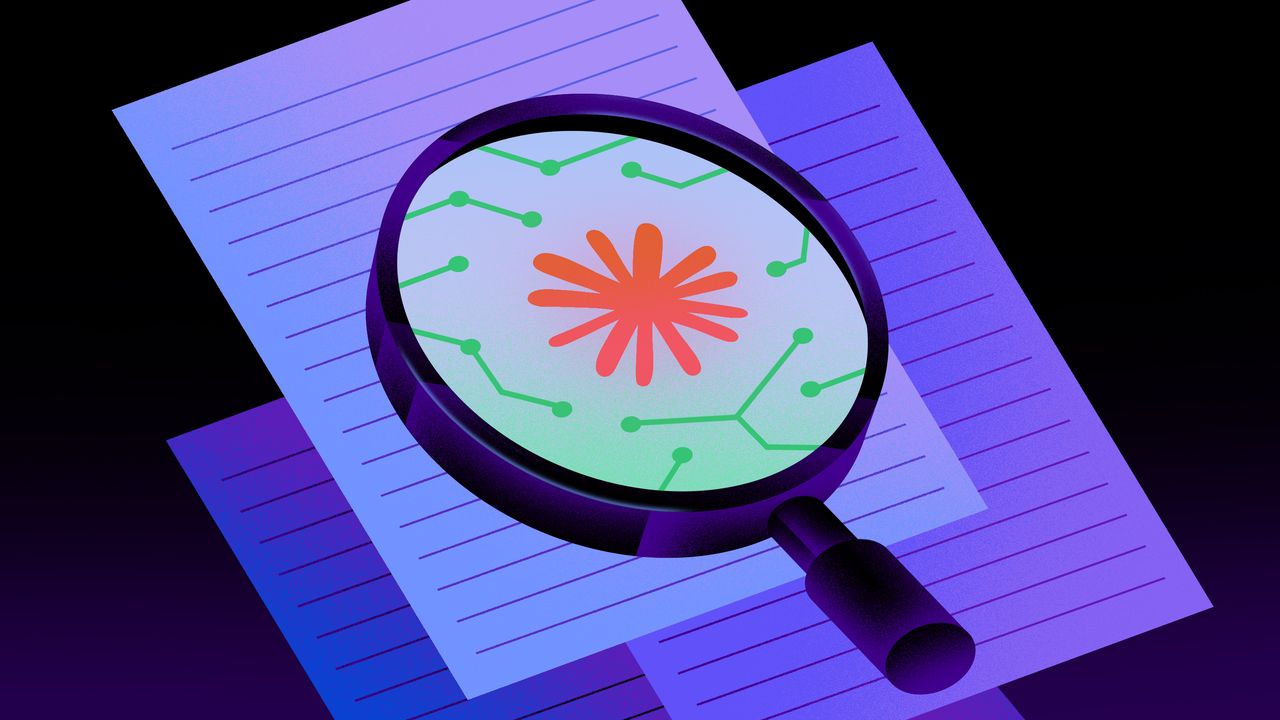
There’s a version of this story where easier detection is framed as purely a transparency measure, a kind of neutral public service. That framing undersells what’s actually at stake. When detection becomes accessible – not just to forensic researchers or platform moderators but to anyone curious enough to check – the relationship between writer and reader shifts. Every piece of text becomes something that can be challenged, verified, or quietly suspected. That’s a different reading environment than the one we had five years ago.
The mechanics of how Anthropic is enabling this detection haven’t been explained in granular technical detail, but the direction is clear: Claude-generated content is meant to be identifiable as such. Whether that means embedded signals, stylistic markers, or some form of watermarking, the goal is a shorter path from suspicion to confirmation. For anyone who has ever received a form email that felt slightly too smooth, or read a product review that seemed to cover all the bases without saying anything, or graded a student essay that was technically correct and completely hollow – that shorter path will feel overdue.
Public shaming works partly because exposure is unpredictable. You don’t know which piece of AI-generated copy will be the one someone decides to screenshot and share. That unpredictability creates a diffuse anxiety that keeps some users cautious. What Anthropic’s move does is shift the exposure mechanism from social accident to deliberate tool – anyone who wants to check can now do so more easily, which changes the calculus for anyone thinking about passing off Claude’s output as their own.
The implications land differently depending on where you sit. For a novelist or journalist, the ability to show that their work wasn’t generated by Claude might become as valuable as the detection itself – a kind of negative proof, a certificate of human origin. For a marketing team or a content farm, easier detection is a new operational variable to account for. For a student, it’s a reminder that the shortcut has a visible seam.
Anthropic’s Position in the Detection Conversation
It’s worth noting that the company building the most visible detection mechanism is the same company that built the model being detected. Anthropic occupies an unusual position in the AI industry – it has positioned itself as a safety-focused organization while still being in the business of making AI systems widely used. Offering detection tools is consistent with that posture, but it’s also good for the brand at a moment when trust in AI-generated content is genuinely contested terrain.
That doesn’t make the move cynical, necessarily. Watermarking and detection have been discussed across the industry for years, and someone was going to make meaningful progress on accessibility. The fact that it’s the model-maker doing it, rather than a third party, has obvious advantages – they know what Claude sounds like better than anyone else does.
The Longer Story About Embarrassment and AI
The New Yorker piece that surfaced this development frames public shaming as one of the few forces that has genuinely tempered AI use. That framing is blunt, but it holds up. Think about the cases that actually changed behavior at scale: the academic caught submitting AI-generated research, the author whose book was found to be largely machine-written, the brand whose customer service responses were identified as canned Claude output. In each case, the mechanism wasn’t a rule – it was exposure followed by social consequence.
What’s interesting is how durable that consequence has been. The early assumption in some quarters was that AI-generated content would normalize quickly, that readers would adjust their expectations and the stigma would fade. That hasn’t happened, at least not yet. The appetite for knowing whether a human wrote something remains strong, and in some contexts – literary fiction, personal essays, investigative reporting – it has arguably gotten stronger as the technology has gotten better. The better Claude gets at mimicking a human voice, the more it matters to some readers that a human voice is what they’re actually getting.
Easier detection doesn’t resolve any of the deeper questions about what AI-generated text means for writing as a practice or a profession. It doesn’t tell you whether a piece of work that used Claude for research, or for a first draft, or for a single paragraph, counts as AI-generated in any meaningful sense. Those lines are still being drawn, argued over, and redrawn constantly across industries and institutions.
What it does is give the social enforcement mechanism sharper teeth. Shaming requires evidence. For the past few years, that evidence has been impressionistic – something felt off, the sentences were too even, the argument moved in too straight a line. Now there’s a tool. The question is who picks it up first, and what they do when they find something.