





Apple Eyes the Enterprise Rack
Apple is developing an enterprise AI server built around its M-series Ultra chips – the same silicon that powers the Mac Studio and Mac Pro sitting on developers’ desks. According to The Information, the machine is targeting a 2029 release, which would make it Apple’s first server product to reach the market in roughly twenty years.
The project has backing from John Ternus, who greenlit it approximately a year ago while still heading Apple’s hardware engineering division – before he stepped into the CEO role. That timeline puts the decision squarely in the middle of an AI hardware spending boom that Apple’s Mac lineup has been quietly riding.
Two Configurations, One Very Familiar Chip Architecture
The server is expected to ship in two distinct configurations: one housing two M8 Ultra chips and another scaling up to four. The M8 Ultra doesn’t exist yet – Apple’s current lineup sits several generations behind that designation – so the 2029 window reflects just how far out Apple is planning this build. The chip count in each configuration suggests Apple is targeting workloads that require substantial unified memory bandwidth, the area where M-series Ultra silicon has consistently outperformed comparable x86 server chips in memory-bound AI inference tasks.
Apple’s unified memory architecture means each M Ultra chip pools CPU and GPU memory into a single high-bandwidth pool rather than splitting compute across discrete cards with dedicated VRAM. For AI inference specifically, that design eliminates the bottleneck that plagues traditional GPU server setups when models exceed a single card’s VRAM ceiling. A four-chip M8 Ultra configuration would give the server access to an enormous contiguous memory pool – likely well beyond what any single Nvidia GPU can address today, though Nvidia’s roadmap by 2029 is its own unknown.
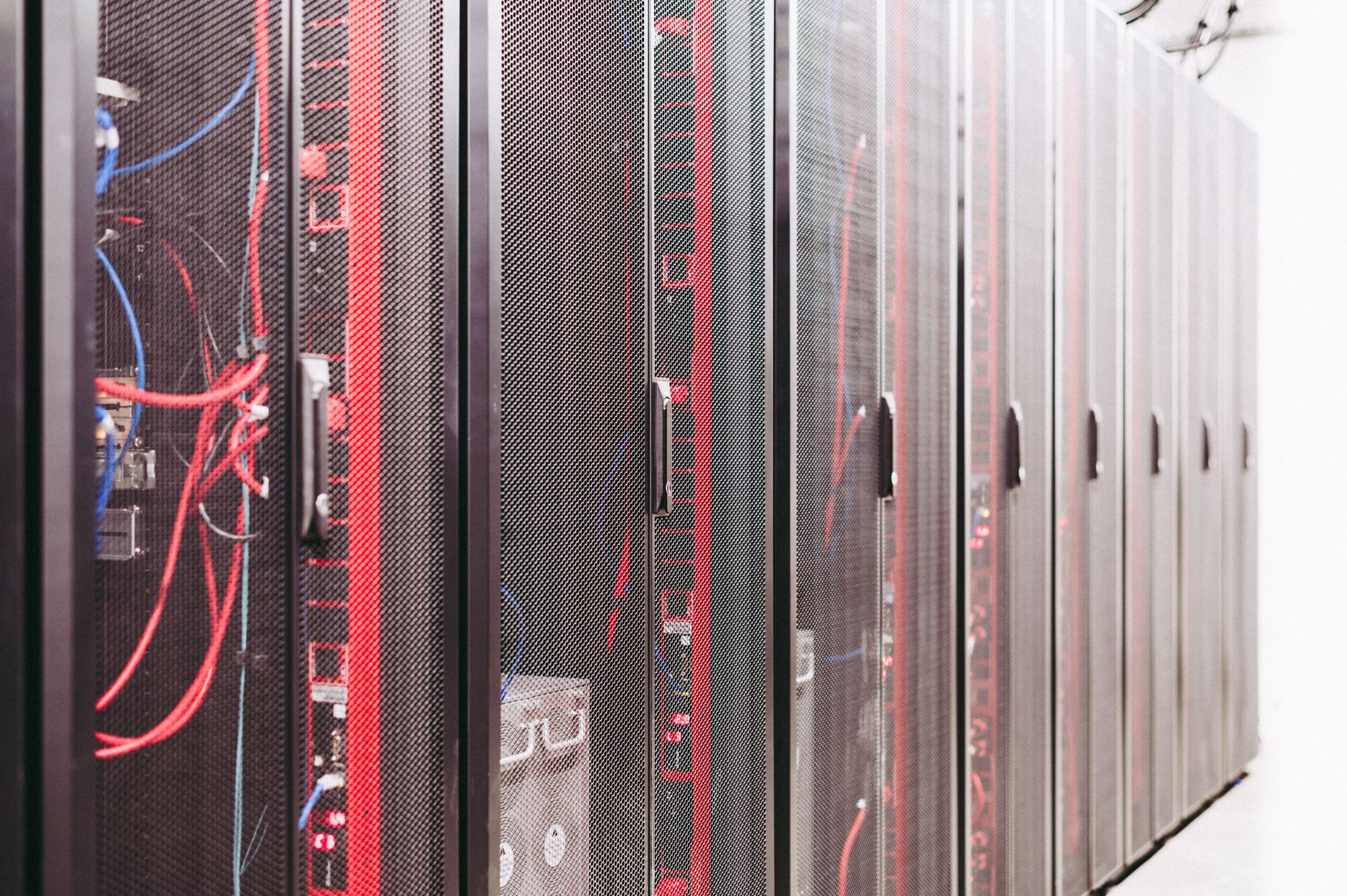
The enterprise positioning also distinguishes this from Apple’s consumer and prosumer Mac hardware. A server chassis designed for rack mounting, managed deployments, and sustained compute loads is an entirely different product category from a Mac Studio on a workbench, even if the underlying silicon is related.
Why Mac Mini Sales Made This Project Inevitable
Apple didn’t arrive at an enterprise server concept in isolation. Mac mini and Mac Studio units have been selling at an unusual rate to AI developers and companies running local inference workloads – a trend that has turned Apple’s consumer desktop line into an unplanned AI hardware category. Developers building with large language models discovered that M-series Ultra chips could run models locally that would otherwise require cloud GPU instances, cutting operational costs significantly.
That organic adoption created a visible gap: companies wanting more than a Mac Studio but with no Apple-native path into the server room. The only option has been clustering consumer hardware or abandoning Apple silicon entirely for dedicated GPU servers. An enterprise server would close that gap directly, giving organizations running Apple-centric AI pipelines a first-party rack solution rather than a workaround.
A Two-Decade Absence From the Server Market
Apple last sold a server product – the Xserve – in 2011, when it discontinued the line after years of declining interest. The Xserve ran Intel Xeon processors and was aimed at media production and enterprise environments. Its cancellation reflected Apple’s broader retreat from markets where tight hardware-software integration mattered less and where commodity Linux servers dominated. The AI moment has changed that calculus.
The difference between 2011 and 2029 is that Apple now controls its own silicon, and that silicon has a measurable advantage in specific workloads. The Xserve era required Apple to compete on price and features against servers running the same Intel chips. An M8 Ultra server would be the only rack-mounted machine running Apple’s architecture, and there’s no direct substitute for buyers who want it.
Ternus, now Apple CEO, carries particular weight in this project’s survival. Hardware decisions at Apple move slowly and require sustained executive commitment – products announced internally in 2025 routinely slip or die before reaching production. The fact that the project has his direct backing after a leadership transition gives it more runway than a typical internal initiative. That said, four years is a long time in AI infrastructure, and the competitive landscape Apple will enter in 2029 looks nothing like the one that made Mac mini sales spike in 2024 and 2025.
Apple’s server ambitions also raise a harder question about software. Mac Studio success in AI workloads ran largely on the Metal performance shaders framework and community-driven tools like llama.cpp that added Apple silicon support. An enterprise server demands more – remote management interfaces, server-grade operating system support, integration with data center orchestration tools. Whether Apple ships a server-optimized OS alongside the hardware, or expects customers to run macOS in rack environments, will matter as much as the chip count.

The two-chip configuration in particular will compete against single-node GPU servers in a price range where procurement teams make decisions on total cost of ownership over three to five years. If Apple prices the entry M8 Ultra server anywhere near what Mac Studio currently commands per chip, the value proposition for AI inference workloads could be straightforward. If it prices at traditional enterprise server margins, the math gets harder – and the sales team Apple doesn’t really have will need to be built from scratch before 2029.