




Quentin Tarantino wrote it. David Fincher directed it. By The New Yorker’s reading, only one of those two men leaves a strong fingerprint on “The Further Mis-Adventures of Cliff Booth.”
A Sequel Missing Its Original Director
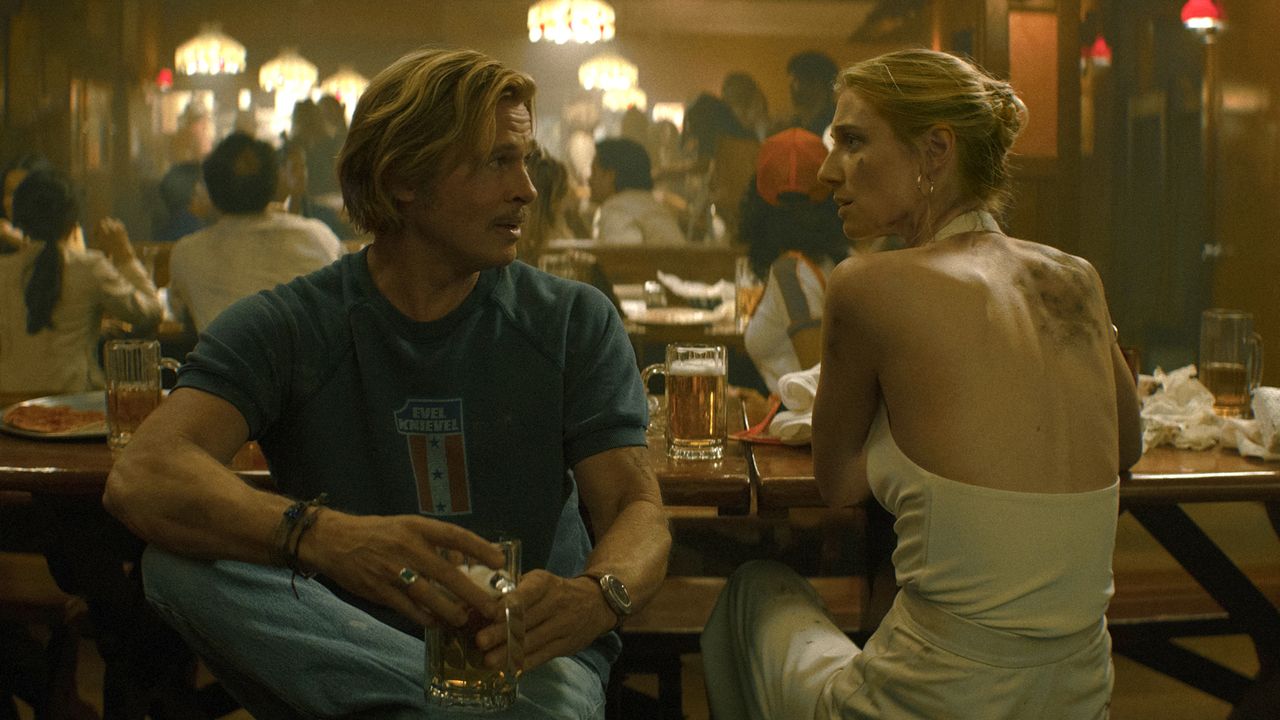
The film continues the story of “Once Upon a Time . . . in Hollywood,” the 2019 picture Tarantino both wrote and directed. That film followed the stuntman Cliff Booth, played by Brad Pitt, and the faded television actor Rick Dalton, played by Leonardo DiCaprio, through the Los Angeles of 1969. Pitt won the Oscar for best supporting actor for the role. The sequel keeps Booth at the center of its title and moves the project into a different set of hands.
Those hands belong to Fincher, the director behind “Seven,” “Fight Club,” “Zodiac,” “The Social Network,” and “Gone Girl.” Tarantino supplied the screenplay, and Fincher is responsible for everything that gets put in front of a lens. For a filmmaker who has handed few of his scripts to other directors, that division of labor is a real change. It also sets up an experiment in what a Tarantino story feels like when he isn’t the one staging it.
The New Yorker’s review argues that the experiment tilts the film “drastically” toward the gratifications of Tarantino’s own writing. The headline puts the point more bluntly, calling the movie “Tarantino minus Tarantino.” The subtraction it describes is the director, the half of the man who decides where the camera sits, how long a shot lingers, and when a song cuts in.
What remains is the screenwriter, working without his usual counterweight.
What the Page Gives and the Camera Withholds
Tarantino’s reputation as a writer is hard to separate from his reputation as a stylist. He won screenwriting Oscars for “Pulp Fiction” and “Django Unchained,” and his dialogue is the part of his work people quote back at each other. Characters talk at length, wander into tangents, and treat conversation as a kind of performance. Those are pleasures of the page, and a review that emphasizes them is describing a movie in which the script is the main event.
On his own films, though, Tarantino has always had a second set of pleasures to deploy: the staging, the needle drops, the period detail, the rhythm of an edit. They give a viewer something to enjoy besides the words, and they often carry a scene when the talk runs long. When he writes and directs, the two sets of gratifications compete and cooperate in the same head. A scene can be indulgent on the page and still be disciplined on screen, because the person who wrote the indulgence is also the person who decides how much of it survives.
Handing the script to Fincher changes that arrangement. Fincher’s films are known for precision, for a cool, exacting control over every frame, and for a temperament that tends to tighten material rather than let it sprawl. Tarantino’s pages, by contrast, are built to sprawl on purpose. Putting the two together does not necessarily produce friction, but it does move the center of gravity. If the director is working in service of a screenplay he did not write, the screenplay becomes the dominant voice in the finished film.
That is the shift the review identifies. The film does not feel like a Tarantino picture with a different name on the director’s chair. It feels like a Tarantino script, fully itself, with fewer of the visual habits that usually frame it. The gratifications of the writing arrive undiluted, and the viewer is left to decide how much of that is a feast and how much is too much of one thing.
Tarantino-as-writer and Tarantino-as-director have been one brand for so long that audiences rarely separate them. This film does it for them, and the seams show.
A Character Who Outlived His Director
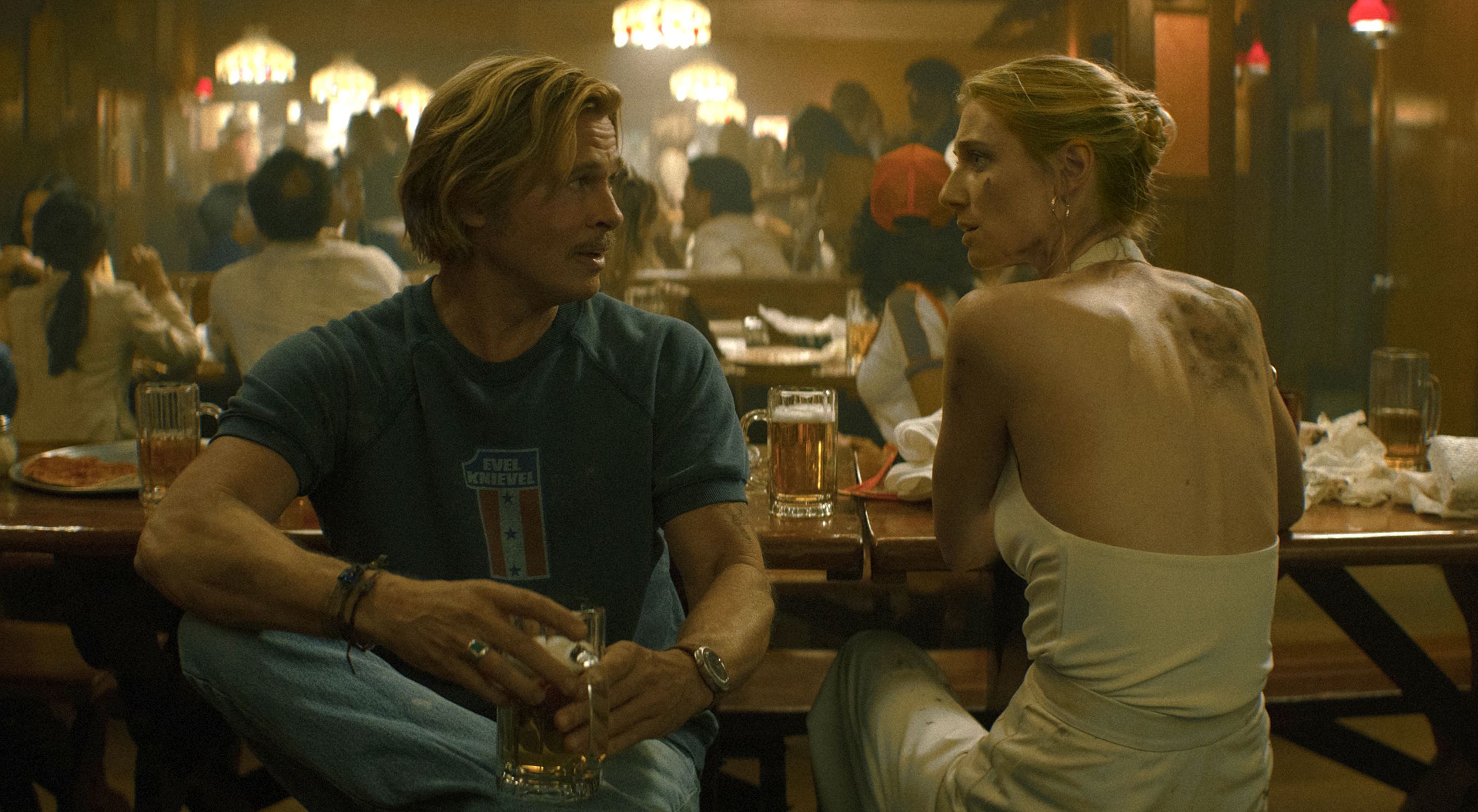
Cliff Booth is a good test case for the arrangement. In the 2019 film he was a figure of easy menace and easy charm, a man whose loyalty and capacity for violence sat side by side without much comment. Pitt’s performance made him look effortless. Tarantino’s staging, the long drives through Los Angeles and the stretches of quiet, supplied part of that effect. Without that staging, the character has to be carried by what Tarantino wrote for him.
The sequel’s title, with its hyphenated “Mis-Adventures,” promises something looser and more episodic than the first film’s period tapestry. It also signals that Tarantino considers Booth worth a second story of his own invention, rather than a supporting figure whose arc ended in 1969. Whether the script earns that confidence is the question the review raises, and the answer it offers leans on the writing’s pull over everything else.
The odd part is that the pairing was always going to invite this kind of reading. A director as distinctive as Fincher and a writer as distinctive as Tarantino cannot share a film without one of them leading. What does a Tarantino sentence sound like when nobody in the director’s chair is Tarantino?