





A Director’s Unromantic Take on the Civil Rights Era
Elegance Bratton’s second feature film, “By Any Means,” arrives with a premise that refuses easy comfort: what happens when the legal machinery of civil rights moves too slowly for the people it is supposed to protect? Set against the nineteen-sixties, the film stars Mark Wahlberg and Yahya Abdul-Mateen II in a story that imports gangland logic into one of American history’s most mythologized struggles. It is not a film interested in making heroes out of its subjects, which is precisely what makes it worth watching.
Bratton, whose debut feature established him as a director willing to sit with moral discomfort, brings that same disposition to this project. The pairing of Wahlberg and Abdul-Mateen II is itself a statement – two actors whose screen personas rarely overlap, now sharing space in a story where the lines between righteous action and criminal method dissolve under pressure.
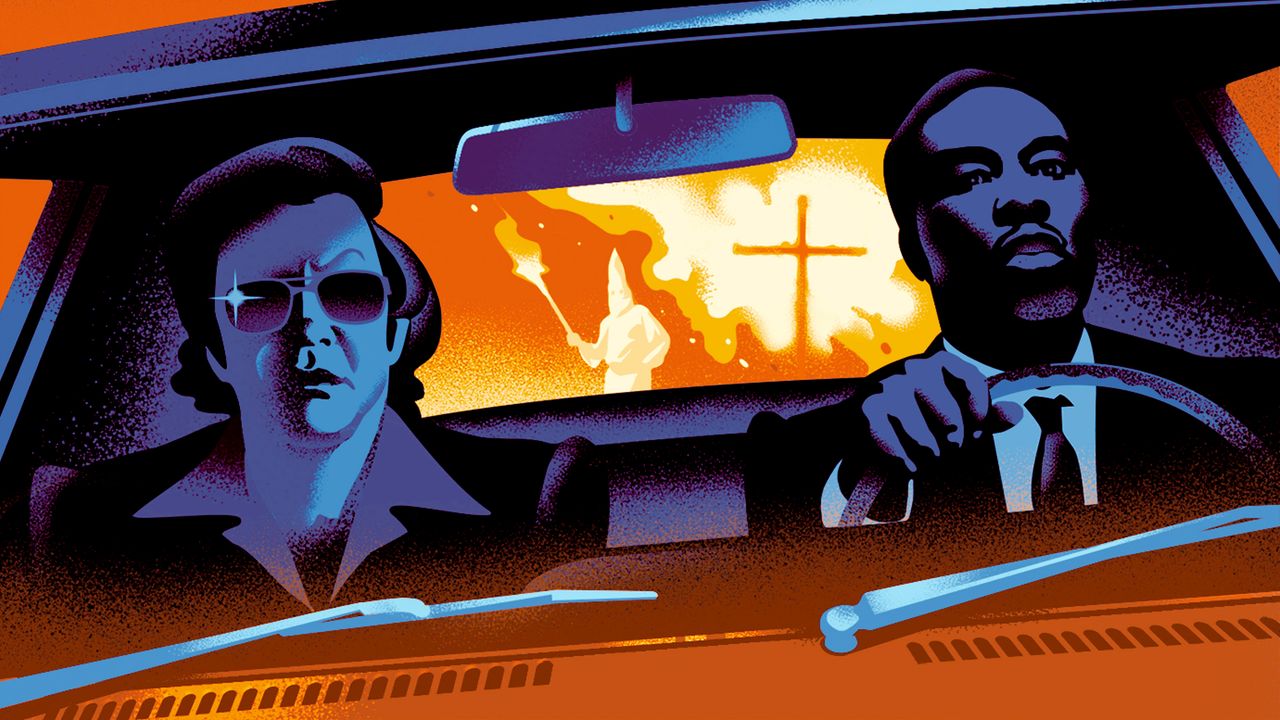
The Gangland Lens on Civil Rights
The film’s central provocation is structural. By filtering the civil rights legal battles of the nineteen-sixties through a gangland perspective, Bratton is not romanticizing criminality – he is arguing that the tactics of survival and the tactics of justice were never as separate as official history tends to suggest. Communities navigating systemic exclusion from legal protection did not have the luxury of waiting for institutions to reform themselves.
That framing gives “By Any Means” its tension and its title. The phrase is not deployed as a slogan but as a genuine ethical question the film refuses to answer cleanly. Bratton lets the contradiction breathe: the same methods that can protect a community can also corrode it, and the film does not pretend otherwise.

What Wahlberg and Abdul-Mateen II Bring to the Material
Mark Wahlberg carries into this project a screen history built heavily on working-class physicality and moral ambiguity – qualities the role appears to demand. He has always been more interesting when playing characters who operate at the edge of legitimacy, and the nineteen-sixties setting strips away the contemporary shortcuts that can make that kind of performance feel familiar.
Yahya Abdul-Mateen II, meanwhile, has spent the past several years building a reputation for choosing projects that resist straightforward classification. From “Watchmen” to “Candyman” to his Academy Award-nominated work in “The Trial of the Chicago 7,” he gravitates toward material where identity and ideology are under active negotiation. That instinct fits naturally into what Bratton is constructing here.
Together, the two actors occupy a film that seems deliberately structured around friction – between legality and justice, between individual survival and collective movement, between what the nineteen-sixties looked like in retrospect and what living through them actually required. The period setting matters not as nostalgia but as distance: enough years have passed that the era gets treated as settled, heroic, resolved. Bratton appears to be betting that treating it as messy and unresolved is closer to the truth.
The civil rights legal battles depicted in the film were not abstract. They involved specific laws, specific courtrooms, specific acts of resistance and negotiation. Bratton’s choice to frame those battles through characters operating outside or alongside formal legal channels is a directorial argument, not a neutral aesthetic decision – and the film’s reception will likely depend on whether audiences are willing to accept that argument on its own terms.
Bratton’s Place in Contemporary Cinema
As a second feature, “By Any Means” carries the particular weight of expectation that falls on directors who made striking debuts. Bratton is working at a scale – with cast names like Wahlberg and Abdul-Mateen II attached – that signals serious production backing and a wider intended audience than his first film reached.
That scale brings risk. Films that attempt moral complexity at the studio level frequently find that complexity negotiated away in editing, in marketing, in the final cut that reaches theaters. Whether “By Any Means” holds onto its principled cynicism through that process is a question only the finished, distributed film can answer.

What the Film Is Asking
The most useful way to approach “By Any Means” may be as a film that takes seriously an uncomfortable symmetry: that the people most harmed by unjust laws were also the people with the least access to the institutions designed to change those laws. Bratton does not appear to be making a polemic. He is making a film about the gap between what justice is supposed to look like and the methods people actually used to pursue it in the nineteen-sixties, when that gap was both enormous and deliberately maintained.
Gangland and civil rights are not natural narrative companions, and Bratton knows it. That discomfort – the sense that these two worlds should not share a frame – is exactly the discomfort the film seems designed to produce. The question hanging over the whole project is whether Wahlberg and Abdul-Mateen II can hold that tension on screen without letting it collapse into something tidier than the history it is drawing from.